If Spark Plug Gap Is Wrong: Troubleshooting Guide
Diagnose and fix a wrong spark plug gap with a practical, step-by-step approach. Safety tips, common mistakes, and prevention ideas from MultiPlugging to keep your engine running smoothly.


If spark plug gap is wrong, your engine will misfire, idle roughly, and lose power. The quickest fix is to verify the gap with a feeler gauge and adjust to the manufacturer spec, or replace the plug if the electrode is worn. After correcting the gap, re-gap and retorque after installation.
Symptom snapshot: when the gap is wrong
If spark plug gap is wrong, you may notice a rough idle, engine misfires, reduced power, and poorer fuel economy. Starting can be harder, especially in cold weather, and you may feel a stumble or hesitation as you accelerate. In some engines, a wrong gap triggers a check-engine-light or misfire codes. For many DIY enthusiasts, the signal is a clear indication to verify the gap and inspect the plug condition before replacing any parts. Remember: a wrong gap disrupts the ideal air-fuel mix and delays the spark, so addressing it promptly improves ignition reliability and efficiency.
Why the gap matters for ignition and fuel efficiency
The spark plug gap controls the distance the spark must jump to ignite the air-fuel mixture. If the gap is wider than spec, the ignition system may struggle to create a strong spark, leading to misfires and incomplete combustion. A gap that’s too narrow can cause the plug to fire too easily, potentially overheating the electrode and shortening plug life. Both extremes waste fuel, lower horsepower, and can increase emissions. The exact gap spec depends on engine design, heat range, and ignition system, so always refer to the owner’s manual or the plug packaging for your vehicle.
How to check the gap safely
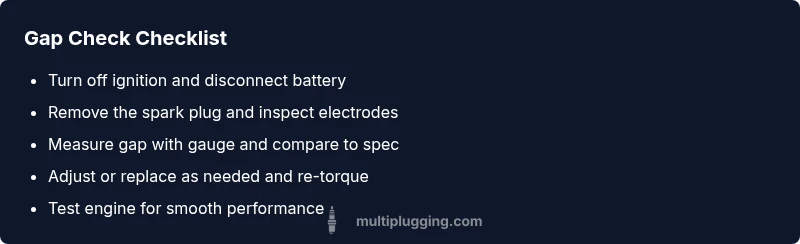
Begin by letting the engine cool and disconnecting the battery. Remove the spark plug boot or coil pack, keeping track of which cylinder you’re working on. Use a proper feeler gauge or a calibrated gap tool to measure the current gap. Compare it to the spec in your manual or on the spark plug box. If the gap is off, gently bend the electrode or adjust with the gauge until it matches the spec. Reinstall the plug with a light film of anti-seize compound if recommended by the manufacturer, then torque to the specified value. Always work gently to avoid damaging the ceramic insulator or thread.
Adjusting vs. replacing: which path is right
If the gap is only slightly off and the electrode edges are clean, carefully adjust the gap and recheck. However, if the electrode is worn, cracked, or fouled with oil or carbon deposits, replacement is the safer, more reliable option. Do not attempt significant reshaping of a worn electrode; it compromises performance and timing. For high-mileage engines, replacing all plugs at the recommended interval prevents uneven gaps across cylinders and ensures consistent ignition.
Common missteps and prevention
Common mistakes include using the wrong gap spec for your engine, bending the ground electrode too aggressively, or reusing a fouled plug without cleaning. Always verify the correct gap before installation, avoid bending the central electrode, and use a proper torque wrench to avoid over-tightening. After installation, perform a quick engine run to confirm smooth idle and power delivery. Regular maintenance checks help prevent gap drift as spark plugs wear and engines heat cycle repeatedly.
Maintenance tips to prevent gap drift
Set a reminder to inspect plugs whenever you service the ignition system or replace filters. Keep a small toolkit with a gap gauge, spark plug socket, and torque wrench in your garage. Store plugs in a clean, dry container to avoid exposure to oil or moisture before installation. If you’re unsure about the correct spec, consult the vehicle manual or refer to the spark plug manufacturer’s datasheet. Regular checks keep your engine running efficiently and reduce the risk of drivability issues.
Steps
Estimated time: 30-45 minutes
- 1
Gather tools and safety gear
Before starting, assemble a spark plug socket, gap gauge, torque wrench, anti-seize (if recommended), and a clean rag. Disconnect the battery to prevent accidental short circuits and ensure the engine is cool.
Tip: Keep the area clear and label each plug so you know which cylinder you’re working on. - 2
Access the spark plugs
Remove access panels or cowling as needed and locate the spark plug boots or coils. Gently unplug the boot or coil for the target cylinder, keeping track of its position.
Tip: Do not yank the wire; twist slightly to release the boot if it’s snug. - 3
Inspect the plug and seating
Carefully remove the spark plug and inspect the electrode for wear, fouling, or damage. Check the seat for cracks or debris that could affect sealing.
Tip: If you see oil or heavy deposits, address root causes before reusing the plug. - 4
Measure and adjust the gap
Use a feeler gauge to measure the current gap. Compare to the engine spec; gently bend the ground electrode to widen or narrow the gap until it matches.
Tip: Avoid bending the center electrode and test multiple gauges to confirm accuracy. - 5
Reinstall and torque
Reinstall the plug with the proper torque specification. Reconnect the boot or coil, and ensure a clean seal to prevent leaks.
Tip: Too loose can cause misfires; too tight can damage threads. - 6
Test the engine
Start the engine and listen for smooth idle. Take a short drive to confirm power delivery, throttle response, and absence of misfires.
Tip: If misfires persist, proceed to diagnose ignition components or consider plug replacement.
Diagnosis: Engine misfires, rough idle, or hard starting
Possible Causes
- highIncorrect spark plug gap (too wide or too narrow)
- mediumWorn or fouled spark plug electrodes
- lowFaulty ignition wires or coil causing weak spark
Fixes
- easyMeasure and adjust gap to spec using a gauge; re-gap and reinstall
- easyReplace spark plug if electrode is worn or gapped beyond repair
- mediumInspect ignition wires/coil and replace faulty components if misfire persists
FAQ
What happens if the gap is too wide?
A gap that’s too wide can weaken the spark, causing misfires and poor starting. It also increases electrode wear and can reduce fuel efficiency. Recheck and adjust to spec or replace the plug if damage is evident.
A too-wide gap weakens the spark and can cause misfires. Recheck and adjust or replace the plug if needed.
What if the gap is too narrow?
A gap that’s too narrow can cause the plug to fire too easily, overheat the electrode, and reduce lifespan. Measure accurately and widen to the correct spec.
If the gap is too narrow, it can overheat the plug. Measure and adjust to the correct gap.
Can other components cause similar symptoms?
Yes. Faulty ignition wires, weak coil, or dirty fuel injectors can mimic gap problems. Always check the entire ignition system if misfires persist after fixing the gap.
Other ignition issues can mimic gap problems; check wires and coils if problems continue.
Is gapping safe on all engines?
Gapping is safe when done with the right tools and torque. Some engines require specific procedures and anti-seize compounds; follow the manual.
Gapping is safe when done with the right tools and the engine’s manual. Follow procedures.
When should I replace spark plugs instead of just adjusting the gap?
If the electrode is worn, the plug is fouled beyond cleaning, or misfires persist after gap adjustment, replacement is recommended.
If the plug is worn or misfires persist after adjusting, replace it.
Watch Video
Main Points
- Check the gap before plugging in a new plug
- Use proper tools and torque to avoid damage
- Replace worn plugs rather than trying to fix a bad gap
- Test drive to confirm issue is resolved