How to Clean a Fouled Spark Plug: Step-by-Step Guide
Learn safe, proven methods to clean a fouled spark plug, decide when to replace, and verify proper gap and torque. This educational, DIY-friendly guide by MultiPlugging covers inspection, cleaning, testing, and best-practice tips for reliable ignition.


According to MultiPlugging, you can restore a fouled spark plug by removing it, inspecting electrode wear, cleaning with a carb-cleaning solvent or suitable wire brush, and checking the gap before reinstalling with proper torque. This quick guide outlines safe cleaning, when to replace, and how to verify each step to avoid engine misfires.
What causes a fouled spark plug and why cleaning can help
Fouling happens when the spark plug accumulates deposits from fuel or oil, or carbon buildup, which insulating the electrode prevents a reliable spark. Common culprits include a rich air-fuel mixture, oil leaks into the combustion chamber, frequent short trips that keep the engine from reaching proper operating temperature, and worn or misfiring ignition components. The root cause matters: cleaning can restore function, but if deposits are oil-based or the ceramic is damaged, cleaning won’t fix the problem and replacement may be necessary. According to MultiPlugging, diagnosing the underlying cause is essential for long-term performance, not just immediate ignition. If deposits are oil-based, you’ll often see oily residue and a glossy plug; for fuel-related fouling, the deposits tend to be dry and sooty. Fouling can trigger misfires, rough idle, and reduced fuel economy. While a clean plug can improve performance, persistent symptoms after cleaning usually indicate a deeper issue that demands further inspection and possibly replacement, especially for high-mileage plugs or engines with known oil leaks.
Safety first: PPE and hazards you should know
Before handling any spark plug, put on safety glasses and gloves. Work in a well-ventilated area and disconnect the negative battery lead if you’ll be working near the ignition system. Spark plug cleaning involves solvents that can irritate skin and eyes; avoid inhaling fumes and keep fuels and cleaners away from open flames. Keep the work area clean and organized to prevent dropping the plug into the engine bay. If you’re cleaning inside a vehicle, ensure the motor is cool to avoid burns and hot components. By following proper safety practices, you reduce the risk of personal injury and damage to your vehicle. MultiPlugging’s safety guidelines emphasize calm, methodical work rather than rushed, improvised fixes.
Cleaning options: wet vs dry, and what to use or avoid
There are several ways to clean a fouled plug, depending on the type of deposit and the plug’s condition. A solvent soak followed by gentle brushing can remove carbon and oil residues, while dry brushing with a brass or nylon brush helps dislodge hard deposits without eroding the electrode. Use cleaners designed for electrical components or carburetor cleaning spray; avoid gasoline, water jets, or shop towels that leave fibers behind. Never use high-pressure water on the plug or its surroundings; moisture can promote corrosion or conductive residue. After cleaning, allow the plug to dry completely before testing or reinstallation. The goal is to restore a clean, dry surface that can reliably conduct current without weakening the electrode or insulation. MultiPlugging notes that cleaning is most effective when deposits are light and the electrode remains intact.
How to inspect: what to look for when you pull the plug
Inspect the electrode for signs of wear, such as rounded or eroded electrodes, chipped ceramic, or scorching that indicates overheating. Deposits should be removable without leaving a film; if the deposits reappear quickly after cleaning, the root cause (oil leaks, misfiring, or persistent rich condition) must be addressed. Check the porcelain insulator for cracks, which can allow arcing or misfires; cracks usually warrant replacement. Compare the thread and gasket for corrosion or damage. If the plug’s gap is far from specification after cleaning, you may need to re-gap or replace the plug. Taking a photo for reference helps track wear and deposition patterns over time. MultiPlugging emphasizes that a plug’s physical health matters as much as cleanliness when assessing whether it should be cleaned or replaced.
Re-gap, reinstall, and testing: the final checklist
If the electrode gap is out of spec, adjust it with a gap tool to the manufacturer’s specification; a small adjustment can significantly affect ignition quality. Reinstall the plug by hand to avoid cross-threading, then torque to the recommended value with a torque wrench or a torque-certified implement. Reconnect the ignition lead, ensure the area around the plug is dry, and start the engine to observe smoothness and power delivery. If misfires persist, re-check the plug, wiring, coils, and fuel system. A quick on-car test after cleaning helps verify that ignition is restored and that you’ve addressed the underlying issue. MultiPlugging’s practical approach is to treat cleaning as part of a broader diagnostic workflow, not a standalone fix.
Authority sources and practical notes
In practice, the decision to clean or replace hinges on deposit type, wear, and the engine’s health. Always refer to the vehicle’s service manual for exact gap specs, torque values, and replacement intervals. For readers seeking trusted references, consider consulting government and major publications that discuss general engine maintenance and ignition systems. The following sources provide foundational information on automotive maintenance and electrical components.
Tools & Materials
- Spark plug socket (size matching your plug)(Typically 5/8 inch or 13/16 inch; use a socket with magnetic insert.)
- Ratchet wrench(For turning the socket; choose a comfortable length.)
- Wire brush (brass or nylon)(Brass is more aggressive; nylon is gentler on ceramic.)
- Carb cleaner or electrical contact cleaner(Spray onto deposits; avoid soaking rubber components.)
- Lint-free cloth(For drying and wiping deposits.)
- Feeler/gap gauge(Use to set the correct electrode gap.)
- Torque wrench(Torque to OEM specification; prevent over-tightening.)
- Anti-seize compound (optional)(Apply only if recommended by plug manufacturer.)
- Safety gloves(Protect hands from solvents and sharp edges.)
- Magnet pickup tool (optional)(Helps retrieve dropped plugs from tight spaces.)
- Small container or tray(Keep removed plugs organized.)
Steps
Estimated time: 30-45 minutes
- 1
Remove the spark plug
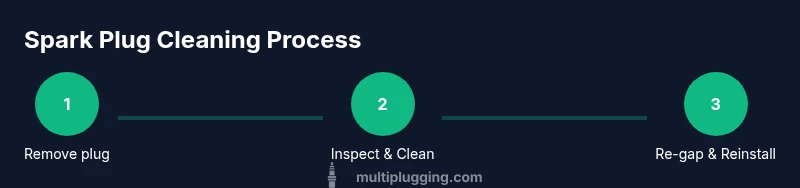
Dismantle the spark plug boot and carefully loosen the plug with the spark plug socket. Keep the area clean to avoid drawing debris into the cylinder. Label or photograph the plug’s orientation for reinstallation.
Tip: Use a magnet to hold the plug as you loosen it to prevent dropping. - 2
Inspect the plug visually
Look for heavy oil, soot, or signs of wear. A cracked ceramic or melted insulator indicates replacement is needed. Take note of deposits' color and texture to identify root causes.
Tip: Take a quick photo to document wear patterns for future reference. - 3
Clean the deposits
Spray cleaner on the electrode and threads; gently scrub with the brush to loosen deposits. Dry the plug completely with a lint-free cloth before re-checking the gap.
Tip: Avoid saturating the insulator—keep solvent away from the ceramic. - 4
Check and adjust the gap
Measure the gap with a feeler gauge and adjust to the manufacturer’s spec. If adjustments are excessive, replacement is safer than forcing a change.
Tip: Never bend the center electrode; adjust the ground electrode only as directed. - 5
Reinstall and torque
Thread the plug by hand to prevent cross-threading, then torque to the recommended value. Reconnect the ignition lead and ensure a snug seal on the seat gasket.
Tip: Use anti-seize only if recommended; otherwise, rely on proper torque. - 6
Test the engine
Start the engine and listen for smooth idle and consistent power. If misfires persist, re-check connectors, wires, and the spark plug seal. Run the engine to temperature to confirm reliability.
Tip: If you can’t solve the issue after cleaning, assume a replacement is prudent rather than chasing misfires.
FAQ
Can a fouled spark plug be cleaned and reused?
Yes, if deposits are not oil-based and the electrode shows no wear or damage. Always inspect for root causes and test after cleaning. If in doubt, safety dictates replacement.
Yes, you can clean it if the plug looks intact and the deposits are not oil-based. If you’re unsure, replace to be safe.
When should I replace instead of cleaning?
Replace if the porcelain is cracked, the electrode is heavily worn, or the gap cannot be set to spec after cleaning. Visual damage or persistent misfires are strong indicators.
Replace if you see cracks, severe wear, or can’t restore the correct gap after cleaning.
What solvents are safe for cleaning spark plugs?
Use electrical contact cleaner or carb cleaner designed for ignition components. Avoid gasoline or water pressure that can damage insulation or introduce moisture.
Safe cleaners include electrical contact or carb cleaner. Avoid gasoline or high-pressure water.
Can I reuse a fouled plug in a high-performance engine?
No. For high-performance or modern engines, a fouled plug that shows wear or deposits beyond cleaning limits should be replaced to preserve ignition reliability.
Not recommended for high-performance engines; replace if in doubt.
How often should I inspect spark plugs?
Inspect during routine maintenance or if you notice rough idling, hesitation, or misfires. Cleaning is a stopgap, not a substitute for proper maintenance.
Inspect during routine maintenance or if misfires occur; cleaning isn’t a substitute for proper upkeep.
What signals misfire after cleaning?
Continued rough idle, engine stumble, or noticeable power loss after cleaning indicates possible misfire or deeper engine issues.
If misfires persist after cleaning, check ignition system and fuel delivery.
Watch Video
Main Points
- Inspect root causes to prevent fouling recurrence.
- Clean deposits safely with approved cleaners and tools.
- Check and set the correct gap before reinstall.
- Torque the plug to spec to avoid damage.
- Test the engine after reinstall to confirm ignition health.