Can Spark Plugs Cause Engine Knocking? Troubleshooting Guide
Late-model or older engines can knock when spark plugs are worn or misfiring. Learn practical checks, how to test plugs, and the right steps to fix knocking quickly. Includes a diagnostic flow, safe procedures, and expert tips from MultiPlugging.


Can spark plug cause engine knocking? In many engines, yes—especially if a plug is worn, fouled, or the gap is incorrect, it can trigger misfires that feel like knocking. Start with a visual inspection, check the gap with a feeler/gap tool, and test the plug with a spark tester. Replace worn, fouled, or incorrect-gap plugs and re-test.
Understanding the Link Between Spark Plugs and Knocking
Many drivers ask: can spark plug cause engine knocking? The short answer is yes, especially when plugs are worn, fouled, or gapped incorrectly. Misfires from bad plugs can produce a knocking or pinging sound, particularly under acceleration or when the engine is hot. In this guide, we break down the connection, outline a safe, practical troubleshooting flow, and show you how to verify whether the spark plug is the root cause. According to MultiPlugging, ignition components are a common source of knocking, and the spark plug is often the first component to check. We'll distinguish the noise you hear from detonation versus a true mechanical knock, and explain how to test plugs without risking engine damage. By the end, you'll have a clear path to diagnosing whether your can spark plug cause engine knocking is the culprit and what to do next. For many DIYers, the goal is a fast, safe resolution that preserves engine life. If you notice knocking at idle or under load, begin with the simplest plug and gap checks before moving to more involved tests. This measured approach protects you from false positives and prevents unnecessary repairs. The MultiPlugging team emphasizes a systematic approach to Avoiding costly engine damage.
Quick Checks You Can Do Right Now
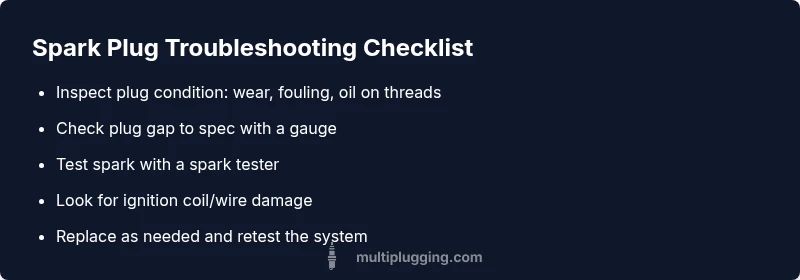
Before you touch the plug wells, use these safe, simple checks to narrow down the problem. Start with a visual inspection: is the plug fouled (oil or carbon), is the ceramic tip cracked, or is there oil on the threads? Check the plug gap with the correct gauge; if the gap is out of spec, misfiring can occur. If you have a spark tester, perform a live-spark check on a known-good cylinder to confirm continuous spark delivery under simulated operating conditions. Inspect the ignition wires or coil packs for cracks, green corrosion at connections, or signs of arcing when the engine is running. Finally, note when the knocking occurs: under load, at idle, or only after the engine warms up. If the knock disappears after a cold start, you may be dealing with timing or fuel issues rather than a physically damaged plug. These quick checks are designed to be completed in under an hour and often point you toward the right next step.
Common Causes That Trigger Knocking
Knocking can arise from several root causes. Detonation happens when the air‑fuel mix explodes in the cylinder rather than burning smoothly, often from incorrect timing, high boost, or too much fuel. Pre‑ignition occurs when a hotter-than-normal plug site ignites the mix ahead of the spark. Fuel quality and octane matter; low-octane fuel can cause detonation, especially on engines with advanced timing. Carbon build-up on the plugs or in the combustion chamber can insulate heat and alter heat range, promoting misfires. Mechanical issues like a worn piston ring, cracked valve, or a failing piston would be separate, but we mention these to illustrate the broader picture. MultiPlugging analysis shows ignition-related issues are a frequent contributor to knocking, reinforcing why plugs deserve careful inspection as part of any diagnostic flow.
How Fouling and Worn Plugs Create Misfires
Fouling—oil, fuel, or carbon deposits—can prevent the plug from firing consistently. Oil fouling is a specific red flag, often linked to worn piston rings, worn valve seals, or a leaking turbo seal, and it can corrode the plug electrode. Even without oil, worn electrodes or a degraded ceramic insulator reduce the spark’s strength, leading to intermittent misfires. Worn plugs also typically show longer-lived deposits and eroded gaps. When misfires occur in one or more cylinders, the engine compensates by altering timing and fuel delivery, which can feel and sound like knocking. A thorough plug inspection, gap check, and simple replacement often restore normal timing and combustion stability.
The Role of Ignition Timing and Fuel Quality
Ignition timing is a critical factor in whether a knock is heard. If the timing is too far advanced for the current load and fuel, detonation can occur, especially with aggressive cams or heavy acceleration. Poor fuel quality or low octane raises the likelihood of knocking, even with healthy plugs. Inconsistent fuel delivery from a faulty fuel injector or clogged fuel filter can also create lean or rich conditions that promote misfires and pinging noises. The combination of correct plug condition, proper timing, and high-quality fuel is essential for quiet, efficient combustion. MultiPlugging analysis shows that attention to these factors reduces knock incidents across many engines.
How to Inspect Spark Plugs Properly
A careful visual inspection is the first step. Remove the spark plug before inspection only if your vehicle’s service manual allows it; otherwise use a spark tester to assess spark quality in place. Look for fouling patterns: oil indicates a seal or ring issue; heavy carbon indicates rich fueling; a white, blistered ceramic can indicate pre-ignition history. Check the electrode gap with a calibrated feeler gauge—the gap should match the manufacturer’s spec. If the plug color is gray to light tan and the electrode is sharp and intact, the plug is likely healthy. If you see oil, heavy deposits, or eroded electrodes, replace the plug. Always reinstall with the correct torque to avoid seat-gasket leaks and cross-threading.
Safety Considerations and When to Seek Professional Help
Safety matters first. Work on a cold engine, wear eye protection, disconnect the battery when removing ignition components, and avoid touching hot exhaust parts. If you find oil on plugs, if you notice persistent misfires after replacement, or if you smell fuel that could indicate a leak, stop and consult a professional. Ignition systems interact with the fuel system and ECU; a buggy timing map or coil pack faults may require professional diagnostic tools and knowledge. If you’re unsure about the service steps or torque specs, it’s safer to seek help from a qualified tech. Early professional input can prevent engine damage and expensive repairs.
Maintenance to Prevent Future Knocks
Preventive maintenance is the best defense against knocking. Regularly inspect spark plugs for wear and deposits; replace according to mileage and engine type. Use the correct heat range and gap for your engine, and confirm the ignition timing is within spec after any service. Keep fuel quality high by using the recommended octane rating; avoid long-term use of poor-quality fuels. A simple habit of checking coil packs, wires, and connectors for corrosion can save you from intermittent misfires. The MultiPlugging team recommends establishing a routine: check, replace, test, and re-test, then drive and listen for changes in engine tone. Following this approach minimizes knock risk and protects engine longevity.
Steps
Estimated time: 60-90 minutes
- 1
Power down and cool the engine
Park on a flat surface, engage the parking brake, and disconnect the negative battery terminal after the engine has cooled to avoid shock or burns. This reduces risk when handling ignition components.
Tip: Use insulated tools and keep track of all wires. - 2
Locate and access spark plugs
Identify the correct cylinder and follow the service manual to locate the spark plug wells. On coil-on-plug designs, the coil pack sits directly on the plug; on distributor systems, you’ll remove the cap and traces to access wires.
Tip: Label each coil wire or take a photo before removal. - 3
Remove ignition components carefully
Carefully detach the coil or wire from the plug, avoiding damage to boots or connectors. Handle components with dry hands and keep the work area clean to prevent debris from entering the well.
Tip: Never yank on cables; twist to release first. - 4
Inspect the plug visually
Look for oil coating, heavy carbon buildup, or a cracked ceramic. Also inspect electrode wear and the gap; note whether deposits are even across all plugs.
Tip: Compare with a new plug of the same type for a baseline. - 5
Test and/or gap the plug
If replacing, gap the new plug to the manufacturer spec using a gap tool. If reusing, check that the existing plug’s gap matches spec and adjust if permitted.
Tip: Gapping must be precise to avoid misfires. - 6
Reinstall and torque to spec
Reinstall plugs with proper torque as per the engine’s manual. Reconnect ignition components in the same orientation they were removed to maintain correct firing order.
Tip: Avoid over-tightening, which can strip threads. - 7
Clear codes and run a test
Reconnect battery, start the engine, and allow it to reach normal operating temperature. Use a scan tool if available to verify no codes appear and monitor for a return of knocking under load.
Tip: Take a short test drive to test under load. - 8
Evaluate and decide on next steps
If knocking persists after plug replacement, consider timing checks, coil packs, and fuel system diagnostics; otherwise continue routine maintenance and monitor engine tone.
Tip: If unsure, seek professional diagnostic support.
Diagnosis: Engine knocking or pinging under load or after warm-up
Possible Causes
- highWorn or fouled spark plug with improper gap
- highIncorrect ignition timing or advanced timing
- mediumLow-octane fuel or poor fuel quality causing detonation
- lowVacuum leak or misfiring in other cylinder
Fixes
- easyCheck and replace worn or fouled plugs; reset or re-gap the new plugs to spec
- mediumTest ignition timing and adjust to manufacturer spec if needed (scan tool or pro timing test)
- mediumUse higher-octane fuel or fix fuel-system issues that cause detonation (filters, injectors)
- mediumInspect for vacuum leaks and diagnose other cylinder misfires with cylinder balance test
- mediumInspect coils/wires and replace failing components to restore consistent ignition
FAQ
Can a bad spark plug really cause engine knocking?
Yes. A worn, fouled, or misgapped spark plug can cause misfires that feel like knocking, especially under load or high RPM. Replacing the plug and rechecking timing often resolves the issue.
Yes. A bad plug can cause misfires that feel like knocking, especially under load; replacing the plug and checking timing helps.
What are the signs that my spark plugs are failing?
Difficulty starting, rough idle, frequent misfires, loss of power, and reduced fuel efficiency are common signs of spark plug issues.
You'll notice hard starting, rough idle, and reduced power when plugs are failing.
How do I test spark plugs without removing them?
A spark tester is the best option to verify spark in place. If you must inspect, remove one plug for quick visual check of color and deposits, then reinstall promptly.
A spark tester is ideal for testing in place. If you can, remove one plug just to inspect its color and deposits.
Is knocking always caused by spark plugs?
No. Knocking can stem from detonation, timing issues, fuel octane, carbon buildup, or other engine components. Plugs are a common culprit, but not the only one.
Knock has many possible causes, including detonation and timing, not just plugs.
When should I see a mechanic for knocking?
If knocking persists after plug checks, or you suspect timing or detonation, seek professional diagnosis promptly to prevent engine damage and avoid unsafe driving conditions.
If knocking keeps happening after checks, get a professional diagnostic.
Watch Video
Main Points
- Inspect plugs for wear and correct gap to prevent misfires.
- Replace fouled or worn plugs promptly to stop knocking.
- Verify ignition timing and fuel quality if symptoms persist.
- Use the correct spark plug type for your engine.
- Consult a mechanic if knocking continues after checks.