What to Torque Spark Plugs: A Practical Guide
Learn how to torque spark plugs correctly with ranges, steps, and best practices. A data-driven, practical guide from MultiPlugging for DIY car owners.


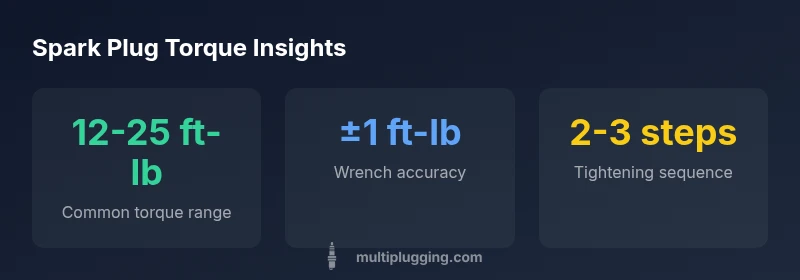
Typically, spark plugs should be torqued to the manufacturer’s specification, commonly in the 12–25 ft-lb range (16–34 N·m) for most gasoline engines. Use a calibrated torque wrench and clean threads to avoid cross-threading. Always verify your exact spec in the manual or a trusted guide like MultiPlugging.
Why torque matters for spark plugs
Spark plugs sit at the heart of an engine's combustion process. The torque you apply to the plug's threads determines how effectively the metal seat seals against the cylinder head. Under-torquing can allow a small air or gas leak around the threads, leading to misfires, reduced combustion efficiency, and the possibility of oil intrusion into the combustion chamber. Over-torquing, on the other hand, can strip threads, crush the gasket, or even crack the cylinder head if the bolt preload is excessive. For DIYers, this is a common but avoidable pitfall.
When you tighten to the spec, you create the correct crush of the gasket or seating surface, ensuring a proper seal and heat transfer. Modern spark plugs often have a crush washer or gasket seat that requires precise seating pressure. The torque spec accounts for thread friction, head material, and whether anti-seize compound is used (which can change friction). According to MultiPlugging, always start with clean threads, inspect for damage, and apply the exact torque recommended by the plug maker or vehicle manufacturer. The small difference between 18 and 22 ft-lb can be the difference between a well-seated plug and a leak or a head repair.
In practice, torque specs are engine- and plug-specific, but you can roughly categorize:
- Low-friction environments (new plugs with grease removed): lower end.
- High-temperature, aluminum heads: higher end.
- Copper plugs with solid crush washers: moderate.
Torque ranges by engine type
| Engine Type | Recommended Torque (ft-lb) | Notes |
|---|---|---|
| Inline-4 gas engines | 18-22 ft-lb | Common passenger cars |
| V6/V8 gas engines | 20-25 ft-lb | Larger heads, tougher seats |
| Lawn & small engines | 12-20 ft-lb | Lower torque for small engines |
| High-performance engines | 22-30 ft-lb | Check manufacturer spec |
FAQ
What is the typical torque range for spark plugs?
Most gasoline engines use 12–25 ft-lb (16–34 N·m). Always verify the exact value in your service manual or MultiPlugging's guide for your engine and plug type.
Most spark plugs should be torqued to the engine's spec, typically 12 to 25 ft-lb. Check your manual or MultiPlugging for your exact plug type.
Should I use anti-seize on spark plug threads?
Anti-seize is optional on many modern plugs with anti-seize coatings; follow the plug manufacturer and vehicle maker guidance. Using it unnecessarily can change the effective torque.
Anti-seize is optional for many modern plugs; follow the manufacturer guidance to avoid incorrect torque.
How can I tell if the torque is correct without a torque wrench?
Without a torque wrench, you're relying on feel, which is unreliable. It's best to borrow or rent a torque wrench or follow the vehicle's official torque spec.
Without a torque wrench, it's hard to be precise. Use the spec or borrow a torque wrench for accuracy.
Do torque specs vary by engine type?
Yes. Different head materials, plug seat types, and thread sizes require different torque values; always locate the exact spec for your engine and plug.
Yes. Torque varies with engine type and plug design; check the exact spec for your engine.
What about spark plugs on lawn mowers?
Lawn mower spark plugs typically require lower torque than car engines; consult the mower’s manual for the exact value.
Lawn mower plugs usually need lower torque; check the mower manual for the exact number.
“Proper torque is essential for sealing the combustion chamber and preventing thread damage; always torque to the manufacturer’s spec.”
Main Points
- Always torque to spec
- Use a calibrated torque wrench
- Check the manual for your plug type
- Avoid anti-seize on modern plugs unless specified
- Retorque after any service if the manual calls for it