What Is Spark Plug Torque Specs? A Practical Guide for DIYers
Discover what spark plug torque specs mean, how to locate the exact values for your engine, and how to tighten plugs safely with a calibrated torque wrench.


Why Torque Specs Matter
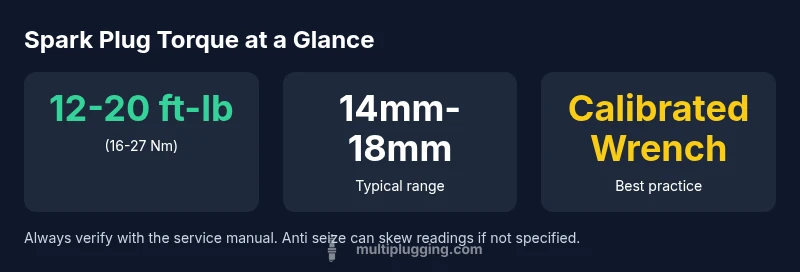
Understanding what is spark plug torque specs means for engine health and long-term reliability. For many DIYers, misfitting or over-tightening plugs is the most common cause of thread damage, coolant leaks, or misfires. In practical terms, correct torque ensures the gasket seals properly and the electrode maintains heat transfer. The phrase what is spark plug torque specs should be interpreted as the factory tightening value that prevents leaks and damage while enabling efficient combustion. Deviating from the spec can leave you with stubborn threads, cross-threading, or stripped seats. Always use a calibrated torque wrench and follow the exact value from the service manual for your make and model.
How to Find the Right Spark Plug Torque Spec
The right torque spec is engine dependent. Start with the owner’s manual or service manual for the exact figure. Many manufacturers publish Nm and ft-lb equivalents, sometimes with notes about gasket type or anti seize. If you cannot locate the spec, consult reputable sources or the vehicle manufacturer website. When you shop for a torque value, remember to convert units correctly and to account for the thread diameter and the presence of a gasket seat. Some engines use a thread sealant or anti seize, which can shift the effective torque. Always log the spec and confirm the value before installation to avoid damage.
Tools and Prep for Correct Torque
Before you begin, ensure your workspace is clean and your tools are calibrated. Assemble a torque wrench that covers the expected range, a spark plug socket, and a torque-angle adapter if required by your vehicle. Inspect the plug threads and cylinder head for debris and corrosion. Lightly clean the threads with a brush; never force or chase damaged threads. Apply only the minimal recommended lubrication if the manufacturer instructs, and avoid multiple lubricants. Finally, verify the torque range on your wrench and test it on a spare bolt to confirm accuracy before touching the plugs themselves.
Step-by-Step: Tightening Spark Plugs Safely
- Prepare the engine: ensure the engine is cool and, if needed, disconnect the battery. 2) Clean the area around the plug to prevent debris ingress. 3) Check the gap on the new plug; if necessary adjust to the recommended value. 4) Thread the plug by hand to avoid cross-threading, and then snug with the torque wrench to the specified value. 5) If your manual calls for torque-angle tightening, set the angle and monitor until the click or angle is reached. 6) Recheck after installation and clear away any tools. 7) Reconnect the battery and start the engine to confirm proper operation. Follow anti seize guidance only if specified, as it can affect readings.
Common Mistakes and How to Avoid Them
Common mistakes include using anti seize when not required, assuming all plugs share the same torque, or attempting to tighten a plug while the thread is damaged. Another frequent error is relying on feel or "snug" instead of a true torque spec. Over-tightening threads can strip the cylinder head and ruin the plug seat, while under-tightening can lead to poor heat transfer and misfires. Never reuse damaged gaskets or re-install a plug in a thread showing cross-thread damage. Pre-lubricate only if the manual requires it, as improper lubrication can skew torque readings. Finally, always verify the torque with a calibrated tool and recheck after installation.