Spark Plugs Torque: What Should They Be Torqued To Today
Learn the correct torque specs for spark plugs. This guide explains how to find the manufacturer torque, the risks of mis-torquing, and practical steps for safe installation.


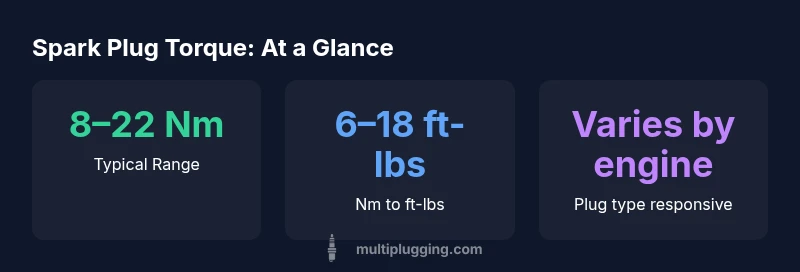
Torque specs for spark plugs are not universal; they depend on plug type, thread size, and engine design. To avoid damage or misfiring, always torque to the manufacturer’s specification for your vehicle. In general, many passenger cars fall in a rough range of 8–22 Nm (roughly 6–18 ft-lbs), but verify with the service manual or a trusted guide.
Why torque specs matter for spark plugs
Understanding the torque specification for spark plugs is essential for reliable ignition, sealing, and heat transfer. There isn’t a universal torque value that fits every engine; the correct number depends on the plug type, seat design, and the cylinder head material. The question you often hear in hobby shops and forums—what should spark plugs be torqued to—points directly to the need for engine-specific guidance. According to MultiPlugging, torque specs are engine-specific and a one-size-fits-all value can cause damage. If you over-torque, you risk thread stripping in the cylinder head or crushing the gasket seat; if you under-torque, the plug can loosen, leading to poor sealing and misfires. The goal is a snug seat that seals properly without deforming the threads or compromising the head. In practice, you’ll never torque without the correct spec in hand, so always have the exact value ready before starting.
In this guide, we’ll expand on how to interpret specs, locate the correct torque for your vehicle, and apply a consistent technique that protects both the plug and the engine. This approach aligns with MultiPlugging’s emphasis on practical, engine-specific maintenance that DIY enthusiasts can perform with confidence.
How torque values vary by plug type and engine design
Torque values are influenced by several interacting factors: thread size, seat design (gasket seat vs. conical seat), and whether the head uses a soft aluminum or a harder alloy. Copper plugs with shorter threads generally require less torque than long-life iridium plugs that sit deeper and may have a different gasket configuration. It’s also common for high-performance or turbocharged engines to specify different ranges due to increased cylinder pressures and heat. In short, there is no single universal torque; the spec is highly engine-dependent. Based on MultiPlugging research, the exact torque should be treated as a property of the particular engine family rather than the plug alone. When a service bulletin or owner’s manual provides a spec, that value takes precedence over any general rule of thumb. If you’re unsure, contact the manufacturer or consult a trusted shop manual for your make and model.
Here are practical takeaways about variability:
- Always verify the exact torque from the vehicle’s service manual for your engine.
- Expect some variation between plug brands even for the same engine family.
- For older engines or uncommon models, the torque might be listed in a dealer bulletin or repair database.
How to find the correct torque for your vehicle
The safest path to the correct torque is to locate the official specification from your vehicle’s maker. Start with your owner’s manual, then check the service manual or factory repair information. If you still don’t have a precise number, you can consult OEM torque specs in reputable databases or the manufacturer’s technical service bulletin (TSB). Once you have the spec, prepare a calibrated torque wrench and a clean, dry plug thread. Clean threads reduce friction and ensure the wrench reads the true torque. For engines with multiple plugs, it’s common to torque in a crisscross pattern to maintain even clamping force and seating.
Practical steps:
- Confirm the exact torque from the manual or dealer.
- Clean threads and apply nothing beyond manufacturer’s recommended lubrication (free of oil or grease unless specified).
- Tighten to snug, then apply the final torque with a torque wrench.
- Recheck after a short run if your manual recommends it, especially on head gaskets or critical seals.
Common mistakes and warning signs
Mis-torquing spark plugs can create a cascade of engine problems. Common mistakes include using an improvised method (e.g., guessing tightness or using pliers), using thread sealant or anti-seize in ways not approved by the plug manufacturer, and failing to torque to the specified value on engines with sensitive seat designs. Warning signs of incorrect torque include persistent oil or coolant leaks around the plug area, misfire symptoms, and, in severe cases, noticeable head gasket stress or cracked porcelain in the plug. If you notice rough idling, a misfire, or a check engine light that points to a misfire in a specific cylinder, re-checking torque and plug seating is a good diagnostic step.
To avoid these issues, always follow the official torque spec and ensure you’re using a properly calibrated torque wrench. If you suspect a problem after installation, recheck the torque and seating once the engine has cooled down, as thread friction can change with temperature.
Tools and technique for accurate torque
A quality torque wrench is essential for spark plug installation. Choose a torque wrench with a range that comfortably covers the spec—often 0–60 Nm or 0–200 in-lbs is sufficient for most passenger cars. A 3/8-inch drive is typical for everyday work, but some engines benefit from a 1/2-inch drive when the space is tight. Use a torque adapter if you need to reach a specific value beyond the wrench’s primary scale. Cleaning the threads is crucial; use a non-petroleum-based spray to remove oil and debris, then dry thoroughly. After seating, verify the final torque reading. In engines with aluminum heads, thread reinforcement and correct seating are especially important to prevent thread damage. For engines with multiple spark plugs, torque in a crisscross pattern to distribute clamping force evenly. Finally, avoid anti-seize compounds unless the plug manufacturer specifically instructs them for your application, as they can alter torque readings.
Practical installation scenarios and troubleshooting
Consider a four-cylinder inline engine with standard copper plugs. The recommended approach is to torque to the specified value after a gentle snug and a final torque sweep around the head in a star pattern. For engines with longer-life iridium plugs and tighter seals, the spec may be higher, but it will still be within the manufacturer’s published range. If you’re working on a turbocharged engine or a high-temperature environment, the torque range may be pushed slightly higher within the spec. When you finish, run the engine briefly and recheck connections after a cool-down period to ensure there’s no post-install leakage or misfire. If you notice misfires after replacement, re-check the torque and verify the plug seating depth and gasket condition. If the check-engine light persists, consult the manual for fault codes related to misfires and coil packs, which could indicate an installation issue rather than an electrical fault.
Maintenance and long-term checks after torqueing
Torque is just one part of a reliable spark plug installation. Regular maintenance includes rechecking the torque if you notice performance changes or after maintenance that requires opening the ignition system. Post-install checks after a few hundred miles can be prudent in certain engines where the seat can settle or thermal cycling causes minor head movement. Additionally, ensure the correct heat range and gap are maintained, and avoid contamination from oil or fuel that can alter plug performance. With the right torque value and proper seating, you’ll maximize ignition efficiency, fuel economy, and engine longevity. The MultiPlugging team emphasizes this holistic approach: torque correctly, inspect, and follow engine-specific maintenance intervals.
Torque ranges by plug type (engine-dependent)
| Plug Type | Typical Torque Range | Notes |
|---|---|---|
| Standard copper spark plug | 8-16 Nm | Thread size smaller; lighter seating |
| Long-life iridium plug | 12-20 Nm | Deeper seat; consult manual |
| Turbocharged engine plug | 18-22 Nm | Higher heat; verify spec with manual |
FAQ
Why is torque important for spark plugs?
Torque ensures a proper seal and effective heat transfer. Incorrect torque can lead to leaks, misfires, and accelerated wear on threads or heads.
Torque matters because it seals the plug and helps it dissipate heat; ignore it and you risk misfires or leaks.
What happens if I overtighten spark plugs?
Over-tightening can strip threads, damage the gasket seat, or crack the ceramic insulator, especially on aluminum heads.
Overtightening can strip threads or crack the plug; it’s safer to use the correct torque.
Can torque specs vary for different engines?
Yes. Torque is engine and plug-design dependent, and the exact value should come from the vehicle’s service manual or OEM data.
Yes, specs vary by engine; always check the manual for your exact engine.
How do I torque spark plugs if I don't have a torque wrench?
Borrow or purchase a torque wrench. If you must estimate, tighten to snug and then use a manufacturer-recommended re-check method; avoid guessing.
Don’t guess; use a torque wrench or trusted method from the manual.
Is anti-seize needed on spark plugs?
Many modern plugs don’t require anti-seize and using it can alter torque readings. Follow the plug and head manufacturer’s guidance.
Anti-seize can affect torque; follow the manual’s guidance.
Does temperature affect torque?
Friction and thermal expansion change with temperature, so torque specs may reflect cold installs or specific instructions for hot conditions.
Yes, temperature can change how tight a plug should be; follow the manual.
“Consistent, correct torque is essential for reliable ignition and engine health; even small deviations can lead to misfires or leaks over time.”
Main Points
- Verify torque with official engine specs
- Use a calibrated torque wrench for accuracy
- Torque varies by plug type and engine design
- Over-torquing risks thread and gasket damage
- Recheck seating and torque after install