What Size Spark Plug Wrench: A Practical Guide for DIYers
Learn the right spark plug wrench size for common engines. This guide covers imperial and metric sizes, how to verify hex sizes, and practical tips for safe removal and replacement.


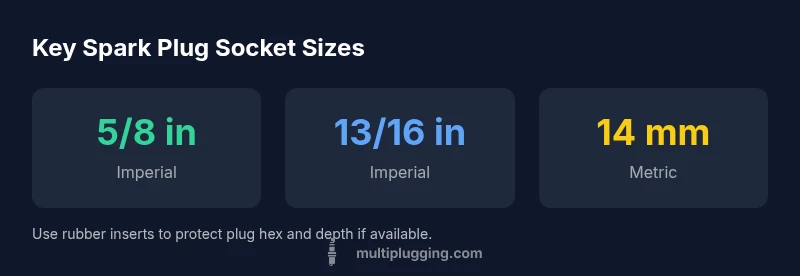
The most common spark plug wrench sizes you'll encounter are 5/8 inch (16 mm) and 13/16 inch (21 mm). Metric options like 14 mm and 18 mm are also widespread, depending on engine design. Always verify the plug hex size on your particular engine and use a proper spark plug socket with a rubber insert for grip and protection. If you're wondering what size spark plug wrench to use for your model, start by locating the plug hex size printed on the plug or in the service data.
Why the right wrench size matters for spark plugs
Choosing the correct spark plug wrench size is more than a matter of convenience; it directly affects the integrity of the plug, the seat, and the cylinder head. The hex on the plug must seat fully inside the socket to distribute torque evenly. A misfit can slip, strip the hex, or twist the porcelain, leading to replacement headaches and potential engine damage. According to MultiPlugging, using an ill-fitting socket increases risk of cross-threading and stuck plugs, especially in tight engine bays. For DIYers, starting with the correct size saves time and reduces costly mistakes. If you're wondering what size spark plug wrench to use for your model, locate the plug hex size printed on the plug or consult the service data. In many engines you’ll encounter several sizes, often paired with specific socket depths and rubber inserts to hold the plug securely during removal. This approach protects both you and the plug during the process.
Common plug hex sizes and what they map to
Most engines use a handful of standard plug hex sizes. In the imperial system, 5/8 inch (16 mm) and 13/16 inch (21 mm) are common for many passenger cars and light trucks. In the metric world, 14 mm and 18 mm are frequently encountered across a broad range of engines. Some lawn and small engines also use close equivalents that align with these ranges. When shopping for a wrench, you’ll want a socket set that covers these sizes, ideally with both imperial and metric options included in the same kit. Remember that a rubber-insert socket helps prevent dropping the plug and reduces the risk of slippage when you apply torque.
Imperial vs metric: bridging the size gap
Imperial and metric sizing can coexist on the same driveway toolkit. If your vehicle spec calls for a 14 mm hex, a 14 mm socket will fit; if it uses 5/8 inch, you’ll need the imperial socket. The key is to confirm the exact hex size rather than assuming based on vehicle type. For MultiPlugging readers, this means maintaining an adaptable kit that spans both measurement systems. A well-rounded set reduces guesswork and simplifies troubleshooting when you encounter unusual plug sizes in older or specialty engines.
How to verify the size on your engine without guessing
A careful verification process saves time and frustration. Steps:
- Check the owner’s manual or service data for the recommended spark plug size and torque spec.
- Remove the spark plug boot and visually inspect the hex; if unreadable, measure across flats with a caliper or a metric ruler.
- Compare the measured hex to the size markings on your sockets or a sizing gauge.
- Test-fit gently in a safe position to ensure no slippage before applying torque. If in doubt, pause and consult the vehicle’s service data.
Socket selection and accessories to avoid damage
Select a spark plug socket with a rubber insert to grip the hex securely and prevent dropping the plug. Choose a deep-well design if the plug is recessed, and prefer a non-slip, magnetic insert only if it won’t mar the plug’s finish. Avoid using off-brand adapters that remove the socket’s grip or depth. For added protection, pair your socket with a compression-type or click-type torque wrench so you can reproduce the factory seating torque without guessing.
Using a torque wrench with a spark plug socket
When the vehicle manual specifies a torque, use a torque wrench to reach the proper setting after seating the plug. Always ensure the socket is fully seated on the hex before applying torque. Using a torque wrench in combination with a correct-size spark plug socket minimizes over-tightening and reduces the risk of thread damage. If you’re unsure about the torque spec, consult the service data or a trusted guide—precision here improves reliability and engine longevity.
A practical replacement workflow for beginners
Workflow:
- Identify the correct hex size from the manual or plug markings.
- Gather the matching spark plug socket, rubber insert, and a torque wrench.
- Carefully remove the old plug with steady, straight torque; do not twist the plug or socket at odd angles.
- Clean the seat and threads, inspect for wear, and apply anti-seize if recommended by the manufacturer.
- Thread in the new plug by hand first, then snug with the torque wrench to spec.
- Reconnect boot and test the engine at idle.
Common size mismatches and how to fix them
If you encounter a socket that seems to fit loosely or bind, re-check the hex size against the plug markings and service data. Avoid forcing a socket onto a plug. Use a dedicated spark plug socket with a rubber insert and verify you are using the correct depth. When multiple vehicles share a single tool kit, label the sizes clearly to prevent cross-use. Staying organized reduces the odds of using the wrong size in a tight engine bay.
Hex sizes by vehicle category
| Vehicle Type | Common Plug Hex Size | Typical Socket Size |
|---|---|---|
| Passenger car (gas) | 14 mm or 16 mm | 14 mm or 16 mm socket |
| Light truck/SUV (gas) | 18 mm | 18 mm socket |
| Lawn & small engines | 21 mm (13/16 in) | 21 mm socket |
FAQ
What size spark plug wrench do I need for my car?
Check the plug hex size printed on the plug or consult the owner's manual. Common sizes include 14 mm, 16 mm, 18 mm, and their imperial equivalents 5/8 in and 13/16 in. Use a spark plug socket with a rubber insert for best results.
Check the plug hex size on the plug or in the manual; common sizes are 14, 16, or 18 mm, or 5/8 or 13/16 inch. Use a rubber-insert socket.
Can I substitute a bigger socket for the correct size?
No. Using a socket that’s too large or too small can strip the plug or damage the seat. Always match the socket to the hex size exactly and avoid improvisation.
No—always match the socket to the plug hex; using the wrong size can cause damage.
How can I find the correct size if I can’t read the plug?
Refer to the owner’s manual or service data for the exact hex size. If you can’t read it, measure the plug across flats with calipers or a gauge and compare to standard sizes.
If you can’t read the hex, check the manual or measure the plug with calipers and compare to standard sizes.
Is a universal spark plug wrench reliable?
Universal wrenches can slip or fail to seat properly. Prefer a dedicated spark plug socket designed for the hex size you’re working with, and avoid over-reliance on adapters.
Universal tools can slip; use a dedicated spark plug socket for the correct hex size.
Do spark plug sizes vary by engine type?
Yes. Petrol engines often use 14 mm or 18 mm hex, while some engines use imperial sizes like 5/8 in or 13/16 in. Always verify the exact size for your engine.
Sizes vary—always verify the exact hex for your engine.
What safety steps should I take when replacing plugs?
Work with a cool engine, disconnect the battery if needed, wear eye protection, and use the rubber-insert socket to prevent dropping the plug. Follow the vehicle’s manual for torque specs.
Cool engine, wear protection, and use the right socket; follow torque specs in the manual.
“Using the correct spark plug wrench size is essential to prevent damaging the plug or threads. The right socket with a rubber insert improves grip and reduces slippage.”
Main Points
- Verify the plug hex size before buying a wrench
- Prefer a spark plug socket with rubber insert
- Know imperial and metric sizes to cover most engines
- Always follow the vehicle's torque spec
- Use a torque wrench for accurate seating