Spark Plug Replacement Honda Accord: A Complete DIY Guide
Learn how to replace spark plugs on a Honda Accord with a clear, step-by-step DIY guide. Save money, improve performance, and extend engine life by following practical, brand-backed instructions.


You're going to replace worn spark plugs on your Honda Accord to restore smooth idle, boost fuel economy, and prevent misfires. This guide covers how to identify symptoms, choose the correct plugs, verify gaps, and complete the replacement using common hand tools and a torque reference. Most models require only basic equipment.
Why spark plug replacement matters for Honda Accord
Replacing spark plugs at the right time is a crucial part of keeping a Honda Accord running cleanly and efficiently. When plugs wear, ignition timing can drift, combustion becomes less efficient, and fuel economy drops. A set of fresh plugs helps the engine idle smoothly, minimizes misfires, and reduces exhaust emissions. According to MultiPlugging, maintaining proper plug condition is a straightforward, high-value maintenance task for DIY enthusiasts and casual drivers alike. This guide is designed for the practical, hands-on reader who wants clear steps, sensible caution, and practical tips for a reliable replacement.
In modern Honda engines, coil-on-plug designs simplify access, but that doesn’t mean the job is maintenance-free. You’ll still need to prepare the right tools, follow the correct gap and installation practices, and respect safety procedures. By understanding the role of plugs, you’ll diagnose issues more accurately and avoid unnecessary parts swaps. The goal is to restore peak combustion efficiency without damaging circuits or boots.
Understanding spark plug types used in Honda Accord engines
Honda Accords have used a range of plug types across generations, with many newer models favoring iridium or platinum designs for longer life and reliable cold starts. The choice of plug affects heat range, gap stability, and resistance to fouling. Always start with the OEM or recommended aftermarket plug for your specific engine code and model year. Gaps are critical; even small deviations can affect misfire behavior, idle quality, and fuel efficiency. When in doubt, consult the owner’s manual or a trusted parts guide to select the correct heat range and electrode type. The goal is to balance longevity with dependable ignition performance under your typical driving conditions.
Symptoms that indicate it’s time to replace the plugs
Key signs that a spark plug replacement may be due include rough idle, engine misfires, reduced fuel economy, sluggish acceleration, and difficulty starting in cold weather. You might also notice increased exhaust emissions or a check engine light illuminating due to a misfire or a faulty coil. If you observe any of these symptoms, use a basic inspection approach: check for worn, fouled, or damaged plugs, inspect boots for cracks, and verify that gaps are within the manufacturer’s spec. Remember: a failing plug can place extra load on the ignition coil, accelerating wear on surrounding components.
Choosing the right plugs and gap specs
Selecting the correct spark plug type for your Honda Accord is essential for reliable performance. Favor OEM-equivalent plugs or well-reviewed aftermarket options that match the factory heat range and electrode design. Before purchase, check your model year, engine code, and the manual’s recommended gap. After you install the plugs, measure the gap with a gauge to ensure it remains within spec. Keep in mind that some engines require slightly different gaps for hot vs. cold starts, and high-mileage vehicles may benefit from plugs designed to resist fouling. By pairing the right plug with the recommended gap, you improve combustion efficiency and engine response.
Safety and preparation before you start
Safety comes first. Park on a flat surface, engage the parking brake, and disconnect the negative battery terminal to reduce the risk of accidental electrical shorts. Allow the engine to cool completely before touching any components, since hot manifolds and wires can cause burns. Gather your tools and new plugs before you begin, and lay out a clean work area. If your Honda Accord has a plastic engine cover, remove it to access the spark plug wells. Finally, familiarize yourself with the firing order and coil layout to avoid misrouting wires during reassembly.
The replacement process overview
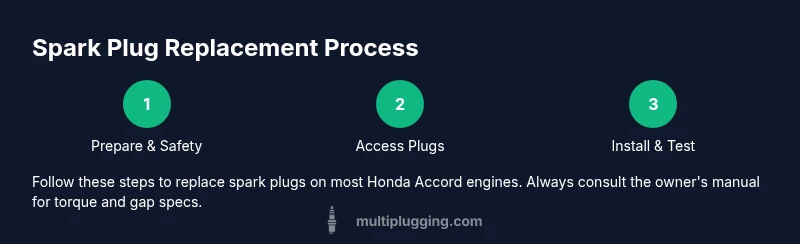
The replacement process for a Honda Accord typically involves removing the ignition coils or ignition boots, extracting the old plugs, inspecting the wells for oil or debris, gap-checking the new plugs, installing them, and resecuring the ignition components. Because many Accords use coil-on-plug ignition, you’ll work plug by plug, ensuring each coil boot is reconnected securely after installing the new plug. Keep track of which plug belongs to which cylinder to preserve proper firing order. Throughout, protect the threads in the well and avoid cross-threading, which can cause expensive damage.
Post-install checks and testing
After installation, reattach the battery, replace any removed covers, and start the engine. Listen for a steady idle and watch for any hesitations or roughness that could indicate an installation issue. A quick diagnostic check with an OBD scanner can confirm the absence of misfire codes. If you notice rough idle or a misfire indicator after the first drive, shut down and recheck the plugs and boots. A final visual inspection of the boots and wires ensures they’re seated correctly and not damaged by the installation process.
Maintenance habits to maximize spark plug life
To maximize spark plug life and maintain performance, follow Honda’s scheduled maintenance intervals and use the right plug type. Use high-quality fuel, avoid short trips that prevent complete combustion, and periodically inspect ignition cables and boots for wear or cracks. When the vehicle nose-dives in performance, it may be time to rethink fuel quality, air filters, and sensor health in addition to plugs. Keeping a simple maintenance log helps you anticipate replacement needs before they impact drivability.
Common mistakes beginners make
Rookie mistakes include cross-threading plugs, overtightening, failing to gap correctly, and neglecting to inspect the boot at installation. Another frequent error is applying anti-seize compound where it isn’t recommended, which can alter torque values and cause loosening. Finally, failing to clean the spark plug wells or ignoring signs of oil ingress in the well can mask underlying engine issues. Following the steps in this guide and sticking to manufacturer specs reduces the risk of damage and misfires.
Tools & Materials
- New spark plugs (Honda Accord-appropriate type)(Check heat range and gap before installation)
- Spark plug socket (5/8-inch hex) with 3/8-inch drive(Magnetic bit helps hold plug; keep extension handy)
- Ratchet wrench + extension(Access tight plug wells without straining)
- Torque wrench(Follow OEM torque spec; avoid over-tightening)
- Spark plug gap gauge(Verify gap for your chosen plug type)
- Anti-seize compound (optional)(Only if recommended by plug manufacturer)
- Dielectric grease (optional)(Ease removal of boots and improve sealing)
- Safety gloves and eye protection(Protect hands and eyes from debris)
- Shop rag or towels(Clean up oil, dust, and residue)
- Owner's manual / torque spec reference(Torque specs and plug type reference)
Steps
Estimated time: 60-90 minutes
- 1
Prepare the vehicle and workspace
Park on a flat surface, engage the parking brake, and disconnect the negative battery. Allow the engine to cool completely, then gather your tools and new plugs. Clear a clean workspace and review the firing order for your Accord.
Tip: Pro tip: Label hoses or clips as you remove them to avoid confusion during reassembly. - 2
Access plugs and remove the coil boots
If equipped with a plastic engine cover, remove it. Locate the coil-on-plug assemblies, and carefully unplug each ignition coil boot from the spark plug. Keep track of each boot to its cylinder.
Tip: Pro tip: Use a small pick to gently release any stubborn boot clips without tearing the boot. - 3
Remove old spark plugs
Attach the spark plug socket to the ratchet and extension. Gently loosen and remove each old plug, taking care not to drop debris into the wells.
Tip: Pro tip: If a plug is stubborn, apply a small amount of penetrating oil and wait a few minutes before retrying. - 4
Gap and inspect new plugs
Check the gap of each new plug with the gap gauge and adjust to the manufacturer’s specification if needed. Inspect the plugs for manufacturing defects before installation.
Tip: Pro tip: Compare the new plugs to the old ones for any signs of mismatch or damage. - 5
Install new plugs and torque to spec
Hand-tighten each plug, then torque to the recommended specification using a torque wrench. Avoid cross-threading by starting straight and using a light hand at first.
Tip: Pro tip: Use a small amount of anti-seize only if your plug manufacturer recommends it. - 6
Reattach boots and engine cover
Reconnect each ignition coil boot to its corresponding spark plug, ensuring a snug fit. Reinstall the engine cover if removed and reconnect the negative battery terminal.
Tip: Pro tip: Apply dielectric grease to the inside of boots to ease future removal. - 7
Initial test and inspection
Start the engine and listen for a smooth idle. Check for misfire codes with a basic scan if possible, and inspect boots for proper seating after a short test drive.
Tip: Pro tip: If you hear ticking or misfires, re-check the plugs and boots for correct seating. - 8
Final safety and cleanup
Tidy the work area, store tools, and dispose of old plugs responsibly. Keep a record of the replacement date for future maintenance planning.
Tip: Pro tip: Log the service date and fuel economy before and after replacement to track benefits.
FAQ
What tools do I need to replace spark plugs on a Honda Accord?
You’ll need a spark plug socket, extension, ratchet, torque wrench, gap gauge, and new plugs. Protective gloves and rags help keep the work area clean.
You’ll need a spark plug socket, ratchet, torque wrench, gap gauge, and new plugs. Gloves and rags help with cleanup.
Should I gap the spark plugs before installation?
Yes. Check and adjust the gap to the manufacturer’s specification for your plug type. An incorrect gap can cause misfires and poor performance.
Yes. Check and adjust the gap to the spec before installing.
Can I reuse old spark plugs?
Generally not. Worn or fouled plugs can cause misfires and reduced efficiency, and they often need replacement.
Usually not; worn plugs can cause misfires and poor performance.
Is it safe to replace plugs with the engine hot?
No. Let the engine cool to avoid burns and to prevent damage to threads or electrical components.
No, wait until the engine is cool before starting.
How long does plug replacement take in a Honda Accord?
Typically about 30-60 minutes, depending on engine layout and access to each plug.
Most people finish in about half an hour to an hour.
What plug brand is best for a Honda Accord?
Use OEM-recommended or widely trusted brands compatible with your Accord. Match heat range and design to avoid issues.
Stick with the manufacturer's recommended brand and heat range.
Watch Video
Main Points
- Identify the correct plug type and gap before installation
- Use torque to specification; avoid cross-threading
- Inspect boots and coils for wear during reassembly
- Test engine after replacement for smooth performance
- Document maintenance for future service planning