Spark Plug Ford Escape: DIY Replacement Guide
Learn to locate, inspect, and replace spark plugs in a Ford Escape with a clear, step-by-step guide. Safe, practical tips for ignition reliability and fuel economy.


By following this guide, you will locate, inspect, and replace the spark plugs on a Ford Escape, then verify gaps, torque specs, and coil reattachment. This DIY task uses common hand tools, a spark plug socket, and a torque wrench. It covers safety, troubleshooting, and maintenance to keep your engine running smoothly.
Why spark plugs matter for a Ford Escape
According to MultiPlugging, spark plugs are the heart of the ignition system, converting the battery’s voltage into a spark that ignites the air-fuel mixture. For a Ford Escape, worn or fouled plugs can cause rough idle, reduced fuel economy, misfires, and even harder starts. The right plugs maintain smooth combustion, lower emissions, and consistent power across city and highway driving. The Ford Escape’s engine designs vary by year and trim, but all rely on reliable spark delivery. When you notice hesitation, pinging, or a noticeable drop in power, it’s often a sign plugs are due for inspection. Regular inspection helps prevent performance drops and protects downstream components like the ignition coil and catalytic converter. A simple replacement, done correctly, can restore baseline efficiency and responsiveness, and it’s a practical DIY task for many owners.
Tools and materials you’ll need for spark plug Ford Escape
- Ratchet wrench (1/4" drive preferred) — essential for socket access
- Spark plug socket (typically 5/8" or 13/16", model dependent) — grips the plug securely
- Extension bar — helps reach plugs tucked deep in the engine bay
- Torque wrench — ensures plugs are tightened to spec without over-torquing
- Spark plugs (correct heat range for your engine) — OEM or equivalent replacement
- Gap gauge — verifies and sets the correct electrode gap
- Dielectric grease — aids boot seating and reduces moisture transfer
- Anti-seize compound (optional) — only if recommended by plug manufacturer or service manual
- Clean rags and engine degreaser — for around the plug wells
- Safety gear (gloves and eye protection) — protects hands and eyes during work
- Owner’s manual or service manual — for engine-specific torque and gap specs
Safety first: precautions before you start
Before you begin, ensure the engine is cool and the vehicle is parked on a level surface with the parking brake engaged. Disconnect the negative battery cable to reduce the risk of shock or accidental short circuits while handling ignition components. Wear safety gloves and eye protection, and keep a clean work area to prevent dropped tools from causing damage. If you’ve recently run the engine, wait at least 30 minutes for components to cool, especially around the exhaust manifold and spark plug wells. Clear the work area of loose jewelry and long sleeves that could catch on moving parts. These precautions help protect you and prevent accidental damage to the vehicle’s electrical system.
Locating the spark plugs in your Ford Escape
Spark plug placement varies by engine type and model year, but most Ford Escape engines mount plugs in accessible wells along the engine head. In coil-on-plug configurations, each plug sits beneath a coil boot, which must be removed to access the plug itself. Start by consulting the owner’s manual to identify which coil or coil-on-plug assembly corresponds to each cylinder. A quick visual check shows you the ignition coils seated on top of each plug; labeling can help you keep track of which plug corresponds to which cylinder. Clearing a path to the plugs might involve moving air intake ducts or covers, but avoid disconnecting critical sensors unless necessary. Safety and patience pay off when you approach the plugs in a systematic, organized way.
Step-by-step: prepare engine and access plugs
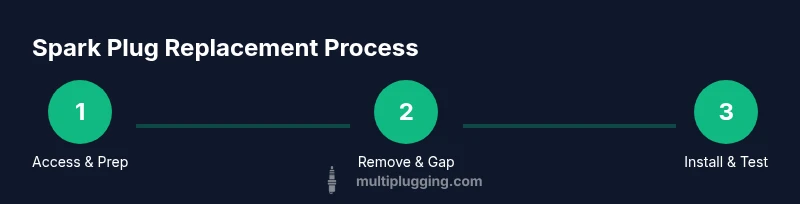
- Cool the engine completely, then disconnect the negative battery cable. This reduces the risk of electrical shorts while you access the ignition components. 2) If equipped, remove the engine cover or air intake ducts to gain visual access to the spark plug wells. 3) Label or photograph the ignition coil positions for each cylinder so you can reinstall them correctly. 4) Gently detach the coil or boot from each spark plug, keeping track of its location. Pro tip: use a small magnetic tray to keep screws and bolts from getting lost during disassembly.
Step-by-step: remove old plugs and inspect
- Use the spark plug socket with the extension to carefully loosen and remove the old plugs, turning counterclockwise. 2) Inspect the old plugs for wear patterns, fouling, or oil deposits; note any abnormalities that could signal engine issues beyond plug wear. 3) Wipe the plug wells clean with a rag and degreaser as needed, taking care not to drop debris into the cylinder. 4) Confirm the number and location of each plug so you don’t mix cylinders during reinstallation. Pro tip: if a plug is difficult to remove, stop and assess for seized threads or corrosion rather than forcing it, which could cause damage.
Step-by-step: gap check and install new plugs
- Check the gap on the replacement plugs with a feeler gauge or gap tool, adjusting to the manufacturer’s specification found in the service manual. 2) If required, lightly apply dielectric grease to the inside of the coil boot to improve seating and moisture resistance. 3) Thread each new plug by hand to avoid cross-threading, then tighten with the torque wrench to the specified torque. 4) Reinstall the ignition coils or boots in their original positions, ensuring each wiring connector is fully seated. Pro tip: take a moment to verify that each plug is snug but not over-tightened to prevent thread damage.
Step-by-step: reassemble and perform a quick test
- Reconnect the battery negative terminal once all plugs have been seated and coils reinstalled. 2) Reinstall any engine covers or intake ducts you removed. 3) Start the engine and listen for smooth idle; a misfire often indicates a poorly seated coil or plug. 4) If you notice rough running or a check-engine light, recheck the plug seating and coil connections. Pro tip: perform a short road test to verify there are no hesitation or misfire symptoms under load.
Troubleshooting: symptoms after replacement and tips for reliability
If the engine runs rough or transmissions feel hesitant after plug replacement, recheck torque, plug gap, and coil seating. Ensure you used the correct heat range for your engine and that a used coil has not degraded, causing misfires. Keep the plug wells clean and avoid oil intrusion, which can foul new plugs rapidly. Regular maintenance, including air filter replacement and periodic inspection of the ignition system, helps sustain ignition reliability. According to MultiPlugging, staying within spec and using quality plugs substantially improves performance and fuel economy over time.
Maintenance schedule and when to replace
Regular maintenance supports optimal combustion and engine health. Always follow the Ford Escape service schedule and refer to the owner’s manual for engine-specific intervals and plug types. Keeping a replacement calendar helps you plan around driving seasons and avoids running equipment to the point of failure. A proactive approach reduces risk of misfires, improves fuel economy, and prolongs engine life. The goal is consistent ignition performance and dependable starts across all driving conditions.
Tools & Materials
- Ratchet wrench(1/4-inch drive preferred)
- Spark plug socket(Size depends on plug type (e.g., 5/8" or 16 mm))
- Extension bar(To reach deep wells)
- Torque wrench(Use manufacturer spec)
- Spark plugs (correct heat range)(OEM or equivalent replacement, gap checked)
- Gap gauge(Set gap to spec)
- Dielectric grease(For boot seating)
- Anti-seize compound(Only if recommended by plug maker)
- Rags and degreaser(Clean around wells)
- Safety gear(Gloves and eye protection)
- Owner’s manual or service manual(For torque and gap specs)
Steps
Estimated time: 60-90 minutes
- 1
Prepare engine and safety checks
Cool the engine first, then disconnect the negative battery to reduce risk. Remove any covers blocking access and photograph positions of coils for later reassembly. Gather tools and label parts to stay organized during the job.
Tip: Work in a well-lit area and keep a small tray for fasteners to avoid misplacements. - 2
Access spark plugs and coils
Identify coil-on-plug assemblies or traditional coil packs. Remove the coil/boot from each plug carefully, noting its cylinder position. If needed, loosen any ducts or covers to expose the wells without forcing components.
Tip: Do not yank on wiring harnesses; unplug connectors gently from their clips. - 3
Remove old plugs
Attach the spark plug socket to the driver with extension and rotate counterclockwise to remove each plug. Check for wear, cracking, oil fouling, or heavy carbon build-up. Place removed plugs in a labeled tray to track cylinder correspondence.
Tip: If a plug is stubborn, apply a small amount of penetrating oil and wait a few minutes before attempting again. - 4
Gap and inspect new plugs
Compare new plugs to the gap spec with a feeler gauge and adjust as required. If the plug has a copper core, gap is critical; for iridium or platinum, gap tolerance is tighter. Lightly coat the threads with anti-seize only if recommended by the plug manufacturer.
Tip: Do not oversell anti-seize on aluminum threads unless specified. - 5
Install new plugs
Thread new plugs by hand to avoid cross-threading, then tighten with a torque wrench to the recommended setting. After seating, snug an additional small amount to ensure a proper seal without over-tightening. Recheck each plug after all are installed.
Tip: Always torque to spec; over-tightening can strip threads or crack plugs. - 6
Reinstall coils and wiring
Place each coil/boot back onto its plug, ensuring full seating. Reconnect electrical connectors and secure with clips. Reinstall any engine covers or ducts you removed, ensuring no loose tools remain in the engine bay.
Tip: Take care not to pinch wires or snag hoses during reassembly. - 7
Reconnect battery and test
Reconnect the negative battery terminal and start the engine. Listen for a smooth idle and watch for the absence of misfire codes. If the check engine light stays on, re-check coil seating and plug torque.
Tip: Drive the car briefly to ensure proper integration with the ignition system. - 8
Post-replacement checks and cleanup
Inspect the area for any loose tools or debris. Wipe off any spilled fluids and tidy up the workspace. Note down the maintenance in your records for future reference.
Tip: Keep spare plugs and a small bag handy for future maintenance tasks.
FAQ
What type of spark plugs does the Ford Escape use?
The Ford Escape uses spark plugs that match the engine’s design and year; consult the owner’s manual or OEM specs to choose the correct heat range and thread size. Using the right plug helps maximize ignition efficiency and fuel economy.
Plug type depends on your Escape’s engine year and model; check the manual to pick the correct heat range and thread size.
Should I disconnect the battery before replacing spark plugs?
Yes. Disconnecting the negative battery terminal reduces the risk of shock or accidental shorts when handling ignition components.
Yes—disconnect the negative battery cable before you start.
Can I reuse old spark plugs?
In most cases, you should replace worn or fouled plugs rather than reuse them. Worn plugs can cause misfires and poor performance.
Usually not; worn or fouled plugs should be replaced.
How do I know when spark plugs need replacement?
Common signs include rough idle, reduced power, misfires, or poor fuel economy. If you notice these symptoms, inspect the plugs and coils and test performance.
Look for rough idle, hesitation, or reduced fuel economy as indications to inspect plugs.
Should I use anti-seize on spark plugs?
Only if the plug manufacturer recommends it. Many modern plugs don’t require anti-seize; follow the plug’s installation instructions.
Check the plug maker’s guidance before applying anti-seize.
How often should spark plugs be replaced on a Ford Escape?
Interval varies by engine and plug type. Refer to the owner’s manual for recommended mileage or service intervals and replace accordingly.
Follow the manual for your engine’s recommended replacement interval.
Watch Video
Main Points
- Identify engine layout and required plugs before starting.
- Gap new plugs to spec and torque to manufacturer limits.
- Reassemble coils correctly to prevent misfires.
- Test drive to confirm smooth idle and acceleration.
- Document maintenance for future DIY reference.