Mazda 3 Spark Plug Change: Step-by-Step DIY Guide
Learn how to perform a Mazda 3 spark plug change with confidence. This DIY guide covers tools, safe steps, and engine-specific tips for 2.0L and 2.5L models.


By following this mazda 3 spark plug change guide, you will safely replace the plugs with the correct heat range and torque specs. This step-by-step method covers both the 2.0L and 2.5L engines, shows how to gap, torque, and route wires, and explains when professional help is advisable.
Why Mazda 3 spark plug change matters
A Mazda 3 spark plug change is a routine maintenance task that helps sustain engine efficiency, smooth idling, and fuel economy. Worn or fouled plugs can cause misfires, reduced power, and higher emissions. The MultiPlugging team emphasizes that regular plug maintenance not only preserves performance but also helps prevent more costly repairs down the line. For the Mazda 3, both the 2.0L SKYACTIV-G and the 2.5L engines share the same goal: ensure a reliable ignition event across all cylinders. If you notice rough idling, hesitation under load, or a drop in fuel economy, a spark plug inspection is a good first diagnostic step. This article explains how to approach a mazda 3 spark plug change with care and precision, using non-technical language that remains accurate for DIY enthusiasts.
Engine variants and plug compatibility
Mazda’s 2.0L and 2.5L engines use a similar ignition approach, but plug type and heat range recommendations can differ by model year. Always check your owner’s manual or service bulletin for the exact part number and gap specification. Even within the same family, a plug that is too hot or too cold can affect combustion, leading to decreased performance or misfires. If you’re unsure, start with the exact replacement specified by Mazda or your trusted parts retailer. The goal is to maintain reliable ignition across all cylinders without introducing cross-threading or improper seating.
Preparing your workspace and safety
Work in a well-ventilated, well-lit area with the engine cool. Gather tools and replacement plugs before you begin to minimize time spent with the hood open. Disconnect the negative battery terminal if you will be handling wiring or coil packs extensively. Wear eye protection and gloves to keep hands clean and reduce the chance of scalds from nearby components. Finally, ensure the vehicle is on a level surface and use wheel chocks if you’re working on an incline.
Tools and materials you’ll need
Before you start, assemble the essential tools and replacement parts. A spark plug socket with a magnetic insert, a ratchet, an extension, and a torque wrench are central to this task. Have a gap tool or feeler gauge to verify the correct gap on the new plugs, even if they arrive pre-gapped. Keep dielectric grease for coil boots, and consider anti-seize on the plug threads only if the manufacturer recommends it. Use OEM or equivalent genuine plugs that match the engine’s requirements. Organize your materials on a tray to avoid dropping components into the engine bay.
Step-by-step overview of the replacement process
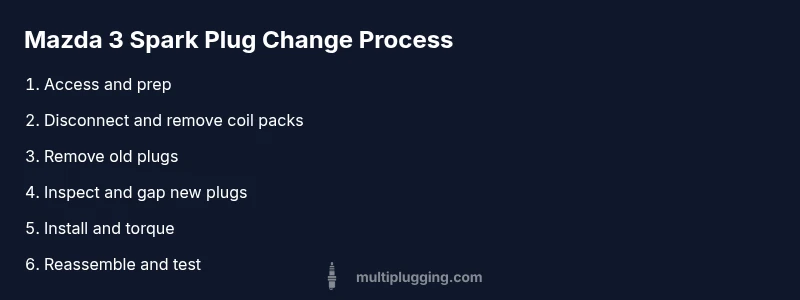
The mazda 3 spark plug change is a straightforward sequence if you stay organized. Start by removing any coverings or shielding to access the plug wells. Then, carefully disconnect ignition coil connectors, remove the coils (or coil-on-plug assemblies), and extract the worn plugs using a spark plug socket. Inspect the wells for debris and clean as needed. Gap and install the new plugs to the specified torque, reconnect the coils, and reassemble any removed components. Finally, start the engine and listen for a smooth idle and steady running. A methodical approach reduces the risk of cross-threading and ensures a seal that won’t leak.
Gap and torque considerations without guessing
Every Mazda 3 engine variant has a precise gap and torquing requirement. Rather than guessing, consult the owner's manual or a trusted service source to confirm the exact values. If your plugs arrive pre-gapped, verify that there is no damage to the electrode or thread. Use a torque wrench to tighten plugs to spec, and avoid over-torquing which can strip threads in aluminum cylinder heads. If you don’t have a torque wrench that covers the required range, you can borrow one or have the dealer perform the job at a reasonable service cost.
Removing old plugs safely and inspecting wear
Worn plugs may show deposits, electrode erosion, or a rounded center electrode. When removing, apply steady pressure and avoid wrenching or twisting the plug body, which can damage the threads in the cylinder head. Inspect each plug for coloration and deposits; uniform tan-brown deposits generally indicate healthy combustion, while heavy soot, oil, or fuel deposits suggest issues beyond the plug itself. If you see signs of fouling or misfire, consider also inspecting the ignition coils and associated wiring for damage or short circuits.
Installing new plugs and securing the seal
When installing new plugs, use a light coating of anti-seize on threads only if Mazda approves it for your model year; otherwise, skip to prevent over-torque when later removing. Thread plugs in by hand to avoid cross-threading, then snug with a torque wrench to Mazda’s specification. Attach the plug boot and coil-on-plug assembly securely, ensuring the connector clicks and is locked in place. Recheck all connections and ensure there are no tools left inside the engine bay.
Reconnecting coil packs and wires and performing a test
Reinstall the ignition coils or coil packs, reconnect all electrical connectors, and replace any engine covers or shields you removed. Reconnect the negative battery cable if you had disconnected it. Start the engine and listen for a smooth idle with no recurring misfires. If the check engine light comes on, scan for trouble codes and re-check plug seating and coil connections. A short test drive helps confirm the repair’s success.
Common mistakes and troubleshooting tips
Common mistakes include cross-threading plugs, over-tightening, neglecting to gap plugs, and forgetting to reconnect spark plug boots fully. Wipe away any residue or oil from around the plug wells to avoid contamination. If the engine runs rough after replacement, double-check each plug’s seating and the integrity of the wiring. Keep a clean workspace and label any components you removed to simplify reassembly. Remember, if you feel uncertain at any point, seek professional assistance rather than risking an incomplete repair.
Maintenance after replacement and next steps
After a successful mazda 3 spark plug change, replace any protective covers and clean up the work area. Reset any service reminder lights if applicable and note the replacement date so you know when to plan the next inspection. Maintain a regular maintenance schedule that includes air filter checks, ignition system inspection, and fuel system cleanliness. A tidy, well-documented maintenance log helps you stay on top of the car’s health and can aid future DIY efforts.
Tools & Materials
- Spark plug socket with magnetic insert(3/8 inch drive commonly used; ensure magnet is strong and keeps plugs secure.)
- Ratchet wrench(Prefer a 3/8" drive for compatibility with sockets and extensions.)
- Extension bar(Helpful for reaching plugs in deeper wells or tight spaces.)
- Torque wrench(Use to Mazda’s specified torque; this ensures proper seating and head protection.)
- Gap tool or feeler gauge(Check the new plugs if they arrive unprepped or require minor adjustment.)
- Replacement spark plugs(Use OEM or equivalent plugs with the correct heat range for your model year.)
- Dielectric grease(Optional for coil boots to improve electrical contact and sealing.)
- Anti-seize compound(Apply only if Mazda recommends for your model year; incorrect use can affect torque.)
- Gloves and eye protection(Safety first; keeps hands clean and protects eyes from debris.)
Steps
Estimated time: 60-90 minutes
- 1
Prepare and access plugs
Open the hood, disconnect the negative battery if you’ll handle wiring extensively, and locate the spark plug wells. Some Mazda 3 models require removing a plastic cover. This step ensures you won’t accidentally short a circuit or drop tools into the engine bay.
Tip: Keep a labeled container ready for removed parts so you don’t mix them up during reassembly. - 2
Disconnect ignition wiring
Carefully disconnect the electrical connector from each ignition coil. Remember which connector goes to which coil if you remove multiple parts. Label or take photos if helpful.
Tip: Use a small pick or tool to gently release the clip without bending the connector. - 3
Remove coil packs
Lift out the coil packs or the coil-on-plug assemblies to expose the spark plugs. Gently set them aside on a non-conductive surface to avoid damage. Handle with care to prevent cracking.
Tip: Keep track of which coil came from which cylinder to ensure correct reassembly. - 4
Remove old plugs
Attach the spark plug socket to the extension and ratchet, and carefully loosen each plug. If a plug is stubborn, use a light rocking motion rather than forcing straight up.
Tip: Avoid wrenching the plug body to prevent thread damage in the cylinder head. - 5
Inspect plugs and wells
Check each plug for deposits, wear, or oil fouling. Inspect the plug wells for debris or oil leakage. Clean the wells if needed to prevent contaminants entering the combustion chamber.
Tip: If you see oil on the plug threads, you may have a valve cover gasket issue to address later. - 6
Gap and install new plugs
Check each new plug’s gap if required. Apply a light anti-seize on threads if manufacturer approves; otherwise, skip. Thread plugs by hand first, then tighten with a torque wrench to spec.
Tip: Hand-threading helps prevent cross-threading and makes torque more accurate. - 7
Reconnect coils and wiring
Reinstall each coil pack and reconnect its electrical connector. Ensure each connection clicks and seats firmly. Reconnect any covers or shields you removed.
Tip: Firmly seat the connectors to avoid intermittent misfires. - 8
Test and verify
Reconnect the battery if removed, start the engine, and listen for a stable, smooth idle. A quick test drive helps reveal any misfire or rough-running symptoms.
Tip: If the check-engine light comes on, recheck the ignition wiring and plug seating.
FAQ
Do Mazda 3 spark plugs require removing the engine cover?
Some Mazda 3 models have a removable cover; others expose plugs directly. Check your model year and any service notes before starting.
Some Mazda 3s need removing a cover to access the plugs; others expose the wells directly.
Can I change spark plugs myself at home?
Yes, with the right tools and care. Follow the manufacturer’s torque and gap specs and take safety precautions.
Yes, you can change spark plugs at home if you have the right tools and follow the specs.
How often should Mazda 3 spark plugs be changed?
Replacement intervals depend on model year and driving conditions. Refer to the owner’s manual for the recommended service interval.
Check the owner’s manual for the recommended service interval for your model year.
What are signs of worn plugs in a Mazda 3?
Look for misfires, rough idle, reduced power, and worse fuel economy. Also watch for the check engine light or hesitation under load.
Misfire, rough idle, and reduced power are common signs of worn plugs.
Do I need to gap the plugs for a Mazda 3?
Many plugs come pre-gapped; always verify against the manual. If adjustment is needed, use a proper gap tool and avoid bending the electrode.
Most plugs are pre-gapped; confirm with the manual and gap only if necessary.
What if a plug won’t torque to spec?
If you can’t reach the proper torque, back off and re-clean the threads, use anti-seize only if recommended, and consider professional service.
If you can’t reach the required torque, stop and seek professional help.
Are OEM plugs mandatory for a Mazda 3?
Using OEM or equivalent recommended plugs helps ensure proper heat range and performance. Avoiding aftermarket mismatches reduces risk of misfires.
OEM or equivalent plugs are usually the best bet for reliability.
Watch Video
Main Points
- Verify engine specs before replacing plugs.
- Inspect wear and deposits to catch parallel issues.
- Torque plugs to spec and test drive afterward.
- Label connections to simplify reassembly.