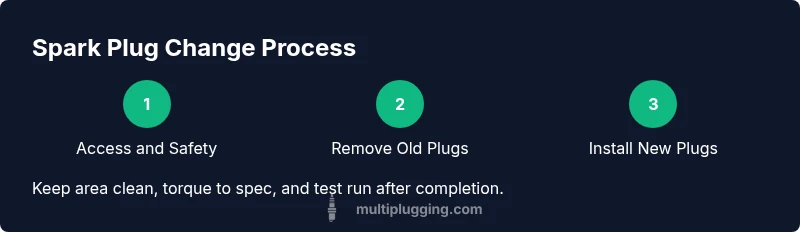
Honda Civic Spark Plug Change: A Practical DIY Guide
A comprehensive, step-by-step DIY guide to replacing spark plugs on a Honda Civic, with tips on choosing plugs, torque, gaps, and maintenance to keep your engine running smoothly in 2026.


Goal: perform a Honda Civic spark plug change to restore smooth idling and fuel economy. You’ll need basic hand tools, the correct spark plugs for your Civic variant, and a torque wrench. This step-by-step guide shows you how to remove old plugs, gap or inspect new ones, install with proper torque, and test the engine.
What You'll Achieve with a Honda Civic Spark Plug Change
A properly executed spark plug change restores reliable ignition, improves cold starts, smooths idle, and can elevate overall fuel efficiency. For most Honda Civics, worn or fouled plugs can cause misfires, rough running, or reduced throttle response. By replacing plugs with the correct type and setting the proper gap, you help the ignition system perform as designed and protect the catalytic converter from unburned fuel. This process also gives you a chance to inspect ignition coils, boots, and surrounding ports for wear. According to MultiPlugging, a disciplined approach to a Honda Civic spark plug change reduces misfires and preserves fuel efficiency, especially on engines with coil-on-plug designs. The aim is a clean burn, consistent compression, and a smoother running engine that starts reliably in all seasons.
Spark Plug Types and Compatibility for Honda Civics
Honda Civics span multiple generations with different ignition layouts and plug types. Most modern Civics use iridium or platinum plugs designed for long life, while older models may use copper plugs that require shorter service intervals. The exact part number, heat range, and pre-gap specifications vary by engine code and model year. Before buying replacements, verify your Civic’s engine code and refer to the owner’s manual or Honda’s official parts catalog to confirm the correct type and gap. If you own a performance variant, you may encounter higher heat-range plugs or specialized designs. Always match the plug to the engine and climate conditions you drive in. MultiPlugging recommends checking the Civic-specific spec sheet and not mixing plug types within a single engine.
Safety, Preparation, and Workspace Setup
Begin by parking on a level surface and allowing the engine to cool. Remove any insulating covers or engine shrouds as needed to access the spark plugs. Disconnect the negative battery terminal to prevent any electrical shorts while you work. Keep a tidy workspace and organize each spark plug wire or coil boot in the order you remove them to avoid misassembly. Wear eye protection and gloves; spark plugs and boots can be sharp and hot if the engine has been running recently.
Tools and Parts You'll Need
You’ll work with typical hand tools: a ratchet, an appropriate socket (spark plug socket with a rubber insert), a torque wrench, and an extension. You’ll also need the correct replacement spark plugs for your Civic model, a gap gauge if the plugs aren’t pre-gapped, dielectric grease for boots, and rags to wipe residue. Having a magnetic tray or labeled cups helps keep fasteners organized. Optional items include anti-seize compound (only if recommended by the plug manufacturer) and a small mirror to view hard-to-see areas.
Process Overview: What Happens During a Spark Plug Change
The change involves removing the old plug from the cylinder head, inspecting the spark plug boot and coil for wear, prepping the new plug by ensuring the proper gap, threading it by hand to avoid cross-threading, and tightening to the specified torque. After installation, reinstall the ignition boot or coil, reconnect wiring, and as a final check, reconnect the battery and start the engine to listen for smooth running. The main goals are to achieve a secure seal in the cylinder head, maintain correct spark gap, and avoid introducing debris into the combustion chamber. Always follow the factory torque specification to prevent damaging the threads.
Common Challenges and How to Avoid Them
Cross-threading the plug is a common mistake that can strip the cylinder head. To prevent this, always start the plug by hand and keep it straight as you tighten. Over-tightening can damage the seat or the plug; under-tightening can cause leakage and misfires. Coils or boots can become brittle over time, so handle them gently and replace any cracked seals. Dirt or oil on the threads can affect torque accuracy, so clean the area before installation. If a plug is difficult to remove, apply gentle, steady pressure rather than forcing it, and consider soaking stubborn plugs with a penetrating oil after cooling down.
Aftercare: Rechecking Gap, Torque, and Seals
Once all plugs are installed, verify that each has reached the correct torque specification with a torque wrench. Reconnect the battery and start the engine to confirm smooth operation and to listen for any misfires. If you notice rough idle, check for spark gap variations, faulty boots, or wiring harness issues. Wipe away any oil or fuel residue from the spark plug area and ensure that the boots seat firmly. Finally, observe exhaust emission color and fuel economy over the next several trips to confirm a successful change.
Long-Term Maintenance Tips for a Healthy Ignition System
Maintain a regular replacement schedule based on your Civic’s engine type and mileage. Using the correct plug type and ensuring a clean, dry environment around the ignition area helps maintain performance. Periodically inspect ignition coils and boots for wear and replace as needed. Keep a basic set of replacement parts on hand for routine maintenance and consider replacing spark plug wires if your Civic uses a coil-on-plug design. Staying proactive saves time and money by avoiding unexpected misfires.
DIY vs Professional Service: When It Makes Sense
If you own a newer Civic with complex engine configurations or limited space around the ignition system, a professional service may be worth considering for peace of mind. For many DIYers, a spark plug change is a straightforward job with the right tools and instructions. If you cannot access the area easily, or you are unsure about torque specifications, consult the service manual or contact a trusted shop. In all cases, using high-quality plugs and following the manufacturer’s torque specs is essential.
Troubleshooting Quick Checks if Misfire Occurs
If you finish the spark plug change and notice a misfire, recheck the plug torque and gap, inspect the boots for cracks, and verify the ignition coil connections. A misfire could also originate from related parts such as the fuel injectors, vacuum leaks, or ignition coils. Take note of the specific cylinder indicated by codes or symptoms, and run a basic diagnostic to isolate the issue. If misfires persist after replacement, re-evaluate the plug type compatibility and consider professional diagnostics.
Tools & Materials
- spark plugs (correct type for your Civic engine)(Ensure plugs match engine code and climate; avoid mixing types)
- spark plug socket with rubber insert(Keeps plug from dropping into the cylinder head )
- ratchet wrench with extension(Used to reach plugs in tight spaces)
- torque wrench(To tighten plugs to the manufacturer specification)
- gap gauge or feeler gauge(Only if plugs aren’t pre-gapped; verify final gap as per spec)
- dielectric grease(Lubricates boots for easier removal next time)
- anti-seize compound(Only apply if specified by plug manufacturer)
- rag or shop towels(Keep the area clean and wipe away residue)
- gloves(Protect hands from heat and sharp edges)
Steps
Estimated time: 45-60 minutes
- 1
Disconnect the battery
Power down the car and disconnect the negative battery terminal to prevent sparks or shorts. This is a safety precaution that protects you while handling ignition components.
Tip: Label or photograph cables to ensure correct reconnection. - 2
Access the spark plugs
Remove any engine covers or shrouds that block access to the spark plugs. Center the area so you can reach the plugs without forcing parts.
Tip: Work in a clean, well-lit area to spot debris easily. - 3
Disconnect ignition coils or boots
Carefully detach the coil-on-plug boot or ignition coil from each plug. Note the order in which you remove them to avoid misassembly later.
Tip: If a boot sticks, twist gently rather than pulling hard. - 4
Remove old plugs
Use the spark plug socket to loosen and remove each plug. Lift straight up to prevent kerfing threads in the head.
Tip: Do not force plugs; if they resist, double-check alignment and try again gently. - 5
Check and gap new plugs
Inspect the new plugs for any shipping damage. If gap adjustment is needed, use a gap gauge to set the correct distance as per the manufacturer.
Tip: If you’re unsure about the gap, install as-received and verify with a gauge during installation. - 6
Install new plugs by hand
Thread each new plug by hand to avoid cross-threading, then tighten with a torque wrench to the manufacturer’s spec. Refrain from using power tools to seat plugs fully.
Tip: Hand starting prevents cross-threading and costly repairs. - 7
Reconnect boots/coils and battery
Reinstall the ignition boots or coils, ensuring a snug, click-tight fit. Reconnect the battery terminal and secure wiring away from hot components.
Tip: Apply dielectric grease to boot interiors if recommended. - 8
Test and confirm
Start the engine and listen for a smooth idle. Check for any abnormal noises or misfires, and address promptly if observed.
Tip: Take a short test drive to ensure consistent performance.
FAQ
Do I need to remove the engine cover before changing the spark plugs?
Not all Civics require engine cover removal. If there is a cover, remove it to access the plugs. Otherwise, you can proceed directly to the spark plugs. Always ensure the engine is cool before starting.
Some Civics have engine covers that need removal; otherwise, you can proceed directly to the spark plugs when the engine is cool.
Can I reuse old spark plugs after inspection?
Reusing old plugs is generally not recommended if they show wear, fouling, or damaged electrodes. Inspect each plug for wear and replace with new ones that meet factory specs.
If a plug shows wear or fouling, replace it with a new one that matches the factory specs.
What torque should I use for Honda Civic spark plugs?
Always torque to the manufacturer’s specification for your Civic’s engine. This prevents head damage and ensures a proper seal. Check the service manual or a trusted guide for the exact value.
Torque to the manufacturer’s specification to protect the threads and ensure a proper seal.
What are signs of a misfire after plug replacement?
If the engine runs rough, has reduced power, or the check engine light comes on, re-check plug installation, gap, and boots. A misfire can stem from improper gap, loose boots, or faulty ignition components.
Rough idle or loss of power after replacement can indicate a misfire; recheck installation and gap.
Is anti-seize needed on spark plug threads?
Anti-seize is only required if the plug manufacturer specifies it. Modern plugs and engines often do not require it and can be damaged if used unnecessarily.
Only use anti-seize if the plug maker says so; many modern setups don’t need it.
How long does a Civic spark plug change typically take?
For a complete set, plan about 45-60 minutes for a DIYer with basic tools. Time varies with access and whether engine covers must be removed.
About 45 to 60 minutes for a full set with basic tools.
Watch Video
Main Points
- Identify the correct plug type from manuals and stick to it.
- Gap plugs only if required; otherwise install as-received.
- Torque to spec to protect threads and seating.
- Organize wires to prevent misassembly and misfires.
- Test-drive to verify smooth operation after installation.