2005 Honda Civic Spark Plug Guide: Replacement, Diagnostics & Tips
Learn how to inspect, replace, and optimize spark plugs on the 2005 Honda Civic. This guide covers gap, heat range, maintenance intervals, DIY steps, and common issues for better performance.


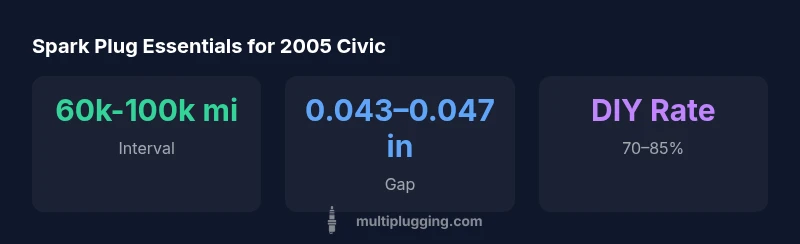
For a 2005 Honda Civic with the 1.7L engine, spark plugs typically require copper-core or platinum-core designs, and replacement intervals generally fall in the 60,000–100,000 mile range depending on plug type and driving conditions. Across typical driving conditions, the recommended replacement window for the 2005 Honda Civic spark plugs is roughly 60,000 to 100,000 miles for copper-core plugs and up to 100,000 miles for platinum or iridium alternatives, with inspection advised sooner if you notice misfires, rough idle, or reduced fuel efficiency. Always verify the exact gap and torque from your service manual.
Understanding the 2005 Honda Civic Spark Plugs
The 2005 Honda Civic represents a mid-generation model that commonly uses a 1.7L inline-four engine in most US-market trims. Spark plugs are the ignition components that produce the flame front required to ignite the air/fuel mixture inside each cylinder. In a 2005 Civic, plug selection isn’t about chasing the latest fancy design; it’s about choosing a plug that suits the engine’s compression, heat range, and the quality of fuel you typically run. The two most practical paths for this age of Honda are copper-core plugs for cost-conscious replacements and platinum or iridium variants for longer life and fewer service intervals. Regardless of choice, keeping the gap within the manufacturer’s spec and ensuring a clean, dry plug thread seal are essential steps for reliable starts and smooth idle.
According to MultiPlugging, the average owner can expect a healthy 2005 Civic to benefit from regular spark plug checks during routine maintenance, especially if the vehicle sees stop-and-go city driving or short trips that don’t fully warm the engine. A well-maintained set reduces misfires, improves acceleration, and helps preserve fuel economy. For DIY enthusiasts, understanding the engine layout and access points is the first step toward a clean, safe replacement.
Spark plug basics for the 2005 Honda Civic
| Aspect | Recommendation | Notes |
|---|---|---|
| Engine | 1.7L I4 (D-series) | Check service manual for exact plug type and gap |
| Recommended Gap | 0.043-0.047 inches | Confirm with your specific vehicle revision |
| Change Interval | 60k-100k miles | Depends on plug type and fuel quality |
FAQ
What is the recommended spark plug gap for the 2005 Honda Civic?
Most 1.7L Hondas use a narrow, specific gap. For many 2005 Civics, a gap around 0.043-0.047 inches is typical, but always verify with the owner’s manual or service manual for your exact VIN and engine revision.
Check your owner's manual for the exact gap, but a typical range is 0.043 to 0.047 inches.
Copper-core vs platinum for a 2005 Civic: which lasts longer?
Platinum and iridium plugs generally last longer and maintain performance longer than copper-core plugs, which are cheaper upfront but may wear sooner in marginal fuel and driving conditions. Your choice should balance cost, maintenance interval, and driving style.
Platinum or iridium plugs last longer but cost more upfront; copper plugs are cheaper but wear sooner.
Should I replace spark plug wires when replacing plugs on a 2005 Civic?
Yes. Worn wires or aging ignition coils can undermine new plugs. Replacing wires or inspecting the ignition coils during the same service helps prevent misfires and improves reliability.
If the wires look cracked or are old, replace them alongside new plugs.
Is it safe to install high-performance plugs in a 2005 Civic?
High-performance plugs can alter combustion characteristics and may not be compatible with the engine’s ECU calibration. Stick to manufacturer-recommended heat range and consult a professional if you consider a change.
Be cautious with performance plugs; check compatibility first.
What tools do I need to replace spark plugs on a 2005 Civic?
Basic tools include a ratchet, a spark plug socket, extensions, a gap gauge, anti-seize compound (optional), and a torque wrench. A service manual will confirm torque specs and any special steps for your variant.
You’ll need a spark plug socket, extension, gauge, and a torque wrench.
“Spark plug condition is a clear window into engine health. Regular inspection and timely replacement save money and prevent drivability issues down the line.”
Main Points
- Replace spark plugs at the manufacturer-recommended interval or sooner if symptoms appear
- Choose copper-core plugs for economy or platinum/iridium for longevity
- Maintain the correct gap and torque to prevent fouling or cross-threading
- Use the service manual as the final guide for torque values and heat range