Which Spark Plug Is Cylinder 7? A DIY Guide to Cylinder Mapping
Learn how to identify which spark plug corresponds to cylinder 7 in your engine. This guide covers cylinder numbering, layout differences, mapping methods, and practical steps for safe identification and replacement from MultiPlugging.


Which spark plug is cylinder 7 depends on your engine design—there is no universal plug for cylinder 7 across all engines. To identify the correct plug, locate your engine's cylinder map in the service manual or on an under-hood diagram, then trace the firing order and spark plug wires or coil packs to cylinder 7. Verify with the diagram.
Understanding cylinder numbering and why it matters
The question “which spark plug is cylinder 7” is inherently engine-specific. Cylinder numbering schemes are not universal across all makes and models. In many engines, cylinder numbers follow a defined firing order that maps to specific spark plugs, coil packs, or individual ignition coils. For DIY enthusiasts, understanding this mapping helps prevent misidentification, which can lead to incorrect replacement, poor combustion, and potential thread damage. The MultiPlugging team emphasizes that always starting with your engine’s official cylinder map or service diagram reduces risk and ensures accurate maintenance.
How engine layout affects cylinder 7 identification
Engine layout dictates where cylinder 7 sits and how its spark plug is accessed. Inline engines typically have a single row of cylinders, whereas V- and W-layout engines split cylinders into banks. In V-series engines, numbers often run along one bank in a specific sequence and switch banks for the opposite side. This means cylinder 7 on one model may be on the front bank, while on another it is on the rear bank. Always cross-check with the manufacturer diagram, since a misread can lead to removing the wrong plug or damaging neighboring components.
Inline vs V engines: where is cylinder 7?
For inline engines, cylinder 7 does not exist in most four- and six-cylinder configurations, while some six-cylinder designs still place the seven position outside the single row. In V6s and V8s, cylinder7 generally belongs to the second bank or the rear row, depending on the numbering convention. The safest approach is to locate the cylinder map for your exact engine family (make, model, year) and then confirm with the firing order diagram. This prevents you from mistaking cylinder 7 for an adjacent plug.
Step-by-step identification method for your engine
- Locate the service manual or under-hood diagram that shows cylinder numbering and firing order. 2) Verify whether your engine uses a coil-on-plug or conventional spark plug wires. 3) Identify the bank and row (front/rear) based on the diagram. 4) Follow the firing order from the diagram to map each plug to its cylinder, locating cylinder 7 exactly. 5) Physically trace the plug wire or coil lead from the diagnostic point to the plug to confirm. 6) If your engine uses colored boots or numbered coils, use them as a cross-check. 7) Before removal, label or photograph the surrounding components to avoid confusion during reassembly.
What to check on the plug once you identify cylinder 7
After confirming cylinder 7, inspect the plug for electrode wear, fouling, or deposits. Look for signs of misfire such as a sooty or oily plug, clogged electrode gaps, or heavy carbon buildup. Compare the plug type and gap with the manufacturer’s specification. If you’re reusing a plug, ensure the gap is set correctly before reinstalling, and verify the thread engagement to avoid cross-threading. Always replace gaskets or boots that show wear to prevent leaks.
Practical replacement tips to avoid cross-threading and misalignment
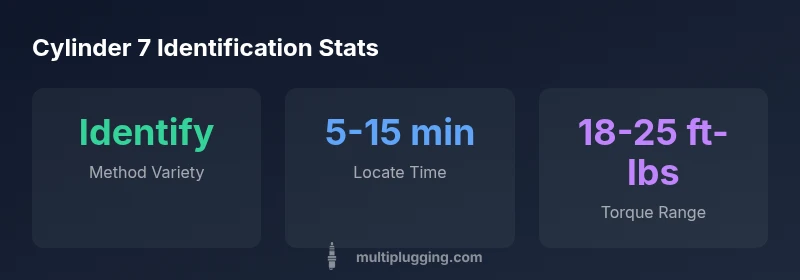
When replacing the cylinder 7 spark plug, hand-thread first to locate the threads, then snug with a torque wrench per the engine’s specification to prevent overtightening. Use a light coating of anti-seize compound only if the manufacturer recommends it; some modern plugs do not require it. Keep plugs clean during installation to avoid introducing debris into the combustion chamber. Reconnect wires or coils firmly and confirm a secure seal before starting the engine.
Record-keeping and reference for future maintenance
Document the exact cylinder mapping for your engine, including the cylinder number, location (front/rear, left/right bank), plug type, and torque specification. Maintain an annotated diagram or photo album for quick reference during future tunes or replacements. This practice minimizes confusion during maintenance after long intervals or after work done by third parties. With clear records, you’ll reliably identify cylinder 7 in future projects and reduce the risk of misidentification.
Guide to locating cylinder 7 across common engine configurations
| Engine Layout | Cyl. 7 Locator | Plug Replacement Note |
|---|---|---|
| Inline-4/6 | Not applicable (no cylinder 7) | N/A |
| V6 | Typically one side of Bank A; verify with diagram | Use correct torque spec per plug type |
| V8 | Cylinders 1-4 on one bank; 5-8 on the other | Cross-check with firing-order map; torque specified by OEM |
FAQ
Is cylinder 7 always in the same place on every engine?
No. Cylinder 7's location varies by engine family. Always refer to the service manual or a labeled diagram to identify it.
No. Cylinder 7 varies by engine family. Check the manual to find its exact location.
How do I locate cylinder 7 on my engine?
Use the official engine diagram or firing order chart in your manual. Trace the spark plug wires or coils to the corresponding cylinder to confirm cylinder 7.
Use the diagram in your manual and follow the wires to cylinder 7.
What tools do I need to map cylinder 7?
A copy of the engine diagram, a flashlight, and a basic hand tool set are sufficient. A torque wrench is required for replacement.
Grab the diagram, a flashlight, and basic tools; you’ll also want a torque wrench for replacement.
Can I replace cylinder 7's plug without removing others?
Accessibility varies by engine. In many cases you can replace cylinder 7 without removing adjacent plugs, but some layouts require removing nearby components for access.
Often yes, but it depends on the engine layout. Check access before starting.
Where can I find reliable cylinder maps?
Consult the owner’s manual, the official service information portal for your vehicle, or reputable automotive repair resources that publish layout diagrams.
Check the manual or official service diagrams for an exact map.
“Cylinder numbering is engine-specific; reliable identification comes from the engine’s cylinder map or firing order diagram rather than generic conventions.”
Main Points
- Know that cylinder numbering is engine-specific.
- Always use the official cylinder map or diagram for your model.
- Identify cylinder 7 before touching any plug to avoid misidentification.
- Use the correct torque, gap, and plug type as specified by the manufacturer.
- Keep good records of your cylinder mapping for future maintenance.