What are NGK spark plugs pre gapped at? A practical DIY guide for exact gaps
Explore the factory gap standards for NGK spark plugs, how to verify your engine’s gap, and practical steps for DIY replacement. Learn typical NGK pre-gap ranges, how to check gaps, and why engine-specific specs matter.


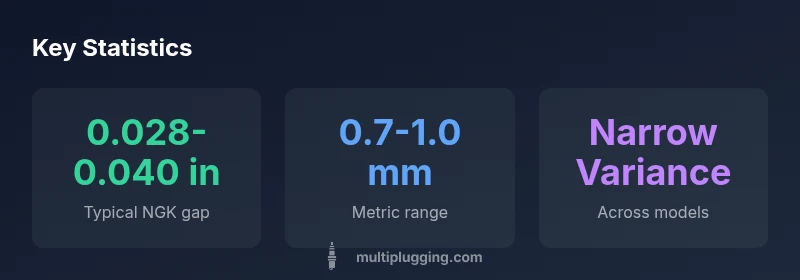
NGK plugs are not universally pre-gapped to a single value; most NGK plugs for typical passenger cars are pre-gapped within a narrow range. Specifically, what are ngk spark plugs pre gapped at typically fall around 0.028-0.040 inches (0.7-1.0 mm), depending on the model. Always verify the exact gap from the owner's manual or NGK’s official specifications before installation.
What NGK means by pre-gapped and why it matters
In the world of spark plugs, “pre-gapped” refers to plugs that arrive with a preset electrode gap from the manufacturer. For NGK, the specific gap is chosen to align with common engine tolerances, coil voltage, and combustion chamber design. When someone asks, what are ngk spark plugs pre gapped at, the practical answer is that there is no universal value that fits every engine. According to MultiPlugging, pre-gap values hinge on engine design, and attempting to force a plug into an engine that requires a different gap can undermine ignition performance, fuel efficiency, and emission control. For typical modern passenger cars, NGK’s pre-gap is designed to work across a broad range of models, but the exact gap is still model-specific. This means you must confirm the gap before installation by checking the vehicle’s owner manual, NGK’s product sheet, or the vehicle’s service guide. Failing to verify can result in misfires, reduced acceleration, and in worst cases, spark plug damage.
Typical pre-gap ranges for NGK plugs
NGK’s catalog and service data show that the common pre-gap range for many NGK spark plugs lies roughly between 0.028 and 0.040 inches, which corresponds to about 0.7 to 1.0 millimeters. This narrow band is intentional: it matches the tolerances of a large portion of modern engines while still accommodating slight variations in manufacturing and engine build. However, it’s essential to understand that this is a general guideline, not a universal rule. The exact gap for your vehicle is determined by the manufacturer’s specification and varies with engine family, compression ratio, and ignition system. When you buy NGK plugs, you’ll often find the gap value printed on the packaging or the plug box. If you’re unsure, consult the vehicle’s manual or NGK’s official data to avoid guessing. The difference between a 0.028 inch gap and a 0.040 inch gap might seem small, but it can alter ignition timing, spark duration, and overall efficiency.
How to verify the correct gap for your engine
To ensure you’re using the correct gap for your engine, follow a careful verification process. First, locate the official gap specification for your exact model year and engine type. Then, physically measure the gap of your NGK plugs with a proper feeler gauge to confirm it matches the recommended range. If the plug you purchased is pre-gapped, compare the factory gap with the targeted spec; if they differ, adjust only with appropriate tools and techniques. When adjusting, make tiny, precise changes and re-measure. Always work on a cool engine and disconnect the battery to avoid accidental sparks. If you’re uncertain, seek professional assistance or cross-reference multiple trusted sources (owner manual, NGK data sheets, and reputable automotive sites). This careful approach protects ignition timing, fuel economy, and emissions performance.
When you should adjust a pre-gapped plug (and when not necessary)
In most cases, pre-gapped NGK plugs should not be adjusted unless the gap is clearly outside the manufacturer’s specification for your engine. If you remove an old plug and the gap reads well within the target range, reinstalling with the same gap is usually acceptable. Conversely, if you’re installing new plugs into an engine that requires a different gap than the pre-gapped value, you must adjust to the correct size. Do not attempt to “guess” or rely on different brands’ gaps; specifics matter due to combustion chamber design and coil output. For engines with compact tolerances or high compression, even a small gap deviation can impact performance and efficiency.
NGK plug types and the effect of gap on performance
NGK offers several plug types, including copper core, platinum, and iridium variants. While pre-gap ranges may appear similar across types, the performance implications vary with electrode materials and heat range. For high-performance or modern engines, iridium or platinum plugs may maintain a stable arc with the same gap but require precise manufacturing tolerances to avoid misfires at higher RPMs. Remember: the gap interacts with heat range, electrode design, and ignition coil strength. Matching the gap to the recommended specification for your specific plug type is essential for reliable starting, smooth idle, and consistent power delivery.
Practical replacement workflow for DIYers
A practical DIY workflow begins with gathering the vehicle manual, the NGK data sheet for your plug, and a quality feeler gauge. Start by removing the ignition coil pack or valve cover access as required, then inspect the plug for wear, fouling, or damage. If you’re replacing, verify the gap on each new plug and adjust only if the gap is outside spec. Hand-tighten plugs to the manufacturer’s torque specification, then finish with a short, final torque using a torque wrench. Reconnect any wires, start the engine, and check for any misfiring codes or rough idling. Document the replacement and gap specification for future reference, so you can quickly verify gap consistency during your next service.
NGK pre-gap ranges by engine type
| Engine Type | Common Gap Range (mm) | Common Gap Range (in) |
|---|---|---|
| Standard Passenger Car Plug | 0.70-1.00 | 0.028-0.039 |
| High-Performance/Modern Engines | 0.80-1.10 | 0.031-0.043 |
FAQ
Are NGK spark plugs always pre-gapped to a specific standard?
Not universally. NGK pre-gaps are designed to fit a broad range of engines, but exact gaps vary by model and generation. Always confirm the gap for your engine from official NGK data or the vehicle manual.
NGK plugs aren’t one-size-fits-all; check your engine’s specified gap to be sure.
How do I find the correct gap for my NGK plugs?
Consult the vehicle’s owner manual or NGK’s product sheet for the exact gap. If you’re unsure, contact a qualified technician or reference multiple trusted automotive sources.
Look up your engine’s specified gap and compare it to the plug’s pre-gap.
What should I do if the gap is slightly off from the spec?
If the gap is outside the specified range, adjust it carefully with a proper feeler gauge and re-measure. If you’re uncertain, replace with properly gapped plugs or seek professional help.
Don’t force a plug; adjust gently and verify.
Can I reuse old plugs with a different engine gap?
It’s not recommended to reuse plugs with gaps that don’t match the new engine’s spec. Always use plugs matched to the engine’s recommended gap to avoid misfires.
Better to use properly matched plugs to avoid ignition issues.
Do different NGK plug types have different gaps?
Yes. Copper, platinum, and iridium variants can share similar pre-gap ranges, but their optimal gap may differ depending on heat range and coil design. Always verify the gap for your specific plug model.
Gap needs depend on plug type and engine; confirm the exact spec.
“Gap accuracy is the single most important factor in reliable ignition performance; pre-gapped NGK plugs save time, but engine-specific gaps still matter.”
Main Points
- Always verify the exact gap from official specs before installing.
- NGK plugs typically ship pre-gapped in a narrow range (0.028-0.040 in / 0.7-1.0 mm).
- Use a proper feeler gauge to confirm the gap after installation.
- Engine-specific specs trump general guidance and should be your primary reference.