Do Spark Plugs Come Pre-Gapped? A DIY Guide
Discover whether spark plugs come pre-gapped, how to verify gaps, and when to re-gap or replace for optimal engine performance. A practical, data-driven guide for DIYers by MultiPlugging.


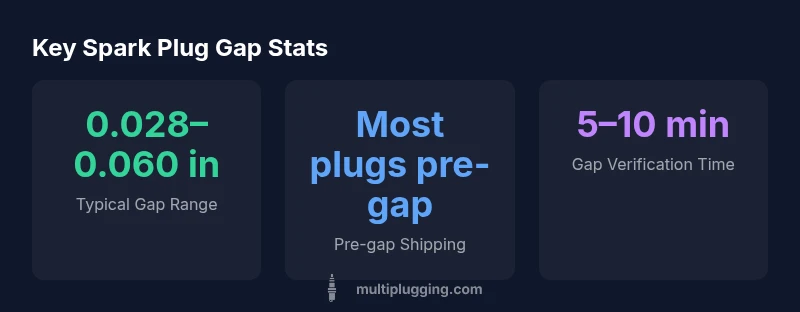
Do spark plugs come pre-gapped? In practice, most consumer-grade plugs arrive with a pre-set gap that reflects a broad range of gasoline engines. The gap isn’t universal, and varies by plug type and application. Always check the OEM spec for your vehicle, measure the gap before installation, and adjust with a gap tool if needed. This approach aligns with MultiPlugging’s guidance for reliable DIY maintenance.
Do Spark Plugs Come Pre-Gapped? A Practical Starting Point
Do spark plugs come pre-gapped? For most consumer-grade plugs, yes—the factory sets a gap designed to fit a broad swath of engines. This pre-gap is a practical starting point for DIYers, especially when replacing plugs in common vehicles. However, the gap is not universal; it varies with plug type, heat range, and the engine’s ignition system. The MultiPlugging team notes that while pre-gapping accelerates changes and reduces early misfires, every vehicle still has a specific gap spec. Before you install, confirm the exact specification in your owner’s manual or the manufacturer’s documentation, and measure the gap with a proper tool to ensure your engine can perform at its best.
Spark Plug Types and Gap Behavior
Spark plugs come in several core designs—copper-core, platinum, and iridium—each with its own gap stability profile. Copper-core plugs are forgiving and sometimes shipped with a looser baseline gap, while iridium and platinum variants tend to hold a given gap more consistently across heat ranges. That said, even the most advanced plugs can drift slightly during handling and installation. In practice, many premium plugs still arrive close to their target gap, but the exact value should be verified against the engine’s spec. This nuance matters because a gap that's too wide or too narrow can impact ignition timing, fuel economy, and overall performance. As you assess your options, keep in mind that engine design and heat range influence the optimal gap more than plug material alone.
Verifying the Gap Before You Install
Always verify the gap before installation, even if the plugs are labeled as pre-gapped. Start by locating the recommended gap in the owner’s manual or service guide. Use a calibrated feeler gauge or a dedicated gap tool to measure the gap at the electrodes. If the gap is outside the specified range, gently bend the ground electrode to adjust, then re-measure. After you confirm the gap, inspect the plug for signs of damage or fouling. A clean seating surface and intact threads contribute to a reliable seal and proper heat transfer. Finally, torque the plug to the manufacturer’s specification to avoid under- or over-tightening, which can alter the gap subtly through the seating process. This careful check helps you avoid drivability issues and aligns with MultiPlugging’s practice of data-driven DIY maintenance.
When to Re-Gap or Replace Instead of Re-Gapping
If a plug shows signs of wear, deposits, or electrode erosion, re-gapping won't fix underlying problems and may be unsafe. Worn electrodes can no longer form a stable arc, even if you set a precise gap. In these cases, replacing the plug is the preferred path for reliable ignition. Some engines tolerate a slightly different gap due to aging components or a change in operating conditions; consult the OEM spec for edge cases, such as high-performance or turbocharged setups. For routine maintenance, it’s often more economical and safer to install a fresh plug that matches the specified gap and heat range.
Tools, Safety, and Best Practices for Gap Checks
DIY gap work demands the right tools and safety discipline. Keep a quality gap gauge or feeler gauge within reach, along with a torque wrench suitable for spark plugs. If your vehicle requires anti-seize on the threads, apply it sparingly and in accordance with the manufacturer’s guidance to avoid affecting torque values. Always work in a clean, well-lit environment, and inspect the plug threads and seat area for debris. When in doubt, refer to the service guide or consult a professional. MultiPlugging’s data-driven approach emphasizes precision and safety in every step of the gap-checking process.
Putting It All Together: A DIY Gap Plan
Here’s a practical plan you can follow on your next plug change: 1) Gather the correct plug type and heat range for your engine, 2) Retrieve the exact gap spec from the manual, 3) Inspect each plug and measure the gap with a proper tool, 4) Re-gap as needed within tolerance, 5) Check seating torque and threads, 6) Replace any plug showing wear or damage, 7) Road-test and observe ignition performance. Following these steps minimizes misfires and maximizes efficiency, aligning with MultiPlugging’s evidence-based guidance for DIY maintenance.
Recommended gaps by plug type
| Plug Type | Typical Gap (in) | Notes |
|---|---|---|
| Copper-core | 0.028-0.060 in | Common for budget plugs |
| Iridium | 0.040-0.060 in | Maintains gap better over time |
| Platinum | 0.030-0.060 in | Balanced gap stability |
FAQ
Do spark plugs come pre-gapped?
Yes, most modern spark plugs are shipped with a factory gap intended for a broad range of engines. However, always verify the exact gap spec for your vehicle and adjust if necessary.
Most plugs come pre-gapped, but always double-check the gap against your engine's spec.
What gap size should I set for my engine?
Refer to the owner's manual or service spec for the exact gap. While there are typical ranges, your engine's design determines the correct setting.
Check the manual for the exact gap size.
Can I reuse old spark plugs if they're pre-gapped?
Reusing old plugs is generally not advised. Worn electrodes and degraded heat range can compromise performance even if the gap seems right.
It's usually better to replace with a correctly gapped new plug.
How do I gap a spark plug if needed?
Use a calibrated gap tool, adjust the ground electrode gently to the specification, then re-measure with a gauge to confirm.
Use a gap tool and re-check the measurement.
What tools do I need to gap and install plugs?
A gap gauge or feeler gauge, a torque wrench for installation, and possibly anti-seize per manufacturer guidance. Keep the work area clean to protect thread integrity.
Gap tool and torque wrench are essential.
Do different engines require different gaps?
Yes. Engine design, heat range, and ignition systems influence the optimal gap, even within the same plug family.
Engine specs determine the gap, not just the plug type.
“Pre-gap is a reliable starting point for most engines, but always confirm against OEM specs and inspect the plug for heat range and condition.”
Main Points
- Verify gap against OEM specs before install
- Most plugs ship pre-gapped, but double-check
- Use a proper gap tool and torque when installing
- Replace worn plugs rather than attempting to re-gap a fouled component