Spark Plug Sounds Like: A DIY Diagnostic Comparison
Learn how spark plug sounds like can guide you through quick triage, diagnose common faults, and decide when to replace plugs. This objective comparison covers normal operation vs fault cues with practical steps for DIYers.


spark plug sounds like: A practical starting point for DIY diagnosis
According to MultiPlugging, listening for how your engine sounds can be a practical, initial diagnostic cue for spark plug health. The human ear is surprisingly capable at detecting irregularities in rhythm, tone, and timbre that correspond to electrical or mechanical faults. In this section we set expectations: sound alone won’t prove the exact fault, but it will narrow down likely causes and guide your next steps. DIY enthusiasts can leverage sound cues to triage without specialized tools, then verify with hands-on tests. This approach keeps you focused on the most common issues first and helps you decide whether a plug, coil, or wiring needs attention.
Normal operation vs altered sound: What to listen for
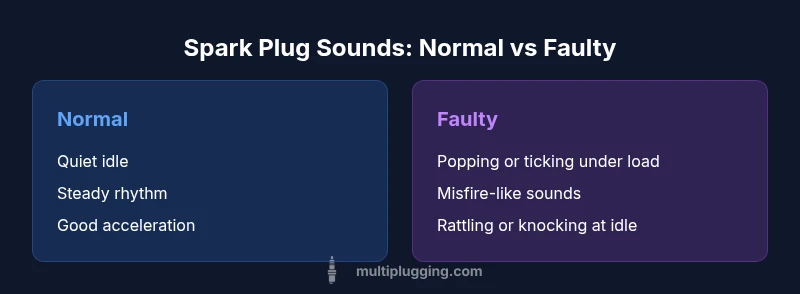
A healthy ignition system typically produces a smooth, quiet idle with a consistent cadence. If you notice a noticeable change in tone, volume, or rhythm, treat it as a red flag worth investigating. Changes might include a subtle tick, a sharper pop, or a misfire-like ping. Record when the issue happens (idle vs acceleration, hot vs cold engine) to locate patterns. Remember, sound alone cannot confirm the exact fault, but it is a reliable first clue that prompts targeted checks as you proceed through your diagnostic flow.
Common sound cues and their likely causes
- Ticking or tapping at idle: could indicate a marginal valve train, loose components, or a minor ignition timing shift; in spark plugs specifically, it may point to a marginal gap or a worn resistor inside the plug cap.
- Popping or backfiring under acceleration: often signals a misfire, plugged or worn electrodes, or improper plug heat range; check plug condition and gap.
- Ping or metallic pinging under load: may be caused by pre-ignition, late timing, or low-octane fuel; more often traced to ignition control or plug heat range mismatches.
- Faint or rhythmic thudding during boost: can indicate misfire across cylinders or a loose spark plug wire connection; verify wiring integrity.
- Loud, irregular misfire sounds: usually point to fouling, oil or carbon buildup, or a cracked insulator in the plug.
These sound cues are starting points; use them to decide which tests to run next and which parts to inspect first.
Tools and methods to confirm what your ears hear
To move from sound to certainty, pair listening with basic tools:
- Spark plug tester: simulates spark under load to confirm ignition performance.
- Gap gauge: checks electrode distance against the manufacturer’s specification.
- Visual inspection: remove and examine plugs for fouling, oil, or heavy carbon buildup.
- Wires and coil check: ensure high-tension wires are intact and coils deliver consistent spark.
If a plug shows fouling or damage, replace it and re-test. If the sounds persist after replacement, the issue may lie in wires, coils, or timing.
Sound cues and related mechanical conditions
Sound abnormalities can echo other engine problems that mimic spark plug symptoms. For example, a lean air-fuel mixture can create pinging sounds similar to a faulty plug, while a failing ignition coil can produce irregular pops that resemble intermittent misfires. Always consider the broader engine context—fuel delivery, ignition system, and engine mechanicals all influence sound. Use a methodical approach: isolate the plug path first, then verify by substituting known-good components or testing with dedicated diagnostic tools.
Step-by-step DIY diagnostic flow for common sounds
- Note when the sound occurs (idle, acceleration, hot vs cold).
- Perform a quick plug inspection: remove the first plug, check for fouling or oil on the tip.
- Check the plug gap against spec and reseat if needed.
- Use a spark plug tester to confirm spark integrity under load.
- Inspect wires and coil packs for cracks, boot tears, or arcing signs.
- If symptoms persist, test fuel delivery and ignition timing with basic tools or seek professional help.
- Document changes after each step to track improvements or ongoing faults.
When to replace spark plugs based on sound cues
If a plug is visibly fouled, oil-wetted, or physically damaged, replacement is advised. Worn electrodes and widened gaps can also justify replacement to restore proper combustion. In diagnostics, replacing all plugs in the same set is often the simplest way to prevent cross-cylinder issues and ensure uniform performance.
Maintenance habits to prevent sound-related issues
Establish a regular maintenance rhythm: inspect plugs on a scheduled basis, verify gap specs, and replace as needed based on engine manufacturer guidance. Use quality plugs suited to your engine type and avoid cheap aftermarket options that may compromise ignition performance. Keep ignition wires in good condition and secure; loose connections frequently generate diagnostic noises.
Cost considerations and value of sound-based diagnostics
Sound-based cues offer a low-cost way to triage ignition problems before spending money on parts you don’t need. The value lies in prioritizing the right component to test or replace, reducing trial-and-error cost. For DIYers, combine sound cues with simple tests to decide whether to repair, replace, or seek professional service. This approach minimizes unnecessary work while keeping you confident in your decisions.
Case studies: two common scenarios
- Scenario A: Idle ticking with clean plug shows normal wear; after gap adjustment, tick disappears and performance improves.
- Scenario B: Popping under acceleration with fouled plug; replacement restores smooth operation and eliminates misfire symptoms.
Safety and limitations of sound-based diagnosis
Sound is a helpful indicator, but it’s not definitive. Combine auditory clues with visual inspection and diagnostic testing to avoid misdiagnosis. Always work with the engine off and cool, wear eye protection, and follow vehicle-specific service guidelines. If in doubt, consult a qualified professional.
Quick checks before you drive away
- Reinstall plugs correctly with the recommended torque.
- Ensure boots are fully seated and wires are intact.
- Clear any oil or carbon from the plug area during replacement.
- Start the engine and listen for any new or recurring noises; re-test if needed.
- Record the changes and keep a maintenance log for future tune-ups.
comparisonTableFormulatedForBlockData":null}
blockData_prosCons_note":null,
blockData_verdictNote":null,
blockData_keyTakeaways_note":null,
blockData_faq_note":null,
blockData_mainQuery":null,