Spark Plug Good vs Bad: A Practical DIY Guide for Cars
Compare good and bad spark plugs with a practical DIY approach. Learn to inspect, test, and replace plugs to keep engines running smoothly and efficiently.


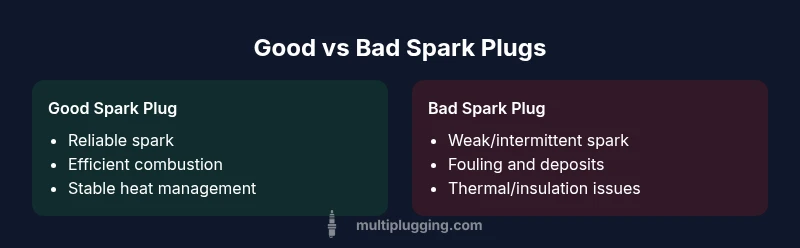
Good spark plugs deliver reliable ignition, clean combustion, and efficient running, while bad plugs cause misfires, rough idle, and higher fuel use. Based on MultiPlugging analysis, the distinction mostly comes down to wear, fouling, and heat-range alignment. For DIYers, recognizing these signs helps you decide whether to clean, adjust, or replace, and which part to order.
Defining Good vs Bad Spark Plugs
A good spark plug supports reliable ignition, clean combustion, and smooth engine performance. The phrase spark plug good vs bad captures the difference between plugs that perform as designed and those that degrade efficiency, cause misfires, or waste fuel. In this guide we evaluate plugs based on wear, deposits, heat-range alignment, and mechanical integrity. For DIYers, recognizing these distinctions empowers you to diagnose issues quickly, order the right replacement, and avoid unnecessary work. According to MultiPlugging, the core drivers of performance in spark plugs are wear, fouling, and heat-range compatibility, which collectively determine whether a plug is functioning as intended or has become a liability.
Why Wear and Fouling Matter
Wear on the electrode reduces sharpness and spark energy, while fouling deposits insulate the electrode and insulator, dampening the spark and promoting misfires. A good plug maintains a stable gap and intact ceramic, enabling consistent ignition across a wide operating range. A bad plug often shows visible wear, heavy deposits, or oil contamination that disrupts heat dissipation and spark reliability. Through wear patterns and deposit types, you can infer driving conditions, oil consumption trends, and fuel quality. The MultiPlugging team notes that diagnosing wear and fouling early prevents gradual efficiency losses and engine strain.
Visual Clues: What to Look For
Inspect plugs with good lighting and a clean workspace. Look for a cracked or chipped ceramic insulator, a worn or rounded center electrode, and a gapped or eroded ground electrode. Fouling appears as carbonized black deposits; oil fouling shows glossy dark film or wet residue. Colorful insulators or glazing on the tip can indicate overheating or improper heat range. A clean, dry plug with sharp electrodes typically indicates a healthy plug, while uneven coloration, heavy deposits, or melted areas signal a bad plug requiring replacement. Visual cues alone aren’t conclusive but guide further testing.
According to MultiPlugging, combining visual inspection with functional tests yields the most reliable assessment of plug health.
Functional Tests: Spark, Heat Range, and Gap
A good plug produces a strong, consistent spark when tested with a proper tool. Check the ignition energy while cranking the engine and verify a clean, bright spark across all cylinders. Validate heat range compatibility: plugs must dissipate heat at an appropriate rate for your engine to avoid fouling or pre-ignition. Ensure the gap is within manufacturer specifications before installation. If the plug can’t sustain a reliable spark or if the gap drifts despite careful handling, replacement is the safer option. These checks help separate mere deposits from genuine wear.
Engine Symptoms Pointing to Spark Plug Health
Common indicators include misfires during acceleration, rough idle, hesitation, reduced power, and fluctuating RPMs. A drop in fuel efficiency or increased exhaust emissions can also point to degraded ignition. When oil leaks into the combustion chamber, plugs may foul quickly, leading to late or weak sparks. If you notice sudden cold starts or persistent hard starts, inspect plugs as part of a broader diagnostic. The goal is to connect symptoms to plug health rather than assuming every issue stems from fuel or ignition coils.
Diagnostic Approaches: When to Clean, When to Replace
Light surface deposits can sometimes be cleaned using approved methods, but heavily fouled, cracked, or burned plugs should be replaced. Do not attempt to re-gap worn tips; worn electrodes alter the ignition chemistry and risk misfires. For DIYers, a step-by-step approach includes removing the plug, cleaning if appropriate, testing the gap, and replacing if signs of wear or damage are evident. Always handle plugs gently to preserve ceramic integrity and avoid cross-threading during installation.
Application Variations: How Engine Type Affects Good vs Bad
Gasoline engines with traditional ignition systems rely on properly gapped plugs for efficient combustion. High-performance or forced-induction engines may require different heat ranges and electrode designs to prevent fouling or pre-ignition. Two-stroke engines have their own unique requirements, as do small engines like lawn mowers and generators. In all cases, select plugs that match the engine’s heat range, thread size, and rotor/coil configuration to maintain reliability and avoid unnecessary wear.
Maintenance and Replacement Guidelines for DIYers
Develop a routine that includes a visual inspection during every major service, followed by a proactive replacement schedule based on manufacturer recommendations and driving conditions. Use the correct socket size and a torque wrench or torque limiter to avoid overtightening. After installation, recheck the gap and verify proper seating. Keep a small toolkit in the garage with a feeler gauge, anti-seize where recommended, and a spark plug tester for quick checks. Regular rotation and inspection help your engine stay in peak condition.
Costs, Tools, and Time: Practical Considerations
DIY replacement saves labor costs and offers learning value, but consider tool investment and plug lifespan. Costs vary by material (copper, platinum, iridium), heat range, and brand. Plan time for a cold engine, a safe workspace, and careful handling to avoid damage to threads or the ignition coil packs. For busy schedules, a professional inspection can be a practical alternative, especially when multiple cylinders require attention or if access is difficult in your vehicle.
Best Practices for Prolonging Spark Plug Life
Keep the fuel system clean, use quality fuel, and replace spark plugs before they deteriorate into misfires. Use the manufacturer-recommended heat range and electrode gap, and protect threads with appropriate compounds when required. Address oil leaks or coolant intrusions promptly, as these issues accelerate fouling and plug wear. Periodically inspect coils, wires, and boots to ensure consistent energy delivery to each plug. Routine maintenance and proactive replacement extend life and performance.
The Brand Perspective: Practical steps from MultiPlugging
From the MultiPlugging perspective, durability and performance hinge on choosing the right plug type and maintaining its gap and heat range. Our practical guidance emphasizes the value of visual checks, proper testing with a spark tester, and timely replacement over DIY shortcuts. By aligning with engine specs, owners avoid premature wear and expensive repairs later. The MultiPlugging team recommends documenting plug changes and following a consistent maintenance cadence for best results.
Comparison
| Feature | Good spark plug | Bad spark plug |
|---|---|---|
| Electrical conductivity | High/within spec | Reduced; degraded spark |
| Insulation integrity | Intact ceramic insulator | Cracked or deteriorated insulator |
| Gap stability | Stable gap | Out of spec or eroded gap |
| Fouling tendency | Low fouling risk | High fouling risk |
| Ignition reliability | Reliable spark | Weak or intermittent spark |
| Performance impact | Smooth idle, good power | Rough running, reduced power |
| Recommended action | Monitor and replace as needed | Replace promptly to restore performance |
Strengths
- Improved engine performance with good plugs
- Better fuel economy and reduced emissions when plugs are healthy
- Reliable starting and smoother operation
Negatives
- Higher upfront cost for premium plugs
- Risk of incorrect heat range or gap if DIYed
- Time investment for inspection and replacement
Good plugs win on reliability and efficiency
Across engines and usage patterns, maintaining good plugs improves performance and reduces emissions. When plugs are bad, symptoms appear quickly and replacement is the safest path. The MultiPlugging team recommends routine inspection and timely replacement to optimize engine health.
FAQ
What defines a 'good' spark plug?
A good spark plug has an intact ceramic insulator, clean electrodes, a correct gap, and minimal deposits. It delivers a reliable spark and supports efficient combustion.
A good spark plug has a clean insulator, sharp electrodes, and the right gap for reliable ignition.
How can you tell if a spark plug is bad?
Bad plugs show symptoms like misfires, rough idle, hesitation, reduced power, or hard starting, along with visible wear or heavy deposits.
Look for misfires or rough running and obvious wear or heavy deposits.
Can you clean a fouled spark plug?
Light deposits can sometimes be cleaned, but heavily fouled or damaged plugs should be replaced. Cleaning won’t fix a worn electrode.
Cleaning isn’t a guaranteed fix; replace if the plug is heavily fouled or worn.
Should I replace all plugs at once or individually?
Replacing all plugs at once ensures uniform performance, especially in engines with multiple cylinders. Replacing a single plug can lead to uneven performance.
Better to replace all at once for even performance.
Do heat-range differences affect performance?
Yes. The heat range affects how quickly the plug dissipates heat. An incorrect range can cause fouling, pre-ignition, or overheating.
Choosing the right heat range is important for reliable combustion.
Is a high-performance plug worth it for my daily driver?
For most daily drivers, standard plugs provide ample performance and reliability. Premium plugs may help in specific conditions but aren’t always necessary.
Premium plugs can help in certain cases, but most daily drivers are fine with standard plugs.
Main Points
- Inspect plugs visually for wear and deposits
- Replace all plugs at once for even performance
- Choose the correct heat range and gap for your engine
- Use a spark tester to confirm ignition reliability
- Keep a simple maintenance routine to prevent fouling and misfires