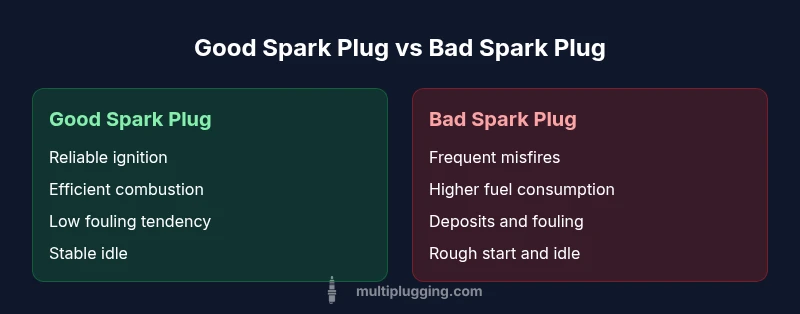
Difference between a good spark plug and a bad one
A rigorous, data-driven look at how a good spark plug differs from a bad one, examining ignition reliability, efficiency, emissions, and maintenance. Learn to diagnose plug health and plan replacements effectively.


Understanding the difference between a good spark plug and a bad one
According to MultiPlugging, the difference between a good spark plug and a bad one hinges on ignition quality, electrode wear, and the ability to maintain the correct heat range and gap under operating conditions. A good plug maintains stable spark delivery across RPM ranges, supports efficient combustion, and minimizes deposits. A bad plug, by contrast, exhibits degraded ignition, uneven heat transfer, and a higher tendency for fouling. For the everyday car owner, recognizing these signs means the difference between a smooth-running engine and repeated misfires, rough starts, or reduced power. This section sets the stage for practical diagnostics by outlining what “good” looks like in real-world driving.
How a good plug supports ignition and combustion
A good spark plug is engineered to ignite air-fuel mixtures reliably at the engine’s operating temperatures. It maintains an optimal balance between heat dissipation and heat retention, which keeps combustion stable across throttle and load changes. Proper electrode design and a consistent gap ensure the arc length matches the engine’s compression pressure, enabling efficient ignition with minimal resistance. When the plug is healthy, ignition occurs predictably, leading to smooth acceleration and steady idle. The impact extends beyond power pulses: cleaner combustion reduces unburnt fuel and exhaust emissions, and reduces catalytic converter stress over time. According to MultiPlugging, keeping a plug in the correct heat range minimizes fouling and helps avoid misfires.
Signs of a bad spark plug: performance symptoms
A failing plug manifests in several tangible ways. You may notice harder starts, rough or unstable idle, and a drop in throttle response. Misfires become more likely under load, especially during acceleration or towing. A bad plug can produce increased exhaust odor and more noticeable engine vibration. If any of these symptoms appear, it is wise to inspect the plug condition and the surrounding ignition system. Early detection helps prevent more serious issues, such as unburnt fuel washing the cylinder walls or damage to the catalytic converter. Regular checks help separate temporary hiccups from genuine wear.
Electrical characteristics to evaluate
Electrical health is a key indicator of plug condition. Good plugs maintain consistent resistance and voltage requirements across operating conditions. Worn or fouled plugs often show irregular current draw, higher coil resistance, or inconsistent arc stability. A simple at-home test involves a visual inspection for deposits and a basic spark test with a tester to confirm steady ignition at the expected gaps. If resistance values drift outside the engine’s specified range, or if the spark arc becomes uneven, the plug is likely past its prime. This electrical lens provides a fast, objective way to differentiate a good plug from a bad one.
Visual clues: electrodes wear and deposits
Visible wear on the center and ground electrodes is a reliable sign of aging. A healthy plug typically shows a dry, light tan insulator tip and evenly worn electrodes. Deposition patterns reveal different problems: light carbon deposits may indicate rich fuel mixture, while heavy oil fouling points to lubrication or sealing issues in the engine. Glazed or melted electrodes signal overheating, often caused by too much heat or incorrect heat range. When deposits are extensive, the plug’s ability to ignite the mixture diminishes, leading to misfires and power loss. Regular visual checks can catch these issues before they translate into drivability problems.
Heat range, gap, and their impact on performance
The heat range and electrode gap determine how the plug behaves under real-world load. A plug with too hot a range may overheat, causing pre-ignition or electrode damage; too cold, and it fouls easily. The gap controls the energy of the arc, and a wrong gap reduces the spark’s effectiveness. A healthy plug maintains its intended gap and operates in a stable temperature window across driving conditions. If you replace plugs with the correct heat rating and gap specified for your engine, you’ll typically see better throttle response, smoother idling, and more consistent combustion.
Fouling types: oil, carbon, coolant, and fuel-related deposits
Fouling comes in several flavors, each telling a different maintenance story. Oil fouling points to worn piston rings or valve guides that allow oil into the combustion chamber. Carbon fouling often indicates a rich fuel mixture or incomplete combustion, while coolant-related deposits suggest head gasket issues or a coolant leak. Fuel-related fouling can result from an intermittent fuel delivery problem or injector misfire. Identifying the dominant fouling type helps pinpoint root causes beyond the plug itself. In many cases, resolving the underlying engine condition improves plug life dramatically.
Misfires and drivability symptoms
Misfires are the most visible symptom of a bad plug. They disrupt engine smoothness, create a rough idle, and may cause vibrations during acceleration. In modern engines, misfires can trigger diagnostic trouble codes, leading to a check engine light. Replacing the failing plug often resolves the issue, but persistent misfires may indicate deeper problems such as ignition coil faults, wiring damage, or injector issues. A systematic approach—visual inspection, gap measurement, and plug testing—helps you distinguish plug health from other ignition components.
Fuel economy and emissions impact
Engine efficiency is tightly linked to plug condition. A good plug promotes efficient combustion, which improves fuel economy and reduces emissions. Conversely, a bad plug can cause incomplete combustion, increasing hydrocarbon and CO emissions and elevating fuel consumption. The results are practical: fewer trips to the pump and cleaner exhaust when the plugs are healthy. Regular maintenance minimizes environmental impact and keeps the engine within typical regulatory limits for emissions.
Lifespan and maintenance timing
Spark plugs wear gradually as they operate. Factors such as driving style, fuel quality, and engine design influence lifespan. Following the manufacturer’s maintenance schedule is a prudent baseline, but real-world conditions—short trips, heavy loads, or frequent idling—can shorten or extend life. Keeping a log of miles and inspection results helps you tailor replacement intervals to your vehicle. The goal is a predictable maintenance rhythm that prevents sudden performance drops and keeps the engine running smoothly.
Diagnosing without pulling the plugs
Not every diagnostic step requires removing plugs. Start with a diagnostic scan to catch misfire codes, inspect ignition coils, and check wiring integrity. A visual exterior check of the spark plug boot and connector can reveal damaged seals or poor contact. For a deeper check, you may remove a plug for inspection, but begin with non-invasive steps. A careful diagnostic approach reduces unnecessary work while pinpointing when a plug replacement is truly needed.
Replacement intervals by engine and usage
Replacement intervals depend on engine design, heat range, and usage patterns. High-performance or modern engines often tolerate longer intervals when using quality plugs and correct heat ranges, but heavy-duty or older engines may require more frequent changes. Use the vehicle’s service manual guidelines as a base, and adjust for aggressive driving, tow work, or extreme temperatures. Practically, scheduled inspections each season and mileage-based changes keep you aligned with optimal ignition performance and engine health.
Tools, safety, and best practices for inspection
Inspecting plugs safely requires basic hand tools, a torque wrench, and personal protective equipment. Always disconnect the battery before working around the ignition system. When removing plugs, use anti-seize on threads only if recommended by the manufacturer. Keep track of the correct torque setting and avoid overtightening, which can damage the cylinder head. Documenting the condition of each plug helps you identify patterns across cylinders and plan comprehensive maintenance.
Costs: plug quality and replacement economics
Investing in quality plugs, especially those with durable electrode materials, can lower long-term maintenance costs by reducing misfires and improving efficiency. Cheaper plugs may offer lower upfront price but can wear out faster, leading to more frequent changes and potential engine wear. Consider total cost of ownership, including fuel savings, reduced emissions, and maintenance time, when evaluating plug options. The most economical choice is often a balance between upfront cost and long-term reliability.
Practical maintenance plan for most cars
A practical, vehicle-agnostic plan involves periodic visual checks, following the manufacturer’s gap and heat-range specifications, and scheduling replacements around the recommended interval. For cars with irregular driving patterns, perform more frequent checks to catch fouling early. Maintain a spare set of recommended plugs and a small toolkit for on-the-road inspections. A simple, repeatable maintenance routine helps you avoid unexpected performance issues and keeps the engine in peak condition.
],
comparisonTable":{"items":["Good spark plug","Bad spark plug"],
rows":[{"feature":"Ignition reliability","values":["High consistency spark","Prone to misfires and irregular sparks"]},{"feature":"Power and acceleration","values":["Smooth delivery and response","Power dips and hesitation"]},{"feature":"Fuel economy","values":["Better efficiency","Increased fuel consumption"]},{"feature":"Emissions","values":["Lower emissions","Higher emissions due to incomplete combustion"]},{"feature":"Start-up and idle","values":["Stable start and smooth idle","Rough start and unstable idle"]},{"feature":"Maintenance/fouling tendency","values":["Less fouling","More fouling with deposits"]},{"feature":"Lifespan/maintenance interval","values":["Longer life with proper heat range/gap","Shorter life with wear and deposits"]}]},
prosCons":{"pros":["Improved engine performance with proper plugs","Better fuel economy with correct gap and heat range","Lower risk of misfires and engine damage","Easier diagnostics through plug condition"],
cons":["Higher upfront cost for quality plugs","Maintenance routine required","Potentially longer replacement intervals may miss early signs","Misleading symptoms if other ignition components fail"]},
verdictBox {
verdict Box is invalid JSON; corrected below