Spark Plug for BMW: Diagnosis, Replacement & Tips
Comprehensive guide to spark plugs for BMWs, covering iridium vs platinum, replacement intervals, installation torque, and model-specific guidance from MultiPlugging for reliable performance.


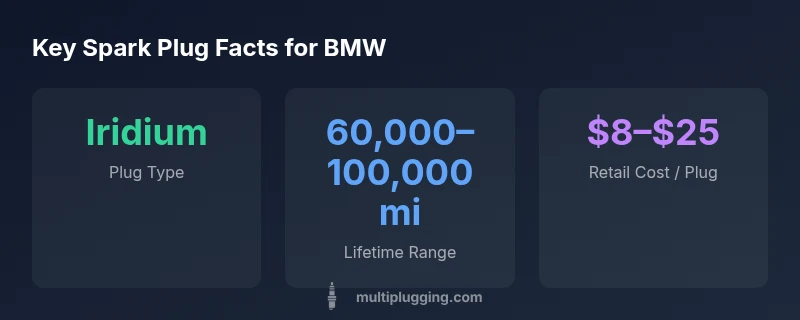
For most BMW engines, the optimal spark plug is an iridium long-life type paired with OEM gap specifications. These plugs resist wear, deliver consistent sparks, and support efficient combustion across fuel trims. Replacement intervals commonly run from sixty thousand to one hundred thousand miles, depending on model, driving style, and maintenance history. Always verify the exact BMW spec for your model before purchasing.
Why BMW spark plugs matter
Spark plugs are the tiny ignition engines behind every smooth idle, strong acceleration, and efficient burn in a BMW. They convert the electrical energy from coils into a precise spark that starts the combustion event. In modern BMWs, where turbocharging, direct injection, and variable valve timing push engines to the limit, a reliable spark becomes more than a comfort feature — it protects drivability and fuel economy. According to MultiPlugging, selecting the right plug type and maintaining the correct gap and torque are essential for long-term reliability. The MultiPlugging team found that using the wrong plug type or neglecting gap and torque can lead to misfires, rough idle, and increased emissions. For DIY enthusiasts, understanding spark plug for BMW is a practical step toward keeping performance consistent across seasons and fuel qualities. The goal is a consistent, strong spark across a wide range of engine loads, from city traffic to sustained highway runs. This section sets the stage for what to know before you buy or pull a plug.
Spark plug types for BMW
BMWs use high-performance ignition systems that reward proper plug selection. The two most common materials are iridium and platinum, with iridium long-life plugs favored for their durability and stable ignition at high compression and turbo boost. OEM-specified plugs are designed to match BMW engines’ heat ranges and electrode geometry, but reputable aftermarket options exist when you need to balance cost and availability. In most cases, BMW owners will encounter pre-gapped iridium plugs that require minimal setup out of the box; if a plug arrives un-gapped, you should gap it to the exact spec in your service manual. Pay attention to heat range and electrode design, as a mismatched plug can degrade efficiency and tip deposits. Finally, be mindful of the gap lifecycle; even non-fouled plugs can drift slightly with vibration and wear. This section helps you differentiate options and pick a plug that suits your engine family without compromising performance.
Diagnosing spark plug problems in BMW
Signs that a spark plug may need attention include rough idle, misfires, reduced power, and poor fuel economy. Before swapping parts, perform a quick diagnostic sweep:
- Visual inspection: check for fouling, oil deposits, or worn electrodes.
- Gap check: verify the plug’s gap matches the vehicle’s spec; a mis-gap can cause misfires and poor combustion.
- Coil and wiring: test ignition coils and plug wires, since a failing coil can mimic a plug problem.
- Spark test: a spark tester confirms ignition performance under load. If multiple cylinders show faults, consider a fuel or ignition subsystem issue rather than a single plug.
- Data checks: scan for misfire codes (P0300 range) and check fuel trims for abnormal patterns. This approach minimizes unnecessary part replacement and keeps you focused on the root cause.
Replacement intervals and maintenance
BMW maintenance schedules emphasize long-life plugs for many modern engines, with recommended replacement intervals commonly spanning 60,000 to 100,000 miles depending on engine family and driving conditions. Turbocharged and direct-injected models may see slightly different intervals due to heat and boost exposure. Driving style matters: frequent short trips, heavy towing, or hot climates can shorten plug life, while steady highway cruising tends to preserve it. When planning replacement, also inspect ignition coils and wiring together with the plugs; a healthy coil can extend the life of a new plug, and a failing coil can prematurely degrade a new plug. Record the service mileages and keep a log for each BMW service interval so you can track wear over time with confidence.
Installation tips and best practices
Installing new plugs for a BMW requires a careful, methodical approach to protect threads and ensure proper seating. Here are practical steps:
- Gather tools: a torque wrench, a spark plug socket, an extension, anti-seize sparingly (check OEM guidance), and a thread-cleaning brush.
- Prepare: disconnect the battery, remove engine cover if needed, and carefully expose the coil packs.
- Remove old plugs: loosen in a counterclockwise motion, avoiding sudden torque that could damage threads.
- Gap and prep: verify the gap on pre-gapped plugs matches the spec; if not, adjust precisely using the BMW service manual guidelines.
- Install: start by finger-tightening, then torque to the spec with a torque wrench. Reinstall coil packs and electrical connectors.
- Final checks: clear codes, run the engine to operating temperature, and check for proper idle. Refer to BMW service documentation for model-specific torque specs to maintain engine integrity.
Common mistakes and model-specific notes
A few pitfalls can undermine plug life and performance. Do not over-torque, as thread damage can occur and cause coolant leaks or oil seepage. Mixing plug types across cylinders is a common mistake; always use the recommended type for your engine family. If you upgrade to a different plug brand, ensure the heat range and electrode design align with BMW specifications. Turbo engines like those in recent 3-, 4-, and 5-series models are particularly sensitive to heat range and ignition timing; using a plug with the wrong heat range can trigger misfires or detonation under boost. Keep in mind that some modern BMWs come with near-sealed or pre-gapped plugs in the package; rely on OEM specs for the final gap and installation torque.
Choosing the right spark plug for your BMW model
Selecting a plug depends on your engine family and turbo setup. Common BMW engines such as N20, N55, B58, and S58 share a preference for iridium long-life plugs, but the heat range and thread length vary by model. Always consult the manufacturer’s recommended part numbers in your vehicle’s service manual or on the BMW official parts site. For DIY maintenance, choose a plug that matches the OEM gap and heat range, verify thread length, and confirm compatible torque. If you own a performance variant, you may have a different recommended plug than a fuel-efficiency-focused model. This section helps you map your BMW’s engine family to a suitable plug choice and installation approach.
BMW spark plug recommendations by engine family
| BMW Engine Family | Recommended Spark Plug Type | Typical Gap (mm) |
|---|---|---|
| N20/N51 family | Iridium long-life plug | 0.7-0.8 |
| B58 engine family | Iridium long-life plug | 0.7 |
| S58/N55 family | Iridium long-life plug | 0.7-0.8 |
FAQ
What is the best spark plug type for a BMW?
For most modern BMWs, iridium long-life plugs are recommended; always verify model-specific requirements in the owner's manual.
For most newer BMWs, iridium long-life plugs are best—check your manual for your exact model.
How often should I replace spark plugs in a BMW?
Replacement intervals vary by engine and driving, but typical ranges are 60,000 to 100,000 miles; consider conditions like frequent short trips or hot climates.
Most BMWs use long-life plugs with intervals around 60k to 100k miles, depending on conditions.
Can I use aftermarket spark plugs in a BMW?
You can, but ensure they meet BMW specifications; OEM-equivalent plugs are often the safest choice for performance and longevity.
Yes, but pick BMW-spec plugs to avoid issues.
Do misfires always indicate a plug problem?
Not always—misfires can stem from coils, fuel delivery, or vacuum leaks. Test plugs first, then diagnose other subsystems if the issue persists.
Misfires can come from several parts; start with the plugs, then check coils and fuel.
What signs indicate worn spark plugs in a BMW?
Rough idle, reduced power, poor acceleration, and decreased fuel economy are common indicators of worn plugs.
Rough idle and low power often point to worn plugs.
Should I gap BMW spark plugs myself?
Many modern BMW plugs are pre-gapped; if gapping is needed, follow exact BMW specifications and use a precise gauge.
Most plugs come pre-gapped; if you gap them, follow the spec exactly.
“Spark plugs are the cornerstone of reliable BMW ignition. Choosing the correct plug material and maintaining precise gap and torque are essential for smooth operation and optimal efficiency.”
Main Points
- Choose the right plug type for your BMW engine.
- Follow OEM gap specs and installation torque.
- Regularly inspect coils and wiring alongside plugs.
- Use long-life iridium plugs for most modern BMWs.
- Record maintenance intervals to optimize performance over time.