New vs Old Spark Plug: When to Replace for Peak Performance
Compare new vs old spark plugs to maximize ignition reliability, efficiency, and emissions. Learn practical signs, tests, and replacement steps for DIYers.


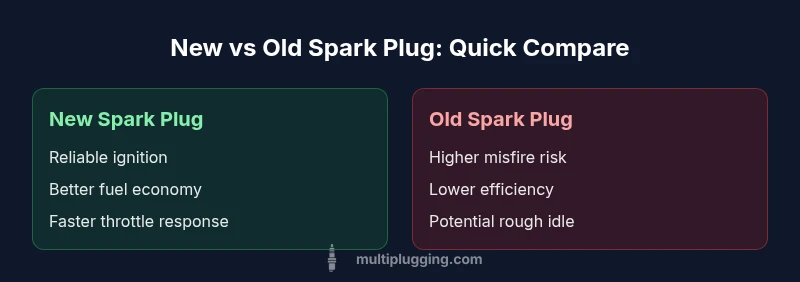
New spark plugs deliver consistent ignition, crisper throttle response, and better fuel efficiency, while old plugs can misfire and waste fuel. In most engines, replacing worn plugs restores smooth operation and lowers emissions more than leaving the old parts in place. The difference between new vs old spark plug affects reliability, maintenance costs, and long-term engine life.
What new vs old spark plug really means
In practice, 'new' vs 'old' spark plug means more than age. A brand-new spark plug arrives with a uniform gap, pristine electrode surfaces, and clean insulators. An old plug, even if still in engine, shows wear: eroded electrodes, a widened gap, and deposits that alter heat transfer and ignition performance. According to MultiPlugging, diagnosing plug wear early saves fuel, reduces misfires, and protects downstream components like ignition coils and oxygen sensors. The choice between using a fresh component or continuing with a worn one is not binary; it's about risk tolerance, driving conditions, and maintenance discipline. For most DIYers, the decision to replace revolves around observable indicators such as misfiring, rough idling, or degraded fuel economy. In this article we’ll lay out objective criteria, explain how wear affects ignition, and provide practical tests you can perform with basic tools. We’ll also distinguish between new, used, and refurbished plugs and explain how to decide when a fresh plug is actually the better investment for your engine. The goal is to empower car owners with clear, actionable guidance rather than abstract warnings.
The MultiPlugging Team notes that choosing wisely can prevent costly downstream problems, so it pays to be proactive about plug wear.
How wear affects ignition and combustion
As a spark jumps the gap, its energy must ionize the air-fuel mixture and ignite it at precisely the right moment. When electrodes erode or deposits build up, the plug loses ability to arc reliably. This reduces peak combustion pressure, increases misfire probability, and can shift timing marginally. Worn plugs often require higher ignition advance or produce slower throttle response. The net effect is more fuel wasted on unburned mixture and increased exhaust temperatures. In the long run, this wear accelerates coil and wiring stress and can trigger rough running, especially in engines with aggressive timing or higher compression. By understanding wear mechanisms—electrode erosion, deposit buildup, and insulator glazing—you can anticipate when performance deteriorates. For DIYers, a quick check using a feeler gauge or a magnifying window inspection can reveal a widened gap or discoloration. The key takeaway from MultiPlugging analyses is that ignition stability degrades with use, and addressing it early yields measurable gains in efficiency and driveability.
Signs your plug is worn and when to replace
Common symptoms point you toward the need for a fresh plug. Rough idle, misfires under load, hesitation during acceleration, and a drop in miles per gallon signal possible wear or fouling. Visual inspection often reveals a dark, sooty electrode or ash, oily deposits from worn piston rings, or a blistered ceramic insulator. If the corrosion on the terminal post is visible, resistance increases and coil energy is wasted. Timely replacement prevents unburned fuel washing down the cylinder and reduces risk to the catalytic converter. If you’re unsure, perform a simple compression check or scan for misfire codes; both can confirm whether a plug is the root cause. Remember that heat range matters; a plug that runs too hot or too cold can indirectly accelerate wear. In any case, replacing worn plugs dramatically improves the chance of smooth starts and consistent ignition across RPM ranges.
Performance differences: ignition timing, economy, and emissions
A fresh plug delivers a clean, fast arc that ignites the air-fuel mixture at the optimal point in the compression stroke. This translates to quicker throttle response, steadier idle, and better fuel economy because less unused fuel is expelled in the exhaust. In contrast, a worn plug may require the ECU to compensate with timing adjustments or fuel trims, which can result in reduced efficiency and higher emissions. You may notice increased hydrocarbon or carbon monoxide readings when testing emissions on an older system. The net effect is that the advantage of new spark plugs is not only the immediate comfort of smoother running but also measurable engine efficiency—especially under city driving or stop-and-go conditions. Engine designs with direct injection or higher compression can be more sensitive to plug condition; in such cases the difference between new and old is amplified.
Diagnostic steps to assess plug condition
To avoid guesswork, follow a simple inspection routine. Remove the spark plug with a proper socket and inspect the electrode tip color: a light tan or gray tip generally indicates proper combustion, while black, sooty deposits suggest rich fuel or fouling; a blistered or melted ceramic suggests excessive heat. Measure the gap with a feeler gauge to determine whether it matches the manufacturer’s spec; a gap that has widened beyond spec reduces spark energy. Check for worn threads, which can complicate sealing and heat transfer. Take a photo of the plug for reference and compare to replacement plugs you’re considering. If you detect oil deposits on the plug, investigate possible valve cover gasket leaks or worn piston rings. Finally, consider a spark plug tester or a professional diagnostic to confirm the issue if you aren’t certain.
Gap, heat range, and compatibility considerations
Choosing the correct gap and heat range is crucial. The gap determines how much voltage is required to produce the spark; as plugs wear, the gap widens and energy distribution shifts, which is why replacement is often recommended to restore the original design. Heat range influences combustion temperature and deposits formation; a plug too hot can cause pre-ignition, while too cold can foul quickly. Ensure thread size and reach match your engine’s cylinder head and ignition coil hardware. For engines with performance upgrades or advanced ignition systems, Iridium or platinum plugs may offer longevity but require exact heat range to avoid misfires. Always consult the engine manual or MultiPlugging’s guidance when in doubt, since incorrect gaps or heat ranges can lead to more problems than a slightly worn plug.
Choosing between copper, platinum, and iridium plugs
Copper-core plugs were traditional and inexpensive, offering good conductivity but shorter life. Platinum and iridium plugs retain electrode material longer, resist wear, and can maintain a stable gap longer, which is valuable for engines with long service intervals. Iridium plugs tend to perform consistently across a wide temperature range and resist fouling better in some conditions, but they are pricier. In most modern engines, manufacturers select a heat range and construction that balances longevity with reliability; replacing with a different material should not degrade performance if the heat range is correct. For casual drivers with standard commuting, copper or platinum plugs may be adequate; for vehicles with heavy loads or high-rev driving, iridium can offer slight durability advantages. Always replace in sets to maintain synchronized timing across cylinders.
DIY replacement vs professional service: costs and risk
Replacing spark plugs at home saves labor, but it requires care to avoid cross-threading, terminal damage, or breaking the plug, which can lodge in the cylinder. If you have the right tools, torque wrench, and clean environment, you can complete a typical four- or six-cylinder replacement in under an hour. Costs primarily involve parts and any diagnostic charges if you’re experiencing misfires. Expect the price range to reflect plug type and fuel system design; high-performance plugs cost more but may deliver greater lifespan. A misstep in torque can warp the head gasket or blow out a seal, particularly in aluminum heads. If you’re uncertain or you own a turbocharged engine with tight tolerances, a professional service may be worth the extra cost for reliability and warranty protection.
Engine type and usage: what matters in your decision
Different engines and driving patterns respond differently to plug wear. In stop-and-go city driving, the benefits of new plugs are usually felt more quickly due to frequent misfire risk and fuel trims. In highway cruising, the difference may be subtler but still present in steady cruise efficiency. Modern engines with direct injection and coil-on-plug ignition can be more sensitive to plug condition, producing noticeable gains in smoothness and throttle response when replaced early. High-mileage engines with oil leaks or worn valve guides may exhibit persistent fouling that may require addressing root causes before plug replacement yields the full benefits. According to MultiPlugging analysis, the severity of the wear effect scales with operating temperature and fuel quality.
Extending life: maintenance tips for new plugs
To maximize the value of new plugs, combine replacement with proper maintenance. Regular air and fuel filter changes, using quality fuels, and ensuring the ignition coils are in good shape all contribute to longer life. Keep the ignition system clean; inspect wires and boots for cracks or damages. Use anti-seize compounds as recommended and torque plugs to the manufacturer’s specification to prevent thread galling. If the engine exhibits oil leaks, fix those issues to prevent fouling. A clean intake and proper combustion chamber temperature can reduce deposits and extend plug life. After installing new plugs, perform a light engine run to settle the gap and re-check after a short drive. MultiPlugging teams emphasize that proactive maintenance reduces long-term costs and improves reliability.
Environmental considerations and disposal
Spark plugs are recyclable and should be disposed of according to local regulations. Many service centers will accept used plugs for recycling. The environmental impact of plug waste can be minimized by replacing only when necessary and by choosing long-life options where appropriate. If you’re maintaining multiple vehicles, adopt a plug maintenance timetable to ensure consistent performance and reduced emissions. Always follow safety procedures when handling hot components to avoid burns, and wear eye protection when inspecting gaps and deposits.
Reading plug labels: heat range, reach, and torque basics
Understanding labeling helps you choose the right replacement. Pay attention to heat range codes, which indicate whether the plug runs hot or cold for your engine. Reach and thread size must match the cylinder head, and the recommended torque ensures a proper seal and heat transfer. The gap specification at installation is critical for optimal ignition; if you find a plug with a different gap, you should adjust or replace accordingly. In modern engines, the ignition system may require precise coil compatibility; verify with the owner’s manual or trusted guides such as MultiPlugging before committing to a replacement. The labels and numbers are not cosmetic; they guide longevity and performance.
Comparison
| Feature | New spark plug | Old spark plug |
|---|---|---|
| Ignition reliability | high: stable, consistent arc | lower: irregular arc, potential misfires |
| Fuel economy | better with new plugs due to complete combustion | often worse with wear due to inefficiencies |
| Throttle response | snappy and smooth with new plugs | can feel lag with worn plugs |
| Lifespan / replacement interval | longer life expectancy (new) | shorter life due to electrode wear |
| Upfront cost | higher upfront cost for new plugs | lower upfront cost if reusing old or refurbished |
| Best for | reliability and efficiency focus | budget-conscious replacement when wear is mild |
Strengths
- Instant boost in reliability after replacement
- Improved fuel efficiency and smoother idle
- Better starting performance and throttle response
- Lower long-term risk of engine damage due to fouling
Negatives
- Higher upfront parts cost
- Environmental waste from discarded plugs
- Risk of damage if installed incorrectly (cross-threading, breakage)
New spark plugs generally win on reliability and efficiency when wear is evident.
The MultiPlugging team recommends replacing worn plugs rather than continuing to drive with degraded ignition. Prioritize new plugs for steady performance, lower emissions, and long-term engine health.
FAQ
How often should I replace spark plugs for a typical car?
Replacement intervals vary by plug type and engine design. If you notice misfires, rough idle, or reduced fuel economy, inspect and replace as needed according to the owner's manual. Regular checks help prevent performance loss.
Intervals vary by plug type and engine design. If you notice misfires or rough idle, inspect and replace as needed.
Can I clean and reuse worn spark plugs?
Cleaning a worn plug may restore operation temporarily, but wear damage remains and performance will degrade again. Replacing with a new or correctly rated plug is usually the better long-term choice.
Cleaning worn plugs is not a long-term fix; replacement is usually better.
How do I tell if the issue is a plug vs a coil or injector?
If misfires are random or under heavy load and you also see poor fuel economy, inspect the plugs first. Use a spark plug test and visual check; coil or injector issues may mimic plug symptoms but show different diagnostic codes.
If misfires occur, start with the plugs and use tests to distinguish coil or injector issues.
Is it better to replace plugs all at once or one by one?
Replacing worn plugs in the same service interval helps maintain uniform ignition timing and engine balance. Replacing individually can save money upfront but may lead to uneven wear and marginal performance differences.
Replacing them all at once keeps ignition balanced and reliable.
Do different plug materials affect longevity or performance?
Copper plugs are cheaper but wear faster; platinum and iridium plugs last longer and resist erosion. Compatibility with your engine’s heat range and ignition system matters more than the material alone.
Platinum and iridium often last longer, but you must match heat range and design to your engine.
Will new plugs improve performance in all engines?
Most engines see a noticeable improvement in responsiveness and reliability with new plugs, especially if the old plugs were worn or fouled. Some modern engines with complex ignition systems may show subtler gains depending on conditions.
Expect noticeable gains in many engines, especially with worn plugs, but some modern engines may show smaller improvements.
Main Points
- Check for wear indicators early and decisively
- Prioritize correct heat range and gap during replacement
- Consider engine type and driving style when deciding
- Plan maintenance to minimize fuel waste and emissions