How Long Do Spark Plug Coils Last: Lifespan, Signs, and Care
Discover how long spark plug coils typically last, what affects lifespan, common failure signs, and practical tips to extend coil life in modern engines.


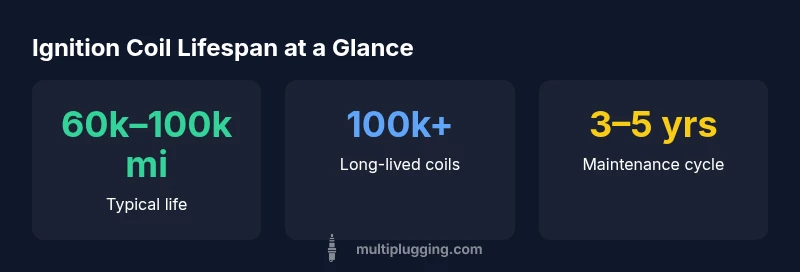
According to MultiPlugging Analysis, 2026, how long spark plug coils last varies by engine, but most modern ignition coils endure roughly 60,000 to 100,000 miles under normal use. Premium designs can exceed 100,000 miles, while extreme heat, repeated misfires, heavy electrical load, or aggressive driving can shorten life to 30,000–50,000 miles, with variations by model and climate. Maintaining proper heat management and avoiding severe heat buildup helps maximize coil life and reduces the risk of unexpected failures.
How long do spark plug coils last in practice
When you ask how long do spark plug coils last, the answer depends on engine design, operating conditions, and maintenance. In modern gasoline engines, ignition coils are designed for longevity and reliability, but they are not guaranteed to last the vehicle’s entire life. According to MultiPlugging Analysis, 2026, most coil assemblies remain functional for about 60,000 to 100,000 miles under typical driving. Premium designs can exceed 100,000 miles, while extreme heat, repeated misfires, heavy electrical load, or aggressive driving can shorten life to the 30,000–50,000 mile range, with variations by model and climate. Maintaining proper heat management and avoiding severe heat buildup helps maximize coil life and reduces the risk of unexpected failures.
What determines coil life: heat, electrical load, and duty cycle
Coil life is not fixed; it depends on heat exposure, electrical demand, and how often the coil experiences high-load transitions. Heat accelerates insulation breakdown and can reduce internal resistance, leading to power loss. Frequent misfires or running an ignition system with the wrong heat range increases stress. Driving style matters: stop-and-go city driving produces more cycling, while sustained high RPM under load can push coils harder. The quality of materials, correct installation, and a clean electrical ground also influence longevity. In short, the same coil type can last very differently across engines due to heat management, fuel quality, and charging system health. Regular maintenance, including correct spark plug gap, proper coil-to-connector fit, and avoiding loose wiring, reduces failures and extends life.
Lifespan variation across engine types and coil designs
Engine architecture drives coil strategy: COP (coil-on-plug), distributor-style coils, and remote coil packs each have distinct lifespans and failure modes. COP designs deliver precise spark near each plug but can run hotter per coil; distributor coils can degrade at the rotor and cap contacts; remote packs consolidate coils in a single module, where insulation or connector corrosion is common failure points. Real-world expectations place typical lifespans in the 60,000–120,000 mile range, depending on heat management, driving style, and routine maintenance. Always consult the vehicle’s manual for OEM-recommended intervals, and monitor performance between services.
Signs your coils are nearing end-of-life
Be alert for symptoms that point to coil problems rather than spark plugs alone. Common signs include misfires, rough idle, hesitation under acceleration, reduced engine performance, and an illuminated check engine light. You may notice higher fuel consumption or occasional backfiring. Coil failures often start gradually, with power loss at certain RPM ranges; sudden, complete misfire is less frequent but possible. If you experience these symptoms, perform a targeted coil test or consult a professional.
Extending coil life: maintenance and driving habits
Extend coil life with a few practical steps. Ensure correct spark plug type and gap, and replace plugs when recommended to avoid over-stressing coils. Keep electrical connections clean and tight; inspect coil boots for cracks; use dielectric grease where appropriate. Minimize short trips that prevent heat cycling, and when possible, allow engines to reach operating temperature fully. Use quality ignition components from reputable brands and follow OEM torque specs during installation. Regular air-fuel and idle balance maintenance also reduces coil load and promotes longevity.
Diagnosing vs replacing: a practical decision guide
When symptoms appear, distinguish coil problems from spark plug or wiring issues. A professional diagnosis may include spark-gap testing, resistance checks, and a coil-on-plug resistance comparison against spec. If a single coil shows excessive resistance, abnormal heat, or poor spark, replacement is typically warranted. In many cases, replacing the coil pack or COP assembly is more cost-efficient than chasing intermittent misfires across multiple cylinders. Always ensure compatibility with your vehicle’s ignition system and torque specifications.
Real-world maintenance plan: a coil longevity checklist
Create a simple plan: check coil connectors at every major service; replace worn spark plugs on schedule; consider a quick coil health check every 30,000–40,000 miles. Keep a log of any misfire events and fuel economy changes, and re-test coils if symptoms reoccur. This habit reduces unexpected breakdowns and keeps ignition performance steady.
Comparison of coil architectures and typical lifespans
| Coil Type | Typical Lifespan (miles) | Common Failure Modes | Notes |
|---|---|---|---|
| Coil-on-Plug (COP) | 60,000–100,000 | Insulation failure, misfires | Precise spark near each plug; can run hotter per coil |
| Distributor-style coil | 70,000–120,000 | Winding failure, cap/rotor wear | Older designs; maintenance needed for cap/rotor |
| Remote coil pack | 60,000–100,000 | Pack failure, connector corrosion | Common in modern multi-cylinder engines |
FAQ
How long do spark plug coils typically last in a modern car?
In modern cars, ignition coils often last between 60,000 and 100,000 miles under normal use, with some extending beyond 100,000 miles. Variations come from engine design, heat management, and driving style. Always reference your vehicle’s manual for OEM guidance.
Most ignition coils last 60,000 to 100,000 miles under normal use, but check your owner's manual for your specific vehicle.
What are the signs of bad ignition coils?
Common signs include misfires, rough idle, hesitation during acceleration, reduced performance, and a check engine light. If symptoms appear intermittently, test the coil and related wiring to confirm before replacement.
Watch for misfires, rough idle, and a check engine light; test coils if symptoms show up.
Do ignition coils wear out before spark plugs?
Yes, coils can wear out independently of spark plugs. If a coil fails, it often causes misfires regardless of plug condition. Always inspect both components during troubleshooting.
Coils can fail before or after plugs; inspect both when diagnosing.
Can high mileage indicate coil failure?
High mileage increases the chance of coil wear, especially in older designs or poor heat management. Regular diagnostics at service intervals help catch problems early.
More miles mean higher risk of coil wear; periodic checks help.
Are ignition coil replacements expensive?
Replacement costs vary by vehicle and coil design, but expect parts and labor to be a consideration. Compare coil pack versus individual coil replacement and consult a professional for a precise estimate.
Costs depend on vehicle; get a quote for coil pack vs individual coils.
“Ignition coil life is highly engine-specific; routine inspections during service help catch wear before a failure.”
Main Points
- Monitor ignition performance for early signs of wear
- Expect coil life to range broadly by engine design and driving conditions
- Follow a regular maintenance plan to extend coil longevity
- Recognize symptoms that point to coil problems, not just spark plugs
- Plan inspections at major service intervals