How Many Miles Do Spark Plugs Last? A Comprehensive 2026 Guide
Learn realistic spark plug lifespans by type, engine design, and driving style. This guide covers mileage ranges, replacement intervals, signs of wear, and maintenance tips to maximize miles on spark plugs in 2026.


Spark plugs in most everyday cars last roughly 30,000 to 100,000 miles, depending on plug material, engine design, and driving style. Copper plugs are on the shorter end, while platinum and iridium options reach higher mileage. For many modern engines with high-quality plugs, a replacement window around 60,000 to 90,000 miles is common, based on MultiPlugging Analysis, 2026.
Why spark plug mileage matters
Understanding how many miles spark plugs can safely travel helps you plan maintenance, avoid misfires, and protect engine efficiency. The question of how many miles spark plugs last isn’t fixed; it depends on material, gap, heat range, engine design, and your driving habits. In this section, we’ll quantify typical ranges, explain why these ranges vary, and show how to align replacement timing with your vehicle’s needs. For most drivers, the practical takeaway is that you should treat spark plug life as a function of usage, not a single number. The MultiPlugging team emphasizes that the best practice is to map your car’s maintenance schedule to the type of plugs installed and the engine’s operational profile.
Factors that influence spark plug life
There isn’t a single mile marker that fits every car. Several variables determine how long a plug will last:
- Plug material: Copper typically wears faster than platinum or iridium.
- Heat range and deposition: Excess heat or carbon/oil deposits shorten life.
- Gap and ignition timing: Worn gaps or mis-timed ignition accelerate wear.
- Engine loads: Regular high-load driving (towing, hills, aggressive acceleration) increases wear.
- Maintenance quality: Clean fuel, air, and oil systems help plugs last longer.
- Environment: Frequent short trips, cold starts, and dirty fuel can reduce life.
When you combine these factors, the question “how many miles spark plugs last” becomes a range rather than a fixed point. In practice, you’ll see copper plugs around the lower end of the range and iridium/platinum plugs toward the upper end. The key is to monitor condition and follow a plug-type-specific schedule.
Spark plug types and mileage expectations
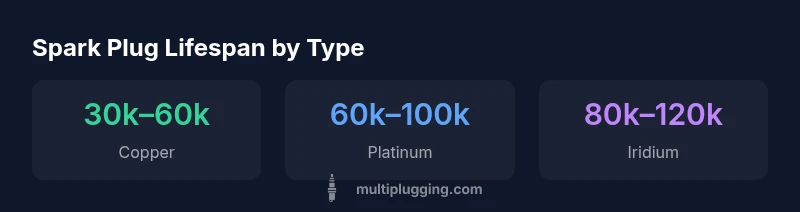
Different plug types are designed for different performance and longevity goals. Copper plugs, favored for cost, usually require replacement sooner. Platinum and iridium plugs are engineered for longevity and can reasonably reach higher mileage if maintenance is consistent. The following ranges summarize typical expectations:
- Copper: approximately 30,000–60,000 miles under normal driving.
- Platinum: around 60,000–80,000 miles under typical conditions.
- Iridium: commonly 80,000–100,000 miles in many modern engines.
These ranges are generalized; your vehicle manufacturer’s recommendations and your actual driving style will influence the final interval. If your engine experiences deposits, fouling, or oil leaks, life can be shortened even for high-end plugs.
How to estimate replacement intervals for your vehicle
To estimate replacement intervals, start with the owner’s manual and a plug type compatible with your engine. Then adjust for real-world conditions:
- Identify the current plug type installed (copper, platinum, or iridium).
- Note your typical driving patterns (city vs highway, frequent short trips, heavy loads).
- Review wear indicators: degraded idle, rough running, misfires, and reduced fuel efficiency.
- Run a diagnostic check if you suspect deposits or fouling.
A practical approach is to set a replacement window based on miles that mirrors the plug’s category (e.g., 60k–100k for iridium) while actively monitoring performance signs. This proactive strategy minimizes the risk of misfires and maximizes engine efficiency.
Signs of worn plugs and how to test
Worn spark plugs can slip past your attention until performance suffers. Look for:
- Rough idle or hesitation on acceleration
- Misfires indicated by the check engine light
- Reduced fuel economy and power
- Fouling signs such as carbon buildup or oily residues
Testing can involve inspecting the plug’s tip for deposits, checking the electrode gap, and using a spark tester to confirm proper ignition. If you notice any symptoms, it’s wise to inspect the plugs and perform a controlled test to determine whether replacement is needed.
Maintenance practices to maximize miles on spark plugs
Simple habits can extend plug life:
- Use high-quality fuel and maintain clean air and fuel systems
- Address oil leaks and coolant intrusion promptly
- Keep engine temperatures stable and avoid frequent overloading
- Follow a plug-type-specific replacement schedule and record maintenance events
- Replace ignition coils if they’re worn to avoid misfires that stress plugs
Smart maintenance translates into longer plug life and smoother engine performance over time.
Replacement strategies by vehicle type and budget
Not all cars require the same replacement approach. For budget-conscious owners, copper plugs may be adequate but require earlier changes. For performance or longevity-focused drivers, iridium or platinum plugs paired with proper maintenance can extend intervals. When planning replacements, weigh the total cost of ownership, including labor, accessibility, and the potential fuel economy benefits of fresh plugs. In many cases, balancing upfront cost with long-term reliability yields the best outcome for the vehicle and driver.
Real-world guidance and pitfalls to avoid
- Don’t rely on mileage alone: always consider visible wear, deposits, and gap changes.
- Don’t mix plug types or brands indiscriminately when replacing; consistency matters for optimal ignition.
- Don’t ignore data from your owner’s manual: it reflects the engine’s intended optimal performance.
- Don’t overlook related systems: cleaning air, fuel, and ignition components enhances plug life.
Practical takeaways and next steps
- If you’re unsure, start with the manufacturer’s recommended interval for your plug type.
- Use diagnostic signals (misfires, rough idle) as early warning signs to inspect plugs.
- Track driving conditions and adjust replacement schedules accordingly.
- Maintain your engine to preserve plug life and overall performance.
Lifespan expectations by common spark plug types
| Plug Type | Typical Lifespan (miles) | Best Uses |
|---|---|---|
| Copper Spark Plug | 30,000-60,000 | Budget, basic engines |
| Platinum Spark Plug | 60,000-90,000 | Balanced longevity |
| Iridium Spark Plug | 90,000-120,000 | High-end performance |
FAQ
How do I know when spark plugs need to be replaced?
Symptoms such as rough idle, misfires, reduced acceleration, and lower fuel economy often point to worn plugs. Use a spark tester or professional evaluation to confirm.
Rough idle and misfires are common signs and should prompt a plug check.
Does mileage alone determine replacement?
Mileage is a guideline, but actual wear depends on deposits, gap, and heat. Inspect plugs and run diagnostics to determine replacement needs.
Mileage helps, but condition matters more.
Copper plugs vs iridium: which lasts longer?
Copper plugs are cheaper but wear faster; iridium and platinum plugs last longer under similar driving conditions.
Copper wears faster; iridium lasts longer.
Can maintenance extend spark plug life?
Yes. Regular air, fuel, and oil system maintenance reduces deposits and stress on plugs, extending their life.
Good maintenance helps plugs last longer.
What are common signs of fouling?
Deposits or oil on plugs indicate fouling. This reduces sparking efficiency and should be addressed with a diagnostic check.
Deposits or oil on plugs mean trouble—check it.
“Life expectancy for spark plugs isn’t a fixed number; it’s a function of materials, heat, deposits, and driving style. By aligning replacement intervals with plug type and engine design, you can reduce misfires and improve efficiency.”
Main Points
- Know your plug type to estimate life
- Follow engine-specific replacement intervals
- Maintain ignition and fuel systems for longer life
- Use diagnostic signals to catch wear early