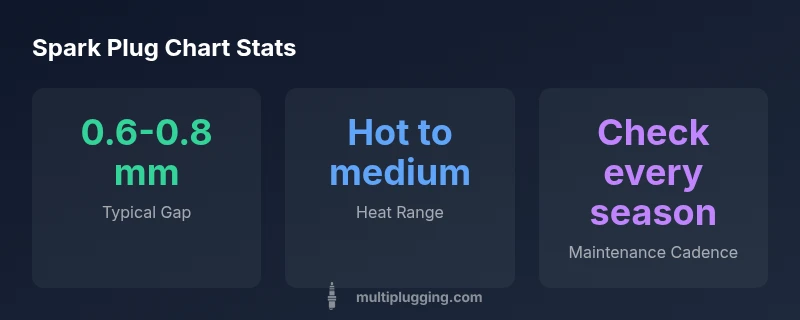
Briggs & Stratton Spark Plug Chart: Diagnose & Replace for Small Engines
Learn how to use a briggs and stratton spark plug chart to diagnose misfires, select the correct plug, and optimize small-engine performance with practical, step-by-step guidance from MultiPlugging.


A Briggs & Stratton spark plug chart is a practical reference that maps plug type, gap, and heat range to engine models. It guides DIYers in selecting the correct replacement for Briggs & Stratton small engines, diagnosing misfires, and planning maintenance. When you use the chart, you avoid guesswork and ensure compatibility across model years and horsepower ranges.
Understanding the Briggs & Stratton Spark Plug Chart
A Briggs & Stratton spark plug chart is a cross-reference tool that consolidates plug types, gap settings, and heat-range recommendations into a single quick guide. It is designed for DIY enthusiasts and professional technicians working with small Briggs & Stratton engines, from lawn mowers to portable tools. The chart acts as a bridge between engine displacement, compression, and the plug chemistry inside the combustion chamber. This resource helps you avoid mismatches that can cause fouling, misfires, or poor fuel economy. In practice, you’ll see columns for plug family, electrode gap, heat range, and the model groups that typically use them. The goal is to align the hardware (the spark plug) with how the engine breathes, fires, and cools under normal operating conditions. The approach is practical: start with your engine family, confirm the recommended gap, and then check if your model requires a hotter or cooler plug under load.
Reading the Chart: Type, Gap, and Heat Range
Most Briggs & Stratton charts categorize plugs by type (metal shell material, electrode composition), gap (the distance between center and ground electrodes), and heat range. The plug type affects ignition reliability and fouling resistance, while the gap influences ignition timing and flame kernel development. Heat range matters under load and operating temperature; using the wrong range can cause fouling (too cold) or pre-ignition (too hot). When reading the chart, confirm your engine class, then match the plug’s characteristics to the chart’s recommended row. Finally, verify the torque spec and seal condition on the thread to avoid leaks.
Model Groups and Plug Choices: What the Chart Covers
Briggs & Stratton engines come in several family lines that share similar combustion characteristics. A well-maintained chart will group plugs by these families rather than listing every model number. This grouping helps DIYers avoid buying wrong-specified plugs when upgrading to a different seasonal model or when swapping between tools with similar horsepower. The chart doesn’t replace the engine’s service manual; it complements it by providing a quick reference for routine maintenance and common replacement scenarios. Use it as a first-pass filter, then confirm with the manual or parts diagram for the exact year and model.
Maintenance Scenarios: Diagnosing Misfires and Fouled Plugs
If your engine runs rough or misfires, a chart-guided sanity check can save time. Start by inspecting the plug’s condition: electrode erosion, fouling from oil or fuel additives, and carbon buildup indicate mismatches or improper tuning. Compare what you see to the chart’s recommended gap and heat range; a mis-match often shows up as persistent misfires under load. Fouling might indicate too-cold heat ranges for the operating environment or a too-lean fuel mixture. Use the chart to decide whether a plug change, gap adjustment, or a heat-range shift is warranted, then re-test with a fresh plug and proper torque.
Practical Steps to Use the Chart in Your DIY Tune-Up
- Identify the Briggs & Stratton engine family and confirm model-year from the data tag. 2) Locate the chart section that matches your family, then read off the recommended plug type, gap, and heat range. 3) Check the current plug: type, gap, and signs of fouling. 4) If a replacement is needed, install a new plug with the specified gap and torque. 5) After installation, run the engine at idle and under load to verify smooth operation. 6) Document the change in your maintenance log for future reference.
Key readings from a Briggs & Stratton spark plug chart
| Aspect | What it tells you | Why it matters |
|---|---|---|
| Plug Type | Identifies compatible plug family | Impact on ignition reliability and fouling resistance |
| Gap (mm) | Specifies correct electrode gap | Directly influences ignition timing and flame kernel formation |
| Heat Range | Maps the heat range to engine load | Prevents fouling or pre-ignition during operation |
FAQ
What is a Briggs & Stratton spark plug chart?
A Briggs & Stratton spark plug chart is a reference that lists plug types, gaps, and heat ranges for different engine families. It helps you choose the correct replacement and diagnose issues.
It’s a handy reference that tells you which plug to use for your Briggs engine.
How do I find the right plug for my Briggs & Stratton engine?
Identify the engine family and model year, then consult the chart section that matches your family to select plug type, gap, and heat range. If in doubt, verify with the service manual.
First, locate your engine family and year, then read the chart for the right plug.
Can I reuse a plug if it looks okay?
Reusing a plug is not recommended. Worn or fouled plugs can fail to ignite properly and cause rough running, especially under load.
It’s best to replace a used plug with a new one.
What if my engine is older than the chart?
If the chart doesn’t cover your exact year, use the closest engine family and cross-check with the official Briggs & Stratton manual or parts diagram for the year-specific spec.
For older engines, use the closest match and double-check with the manual.
Where can I find the Briggs & Stratton spark plug chart?
The chart is typically listed in the engine’s service manual, Briggs & Stratton official resources, or trusted maintenance guides such as MultiPlugging.
Check the manual or trusted guides for the chart.
“Using a Briggs & Stratton spark plug chart helps ensure the selected plug matches the engine’s operating conditions, reducing misfires and extending engine life.”
Main Points
- Match the chart to your engine family
- Check gap before install
- Use the chart to avoid fouling or misfires
- Keep the chart handy with model-year notes