Are Spark Plug Sockets Magnetic? A Practical Guide
Discover if spark plug sockets are magnetic, how magnets aid handling, and what to look for when buying for DIY maintenance. Includes practical tips and myths debunked.


Are spark plug sockets magnetic? In practice, many are designed with a magnetic tip or sleeve to hold the plug as you loosen and remove it. This feature is common in quality sets, though some budget or specialty models are non-magnetic. Look for 'magnetic spark plug socket' on packaging and test the hold by gently lifting a spark plug with the socket before proceeding.
Are spark plug sockets magnetic?
Are spark plug sockets magnetic? Yes, in most modern socket sets, a magnet is built into the socket tip or sleeve to hold the spark plug while you loosen or remove it. The feature is extremely helpful in tight engine bays where gravity alone cannot keep the plug from falling. The answer to the question are spark plug sockets magnetic is often yes, though there are non-magnetic variants for budget kits or specialized applications. The MultiPlugging team notes that magnet strength and placement vary by brand, and some sockets use a magnet insert while others rely on a magnetic sleeve to grip the plug. When you shop, look for terms like magnetic, magnetized, or magnet-included on the packaging. Before you start, test the hold by lightly attempting to lift a spark plug with the socket; a good magnetic socket should hold the plug securely enough to permit precise positioning without dropping it. If the plug falls out during manipulation, consider a different model or an extra magnetized sleeve option.
How magnetic sockets work and what to look for
Magnetic spark plug sockets use a magnet positioned at the tip or integrated into the socket rim. Rare-earth magnets (neodymium) are popular because they deliver strong holding force in a compact size. Some sockets use ferrite magnets or magnetized sleeves; the choice affects holding power and the risk of attracting metallic debris. Look for a magnet that does not extend beyond the opening excessively; a recessed magnet reduces interference with the plug threads while enabling clear engagement. The hold should be sufficient to keep the plug from slipping as you thread the new plug, yet not so strong that you can't release the plug with a twist. In addition to magnetization, some models feature anti-seize compatibility coatings and a resistant finish for extended life. Check that the socket size matches the plug standard (often 5/8 inch or 13/16 inch) and ensure the magnet type is described on the packaging, especially for specialty engines.
Magnetic versus non-magnetic: practical implications
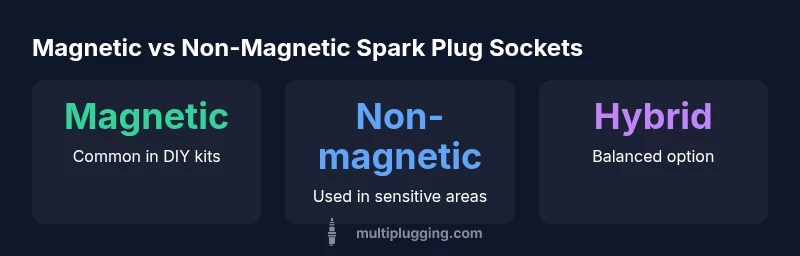
Choosing between magnetic and non-magnetic sockets is often a balance between convenience and the risk of debris attraction. Magnetic sockets minimize the chance of dropping the plug in cramped bays and can speed up DIY maintenance. Non-magnetic designs, by contrast, eliminate any risk of attracting ferrous debris near delicate components and can be preferred for engines with micro tolerances or when working near sensitive electronic sensors. According to MultiPlugging, most DIY users benefit from magnetic sockets for routine spark plug changes, while professionals who routinely operate near magnetic-sensitive areas may opt for non-magnetic variants in specific situations. Always verify the product description and test grip before committing to a purchase.
Materials, magnets, and durability
Many magnetic spark plug sockets rely on rare-earth magnets, typically neodymium, to deliver strong holding power in a compact form. These magnets are embedded in the socket or housed in a sleeve and are designed to withstand the heat and vibration encountered during engine service. Durability depends on magnet quality, coating, and the overall tool construction. A well-made magnetic socket should resist chipping and corrosion and maintain magnet strength over many cycles. Be mindful that high heat over time can, in some cases, affect magnet performance; choose sockets with high-temperature ratings and protective finishes to maximize longevity. Regular inspection for loosened magnets or coating wear can prevent unexpected drops during a job.
How to test a spark plug socket magnet at home
Testing a magnet at home is simple and safe. Start by cleaning the spark plug socket and a spare spark plug. Place the plug in the socket and hold the assembly at a slight angle. Gently tilt to see if the plug remains seated. If the plug slips away easily, the magnet may be weak or absent. You can also perform a quick pull test with a small metal bolt or washer. A healthy magnet will hold the bolt firmly yet release with a deliberate twist. Finally, check for uniform magnet engagement around the socket opening to ensure consistent grip across the plug’s surfaces. If in doubt, consult manufacturer specs or try a different brand.
Using magnetic sockets in tricky engine bays
In cramped engine bays, a magnetic socket often makes the difference between a successful plug change and a dropped hex head somewhere behind a radiator. Use a magnetic socket in combination with a mag extension if needed to reach recessed plugs, but avoid forcing a misaligned plug into place. When working near painted surfaces or nearby sensors, handle the socket with care to prevent inadvertent contact that could chip coatings or contaminate threads. If you’re unsure about clearance, map out the path from the socket to the plug with a flexible probe before attempting removal. The right approach is slow, deliberate, and well-lit—the magnet simply provides an extra hand.
Maintenance tips to keep your magnetic socket performing
To keep magnets performing, avoid exposing sockets to prolonged high heat and moisture, which can degrade coatings and, in rare cases, magnet strength. After use, wipe the socket with a clean cloth to remove oil and metal shavings that can attract grit. If you drop the tool or notice coating wear, inspect the magnet assembly for cracks or detachment. Store magnetic sockets in a dry, organized tray to prevent chipping and ensure that the magnet remains evenly positioned. Periodic testing with a spare spark plug or metallic test piece can help confirm continued holding power. A well-maintained magnetic socket will consistently assist with positions and torque application during spark plug service.
Common myths about magnetic spark plug sockets
A common myth is that magnets will demagnetize under engine heat or disrupt electronics. In reality, tool magnets are engineered to withstand typical service temperatures, and the magnetic field is localized to the socket tip, not the ignition system. Another misconception is that magnetic sockets will always grip every plug perfectly; plug size and thread engagement vary, so a firm fit is not guaranteed in every scenario. Finally, some users worry that magnets attract all metal debris in the bay; while magnets do attract ferrous particles, regular cleaning and using the right extension tools minimize debris buildup.
Choosing the right magnetic socket for your vehicle
Selecting the best magnetic spark plug socket depends on your vehicle and your workflow. Consider plug size, thread pattern, and whether the engine bay presents unusual clearance challenges. Look for a socket with a robust magnet, a corrosion-resistant finish, and a drive size that matches your ratchet or torque wrench. If you operate on older or high-mileage engines, you may want reinforced coatings to resist wear. For most DIYers, a magnetic socket in the standard size range plus a few adapters covers the majority of jobs. The MultiPlugging team recommends starting with a commonly sized magnetic socket kit and expanding only if you encounter unique plug sizes or tighter bays.
Comparison of spark plug socket magnetization types
| Socket Type | Magnetization | Best Use | Notes |
|---|---|---|---|
| Magnetic | Strong magnet at tip | General use | Prevents plug drops |
| Non-magnetic | None | Special installations | No magnet debris attraction |
| Hybrid | Partial magnetization | Balanced use | Less debris attraction |
FAQ
Are spark plug sockets always magnetic?
Not always. Most adult-grade sets include magnets, but some budget or specialized models may be non-magnetic. Check the packaging for 'magnetic' or 'magnet-equipped' to confirm.
Most spark plug sockets are magnetic, but always verify on the packaging before buying.
Can magnets affect car electronics?
In normal use, the magnet is confined to the socket and does not affect ignition coils or sensors. Still, avoid prolonged exposure of sensitive electronics to strong magnets.
Generally safe; keep magnets away from delicate electronics when possible.
How strong is the magnet in a typical socket?
Strength varies by brand and magnet type, but most are designed to hold the plug securely without making removal difficult. If the magnet feels weak, consider testing another model.
Strength varies; test before committing.
Do magnetic sockets attract debris in the engine bay?
Yes, magnets can attract small ferrous particles. Regular cleaning and using the right tools reduce debris buildup and keep threads clean.
They can attract metal bits, so clean after use.
Should I choose magnetic or non-magnetic for every vehicle?
For most DIY spark plug changes, a magnetic socket offers convenience. In sensitive or highly specialized engines, a non-magnetic option may be preferred.
Magnetic is fine for most jobs, unless you’re dealing with sensitive components.
How do I test a magnetic socket at home?
Clean the surfaces, place a spark plug in the socket, and gently tilt to see if it stays seated. A strong hold confirms a good magnet; if it drops, try another model.
Test at home by gently tilting to check hold.
“Magnetic spark plug sockets are a practical centerpiece for DIY engine maintenance; they simplify handling without compromising safety.”
Main Points
- Magnetic tips are common but not universal
- Test the hold before use
- Choose based on engine bay size and plug type
- Durability matters: look for heat-resistant coatings
- Avoid relying on magnets in sensitive electronic areas