Spark Plug Replacement Cost Near Me: A Practical Budget Guide
Understand how spark plug replacement costs near you are shaped by engine size, plug type, and labor. Compare DIY vs pro, get local quotes, and plan budgets with clear ranges and practical tips.


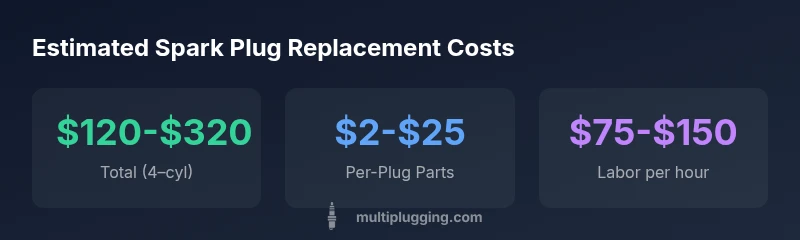
On a typical four-cylinder car, spark plug replacement costs about $120 to $320, including parts and labor, depending on plug type and local rates. Expect higher prices for engines with more cylinders or premium iridium/platinum plugs. Doing it yourself can cut costs to $10–$40 per plug for copper variants, plus your time. Local estimates vary by market.
Why Spark Plug Replacement Cost Near Me Varies
Prices for spark plug replacement are not one-size-fits-all. According to MultiPlugging, cost estimates vary widely by engine size, plug type, and your local market. Copper plugs installed during a DIY session can dramatically reduce labor costs, but professional replacement adds value through proper torque specs, gapping, and a warranty. Regional labor rates, shop demand, and the vehicle’s accessibility (tight engine bays or difficult wiring) also influence the final bill. For DIYers, the biggest lever is choosing plugs wisely and whether you source them yourself or have the shop supply them. This section explains why the price can swing and how to read a quote so you aren’t surprised at checkout.
What Drives the Bottom Line: Parts, Labor, and Fees
The total you pay breaks down into three main buckets: parts, labor, and any service fees or shop supplies. Parts can vary based on plug material (copper vs platinum vs iridium), brand, and the number of cylinders in your engine. Labor is shaped by engine complexity, access to the spark plugs, and your local wage rates. Some shops include a diagnostic or tune-up check in the labor line item, while others list it separately. Optional add-ons like coil or wire replacement, or cleaning of the well, can add to the cost. Always request a line-by-line estimate so you can compare apples to apples.
Engine Size Matters: 4‑cylinder vs V8
Engine configuration is a primary pricing driver. Four-cylinder engines usually require fewer plugs and less labor time, often yielding the lowest total cost range. Six- and eight-cylinder engines add more plugs and may require longer service times, especially if access is restricted. Premium plug types (platinum or iridium) also push the parts cost up, but they can offer longer life and better fuel efficiency benefits. If you drive a diesel or a turbocharged engine, expect further variations due to different plug types and tighter tolerances.
Plug Type and Longevity: Copper vs Platinum vs Iridium
Copper plugs are the cheapest upfront but wear faster, which can increase long-term maintenance costs if replacements become frequent. Platinum and iridium plugs cost more per plug but typically last longer and resist fouling in modern engines. For high-mileage or performance engines, iridium or platinum plugs may reduce replacement frequency, potentially lowering lifetime costs, even if the initial outlay is higher. Your driving style and maintenance history matter here as well.
Regional Price Variation: How to Shop Around
Prices for spark plug replacement can differ by city, county, and state due to labor availability and demand. To capture fair pricing, get multiple written estimates from nearby shops and ask for separate line items (parts vs labor). If you’re near a dealer, compare their quote to an independent shop—sometimes dealers charge a premium but include a dealer-specific warranty. Check online reviews for consistency in pricing and workmanship. Don’t hesitate to negotiate a bundled maintenance package that includes spark plugs if you’re due for a service.
DIY vs Professional: Weighing the Pros and Cons
DIY replacement saves labor costs, but it requires tools, a service manual, and time. It’s a practical route for copper plugs in a simple engine where you’re comfortable with basic mechanical work. A professional replacement offers torque specifications, a precise gap, and a warranty if something goes wrong. If you’re uncertain about your torque wrench calibration or access challenges, a shop replacement may be more cost-effective in the long run, even if the upfront price is higher.
How to Get an Accurate Local Quote Near You
To minimize surprises, prepare a standard request for quotes: list your car year, make, model, engine type, number of cylinders, plug type preference, and whether you want the shop to supply parts. Ask for a clear cost breakdown (parts, labor, disposal, taxes). If you’re comparing multiple shops, verify whether they include coil or wire replacement in the labor line item. A written quote protects you from overages and helps you budget for upcoming maintenance.
Smart Budgeting: Maintenance vs On-Demand Replacement
If your car is approaching higher mileage, consider replacing plugs during a broader maintenance window (coolant flush, air filter, etc.) when a single trip has multiple service items. This approach can reduce overall labor costs and downtime. Keep a maintenance log so you can anticipate when plugs will likely need replacement, rather than waiting until a misfire or rough idling occurs. Proactively budgeting for plugs can help you avoid peak-season price spikes.
Estimated spark plug replacement costs by engine size
| Engine Configuration | Avg Cost to Replace (USD) | Typical Plug Type |
|---|---|---|
| 4-Cylinder Standard | 120-320 | Copper or Platinum |
| 6-Cylinder | 180-420 | Platinum/Iridium |
| V8 or Larger | 240-520 | Iridium |
FAQ
What factors most influence spark plug replacement costs near me?
The biggest drivers are engine size, plug type (copper, platinum, iridium), labor rates in your area, and whether any additional labor is needed for tasks like replacing ignition coils or wires. Getting quotes that separate parts and labor helps you compare apples to apples.
Costs are driven by engine size, plug type, and local labor rates; ask for a clear parts-and-labor quote.
Is it cheaper to replace spark plugs myself or hire a shop near me?
DIY replacement saves on labor but costs time and may require tools. Shops provide warranties and professional torque specs. If you have basic tools and a service manual, you can save; otherwise, a shop is safer for complex engines.
DIY saves labor, but a shop offers safety nets and torque accuracy.
Do costs differ by engine configuration or vehicle type?
Yes. Four-cylinder engines typically cost less, while six-, eight-, or diesel engines may require premium plugs and longer labor time. The overall price scales with the number of plugs and complexity.
Yes, cost scales with engine size and plug type.
How often should spark plugs be replaced and how does that affect cost planning?
Most vehicles require replacement every 30,000–100,000 miles depending on plug type and engine. Premium plugs can stretch life but cost more upfront. Plan ahead to align replacement with maintenance visits to minimize multiple trips.
Check your manual; intervals vary by plug type and engine.
Can you get accurate price estimates for spark plug replacement online or without a local visit?
Online quotes rarely capture your exact engine configuration, location, and labor rates. They can give a ballpark, but you should seek a local, in-person estimate. Ask for a written breakdown before agreeing.
Online estimates are rough—get a local written quote.
“Pricing accuracy starts with understanding your engine and plug type; costs can swing based on local labor rates and plug quality.”
Main Points
- Compare local quotes to lock in a fair price
- DIY parts can cut costs for copper plugs significantly
- Premium plugs and larger engines raise total cost
- Ask for a full parts-and-labor breakdown in writing