Spark plug socket vs regular socket: Which tool wins for spark plug service?
Compare spark plug sockets with regular sockets for grip, reach, and safety. Learn which tool saves time and prevents dropped plugs, with expert guidance from MultiPlugging.


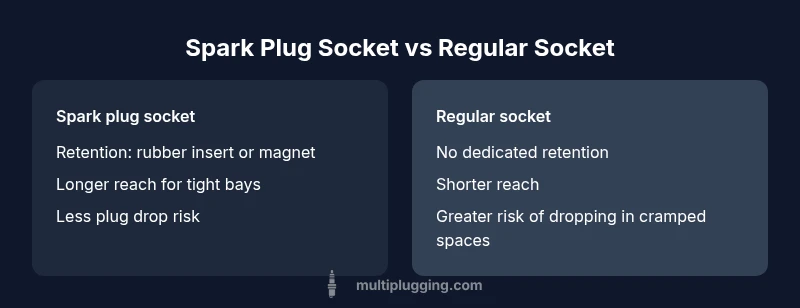
Choosing the right tool matters: a spark plug socket, with a rubber insert or magnet, is specifically designed to grip and reach spark plugs in tight engine bays, reducing dropped plugs and accidental damage. A regular socket can work for some tasks but lacks plug-specific retention and reach. For most DIY engines, the spark plug socket is the safer, more reliable choice.
Why a dedicated spark plug socket matters for maintenance
The spark plug is a precision component that sits deep in the engine bay and connects to the ignition system. A spark plug socket is designed specifically for this task, providing secure retention and a deep reach. According to MultiPlugging, using the right socket reduces common mistakes like dropping the plug, cross-threading, or leaving the plug loose during installation. The interior is often lined with a rubber insert or foam that grips the plug head without risking contact with its delicate terminals. This retention feature makes alignment easier as you thread the plug into the cylinder head, especially when space is tight around hoses, wires, and others. While a regular socket can sometimes work for basic tasks, it lacks a plug-specific design that prevents wobble, reduces slip, and accommodates the long boot that accompanies most spark plugs. A separate magnet or a flexible extender can help, but the socket itself is the key line of defense against dropped plugs and damaged threads.
Key design differences you should know
Design differences between a spark plug socket and a regular socket matter in practice. Spark plug sockets are built with retention in mind, typically including a rubber or foam insert that grips the plug head and prevents it from rotating or falling during seating. Many designs also feature a deeper knob or a longer reach to clear the ignition boot and wire harnesses, plus a reinforced wall to withstand torque without deformations. Regular sockets, by contrast, are generic fastener tools that fit a wide range of nuts and bolts but lack plug-specific retention and reach. If you rely on a magnet in a plain socket, remember that magnet strength can vary and may not hold a plug securely during removal in cramped spaces. Overall, the plug-focused design minimizes slip and scratches, reducing the risk of costly damage to the plug threads.
How to pick the right socket for your engine
Start by identifying the engine model and the spark plug type. Refer to the service manual for the recommended tool sizes and extensions. Choose a spark plug socket with a snug interior and a retention method you prefer (rubber insert or magnet). Consider reach length based on engine bay clearance; longer sockets help with tight spaces but require careful handling near belts and hoses. Ensure the drive size matches your ratchet or torque wrench, and look for robust chrome-vanadium steel construction for durability. If you occasionally work on older engines with larger plugs, verify that the socket head opening accommodates the plug head width without needing excessive force. Finally, opt for a socket that’s compatible with both non-impact and light impact tools if you use a drill or impact driver in your workshop.
Practical tips for using spark plug sockets
Before starting, disconnect the battery and depressurize the system if applicable. Use a swivel head and a low-extension to improve maneuverability in cramped bays. Align the plug straight with the threads to avoid cross-threading, then thread by hand until snug before final tightening with the recommended torque from the vehicle manual. Keep the rubber insert clean and free of debris; wash the socket periodically to prevent grit from lodging in the grip. When removing, use a controlled, steady motion to avoid snapping the plug, and never strike the socket as a lever. Store sockets in a protective tray to prevent nicks that could affect fit.
Real-world scenarios: engine types and plug styles
Different engines place plugs in varying orientations. In transverse front-wheel-drive layouts, plugs may sit behind tight belts or near the intake manifold, making reach critical. High-performance engines with shallow angles benefit from longer or angled sockets. Engines with stubborn deposits or fouling require careful insertion and lighter torque to avoid damage. Spark plug sockets also come into play when removing stubborn frozen plugs; in such situations, a long-reach socket paired with a swivel and proper lubrication can save time and avoid thread damage. Always inspect the plug for head wear before removing it, as a damaged head can complicate extracting it without the right tool.
Maintenance and longevity of your sockets
Like any precision tool, your spark plug socket benefits from regular maintenance. Rinse interior passages to remove grease and grit after each job, dry thoroughly, and store in a clean, dry place. Periodically inspect the rubber insert for cracks, and replace the socket if the grip weakens. If you use magnetic variants, ensure magnets remain strong and free of corrosion. Use a socket that fits snugly with your ratchet or torque wrench to reduce slippage under load. Keeping tools organized not only extends their life but also helps prevent cross-contamination between different engine bays and vehicles.
Common mistakes to avoid
Avoid using an ill-fitting socket that allows the plug to wobble. Never force a plug into a misaligned thread, as this can strip threads or damage the plug. Don’t rely on magnetic force alone without a proper retention method. Avoid using damaged or worn sockets, which can slip and scratch the plug head or cause the plug to drop into the cylinder. Finally, skip the shortcut of using improvised extensions; use the correct length and a swivel for better control in tight spaces.
Comparison
| Feature | spark plug socket | regular socket |
|---|---|---|
| Grip/retention | rubber insert or magnet retention secures the plug | no dedicated retention; relies on fit or external magnets |
| Reach/depth | longer reach designed for crankcase clearances | standard reach; may be short for tight spaces |
| Design focus | plug-specific design with protective interior | general-purpose design for bolts and nuts |
| Compatibility | optimized for spark plugs across engines | works broadly but not plug-specific |
| Common drawbacks | may be pricier or require specific sizes | potential drop risk if retention is weak |
Strengths
- Improved retention reduces the risk of dropping plugs during removal or installation
- Longer reach helps access plugs in tight engine bays without contortion
- Plug-specific design minimizes contact with fragile plug terminals
- Wide availability across brands and drives makes them easy to source
Negatives
- Usually slightly more expensive than generic sockets
- Not every engine requires a spark plug socket, but most DIY tasks benefit from one
- Availability varies by retailer and kit, which may require shopping around
Spark plug socket is the recommended tool for most spark plug maintenance.
For DIYers and professionals, using a spark plug socket improves retention, reach, and protection of the plug. Regular sockets remain useful for other tasks, but they lack plug-specific features. The smart choice is to use a dedicated spark plug socket for reliability and speed.
FAQ
What is the main difference between spark plug sockets and regular sockets?
Spark plug sockets are designed specifically to grip and reach spark plugs, featuring retention mechanisms and deeper reach. Regular sockets are general-purpose and may lack secure plug retention or adequate clearance in tight engine bays.
Spark plug sockets grip better and reach deeper, while regular sockets are generic and can increase the risk of dropping a plug.
Can I use a regular socket for spark plug replacement?
You can, in some cases, but it’s not ideal. A regular socket may lack plug retention and reach, increasing the chance of dropping the plug or damaging threads.
A regular socket can work sometimes, but a spark plug socket is safer and more reliable for plugs.
Do spark plug sockets require a magnet or rubber insert?
Most spark plug sockets include either a rubber insert or a magnet to hold the plug securely during removal and installation. This retention is key to preventing drops in tight spaces.
They usually have a rubber insert or magnet to hold the plug in place.
Are spark plug sockets compatible with impact drivers?
Many spark plug sockets are designed for hand tools or light impact use, but always check the manufacturer’s guidance and use an appropriate impact-rated socket if you plan to use a drill or impact wrench.
Some are, but check compatibility before using an impact driver.
How do I know which socket size fits my spark plug?
Check the vehicle’s manual or the spark plug manufacturer’s specification for the correct head size. Choose a socket that fits snugly with minimal wobble but allows for easy removal.
Look up plug size in the manual and pick a socket that fits firmly.
Main Points
- Prioritize a spark plug socket for most plug work
- Check for a secure retention mechanism (rubber insert or magnet)
- Prefer longer reach to clear the boot in tight bays
- Use the tool with the correct drive size and torque specs
- Maintain sockets clean and inspect for wear regularly