Difference Between a Spark Plug Socket and a Regular Socket: An Analytical Guide
Learn the practical distinctions between a spark plug socket and a regular socket, why it matters for engine maintenance, and how to choose the right tool for safe spark plug work.


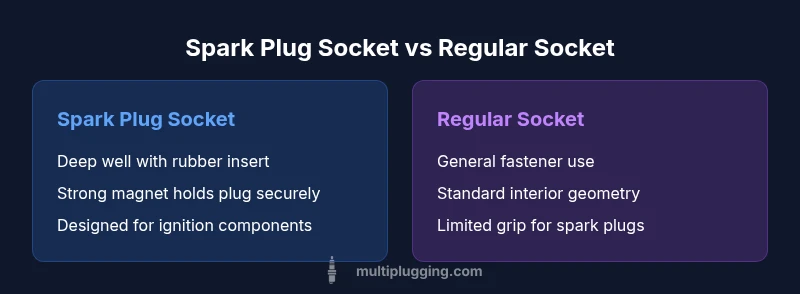
The difference between a spark plug socket and a regular socket is rooted in purpose and geometry. A spark plug socket is designed to accommodate the protruding insulator and hex head of a spark plug, usually with a rubber insert and a strong magnet to hold the plug securely. A regular socket is a general-purpose tool that may not grip the plug as reliably and can slip or damage delicate components during removal, especially in tight engine bays. For DIY engine work, using the spark plug socket reduces slip risk and protects the plug’s hex and insulator from damage.
Why the difference matters in spark plug work
According to MultiPlugging, understanding the difference between a spark plug socket and a regular socket is essential for DIYers who service ignition components. Spark plugs sit in the engine block with a fragile ceramic insulator and a precise hex head that must be engaged cleanly. Using the wrong tool can nick the ceramic, strip the hex, or push debris into the cylinder. In contrast, a general-purpose socket is optimized for bolts and nuts in broader applications, not for the recessed geometry or delicate contact points around a spark plug. As you perform routine maintenance or tune-ups, selecting the right socket reduces the risk of damage and saves torque time. The distinction becomes especially important in tight engine bays where visibility is limited and alignment must be exact. By adhering to tool-specific design cues, you maintain thread integrity and prolong the life of the plug and installed hardware.
Anatomy: what makes a spark plug socket unique
A spark plug socket differs from a regular socket in several tangible ways. It is typically deeper yet has a shallow interior opening to accommodate the plug’s hex head and the protruding insulator. A rubber insert is common, providing a snug grip and protecting the ceramic from chipping. The magnet is usually strong enough to hold the plug in place while you turn the wrench, reducing the chance of dropping the plug into the engine bay. The outer geometry is often designed to slide smoothly over the boot and onto the plug, minimizing contact with surrounding components. In many sets, the socket head is designed to reduce contact with delicate surfaces and to prevent burrs from causing cross-threading. The end result is a tool that stabilizes the plug, concentrates torque at the hex, and protects critical surfaces during extraction and installation.
Compatibility and fitment: drive sizes and hex profiles
Drive size compatibility is a practical concern when choosing between a spark plug socket and a regular socket. Spark plug sockets are commonly offered in standard drive sizes (such as common inline 3/8 inch or 1/2 inch systems) and are often longer to reach deep spark plug wells. The interior hex profile is tailored to a standard spark plug hex size, ensuring a precise fit that minimizes rounding. Regular sockets come in a broad range of sizes, but their interior geometry may not align perfectly with spark plug heads, especially when the plug sits deep in a well or is surrounded by ignition wiring. The mismatch can lead to slippage or cam-out, which jeopardizes the plug head. When you need maximum engagement and reliability, verify both drive size and hex compatibility before starting a job.
Practical scenarios: when to use a spark plug socket vs a regular socket
In most ignition maintenance tasks, the spark plug socket should be your first choice. For example, removing a fouled spark plug in a hard-to-reach cylinder requires a socket with a deep well and a secure grip to prevent the plug from dropping. A regular socket, while perfectly adequate for bolts and nuts outside the ignition system, often lacks the depth, grip, and clearance around boots that spark plugs demand. You’ll also notice that spark plug sockets frequently include a magnet and rubber insert, which are deliberate design features to stabilize and protect the plug during removal and installation. Conversely, if you are working on brake components or body fasteners, a regular socket will likely be more efficient, given the wider variety of bolt head types and access constraints.
Common pitfalls and how to avoid them
A frequent mistake is using the wrong socket for the plug, which can strip the hex or chip the ceramic. Another pitfall is attempting to remove a plug without a magnet or rubber insert, increasing the risk of dropping the plug into the engine. Ensure you have the correct drive size, and never force a tool into a tight space. If the plug is recessed, use a socket with a longer reach or a wobble extension to maintain alignment. Always inspect the socket head for burrs and ensure the rubber insert is intact to grip without marring the insulator.
Performance implications: torque, grip, and longevity
Tool design affects performance. A spark plug socket’s magnet and rubber insert maximize grip, reduce accidental drop, and help protect the plug threads during removal and installation. The deep-well design minimizes contact with the ignition boot, which lowers the chance of boot damage. Regular sockets may work, but they require greater care, since improper engagement can lead to cross-threading or hex rounding if the tool slips. Over time, repeated use of an ill-suited socket can degrade plug seating surfaces and complicate future maintenance.
Maintenance tips for spark plug sockets and regular sockets
Keep sockets clean and dry to prevent rust and corrosion. After use, wipe away grease and debris, and store them in a dry, organized roll or rack. For spark plug sockets, check the rubber insert periodically for tears and replace the socket if the insert loses grip. A light lubrication on the thread area of the plug can ease future removal, but avoid over-lubricating to prevent foreign material from entering the combustion chamber. Regular sockets should also be maintained, but pay particular attention to burrs or deformed hexes that can worsen the user’s grip.
How to select the right socket set for spark plug work
Start with your ignition work goals. If you service multiple vehicles, choose a set that includes a spark plug socket with a durable magnet, rubber insert, and sufficient internal depth. Confirm the drive size (typically 3/8 inch or 1/2 inch) and the length needed to reach spark plug wells without contact with the surrounding components. Look for quality materials that resist corrosion and provide a snug fit across common spark plug hex sizes. Finally, verify that the set includes other essential tools, such as a torque wrench or extension bars, to complete ignition maintenance tasks.
Quick-reference checklist before spark plug work
- Identify the spark plug type and hex size. 2) Verify socket drive compatibility. 3) Check magnet strength and insert integrity. 4) Inspect for clearance around the boot and wiring. 5) Confirm you have a torque wrench with the correct range. 6) Prepare cleaning solution and rags for post-work maintenance.
Comparison
| Feature | Spark Plug Socket | Regular Socket |
|---|---|---|
| Purpose | Engine ignition maintenance; protects ceramic insulator and hex | General fastener tasks (bolts, nuts) |
| Design focus | Deep well, shallow interior opening, rubber insert + magnet | Standard interior geometry; no special insert |
| Retention mechanism | Magnet with rubber insert to hold plug securely | Frontal grip or magnet; not optimized for spark plugs |
| Internal geometry | Shallow hex opening with depth to clear the insulator | Common hex head for bolts with broader tolerances |
| Drive compatibility | Common drives: 3/8" or 1/2"; longer reach options available | Multiple drive sizes; not specialized for ignition components |
| Cost range | $8-25 (typical for quality spark plug sockets) | $4-15 (basic impact/standard sockets) |
| Best for | Spark plug removal and installation in tight wells | General bolt/nut tasks |
Strengths
- Prevents drop and cross-threading on spark plugs
- Rubber insert cushions, reducing plug and insulator damage
- Strong magnet improves retention during removal
- Longer reach helps access deep wells without disturbing wiring
- Designed hex and interior geometry minimize rounding
Negatives
- Generally more expensive than basic sockets
- Not all sizes are available for every vehicle
- Requires careful use to avoid over-torquing when used with a torque wrench
- Less versatile for non-spark plug tasks if you rely on a single set
Spark plug sockets win for ignition work; regular sockets are fine for bolts but not ideal for spark plug handling.
For most DIY ignition tasks, use a spark plug socket to maximize grip and protect sensitive components. Reserve regular sockets for general fasteners outside the ignition system.
FAQ
What is the main difference between a spark plug socket and a regular socket?
The spark plug socket is specifically designed to grip spark plugs with a deep well, a rubber insert, and a magnet to hold the plug securely. A regular socket is a general-purpose tool optimized for bolts and nuts and may not secure a spark plug reliably, especially in tight spaces.
The spark plug socket is built for spark plugs, with a deep well, rubber grip, and magnet to stop the plug from dropping. Regular sockets are for bolts and nuts and may not grip a spark plug well, especially in cramped spaces.
Can I use a regular socket on a spark plug?
Using a regular socket for spark plug work increases the risk of slippage, rounding the hex, and dropping the plug into the engine. It is best to use a spark plug socket designed for ignition components.
No—use a spark plug socket for plugs. Regular sockets can slip or damage the plug and the engine.
Do spark plug sockets come with magnets?
Most spark plug sockets include a magnet to hold the plug during removal, along with a rubber insert to cushion and secure the plug. Some specialty sets may de-emphasize magnets, but magnetized options are common.
Yes, most spark plug sockets have magnets to hold the plug, plus a rubber insert for a tight grip.
What sizes are spark plug sockets available in?
Spark plug sockets come in common drive sizes and hex sizes that match typical spark plugs. Check your vehicle’s specifications to confirm the exact size and depth needed for a proper fit.
They come in standard drive sizes; verify the hex and depth match your spark plug.
Are spark plug sockets more expensive than regular sockets?
Generally, spark plug sockets cost a bit more due to the magnet and rubber insert. The price difference reflects added grip and protection for delicate ignition components.
They can be a bit pricier, but the extra grip and protection are worth it for spark plug work.
How should I maintain a spark plug socket?
Keep the socket clean and dry, inspect the rubber insert for wear, and replace if grip is compromised. Store in a dry place to prevent rust and maintain magnet strength.
Keep it clean, check the insert, and store it dry to prevent rust.
Main Points
- Choose a spark plug socket for any plug-related maintenance
- Check magnet strength and rubber insert integrity before use
- Use the right drive size and depth to reach deep wells
- Maintain sockets to prevent rust and ensure grip
- Pair with a torque wrench for accurate seating