Spark Plug B8ES: A Practical DIY Guide
Explore spark plug B8ES: heat range, compatibility, gap guidance, and DIY replacement steps. Practical, brand-backed guidance from MultiPlugging.


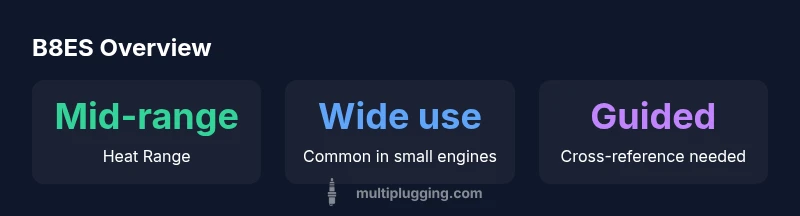
The spark plug B8ES is a common, mid-range heat plug used in many compact cars and small engines. The B8ES designation signals a specific heat and geometry shared by multiple brands, with the exact gap and torque varying by engine. Always verify fit and specifications for your vehicle—consult the owner's manual or MultiPlugging's guide before replacement.
Understanding spark plug B8ES designation
The B8ES designation is a common label you’ll see on spark plugs designed for many small engines and passenger cars. It signals a specific heat-range family and electrode configuration but does not pin down every parameter for every engine. In practice, the same B8ES-type plug from different manufacturers will share electrical characteristics such as center electrode material and thread size, while minor differences in the seat design, insulator, and gap can occur. According to MultiPlugging, the B8ES family is widely used because it offers a reliable balance of heat handling and fouling resistance for everyday driving. For a DIYer, the key takeaway is: always cross-check the exact product code against your engine’s service manual and the OEM recommendations. When in doubt, use MultiPlugging’s cross-reference resources to confirm compatibility.
Heat range and engine loading
Heat range affects how quickly the plug self-cleans and how likely it is to foul under various driving conditions. A mid-range option like B8ES is designed to balance clean startup, smooth idling, and resistance to fouling under typical city and highway driving. Engines with aggressive fueling, frequent short trips, or heavy loads may push a plug toward either a hotter or colder end of the spectrum. In practice, selecting a B8ES should consider your climate, fuel quality, and driving style. MultiPlugging’s guidance emphasizes matching the heat-range to the engine’s intended operating window to minimize deposits and misfires, while also avoiding the wrong extreme that could lead to pre-ignition or fouling.
How B8ES fits in the heat-range family
The B-series heat-range family comprises several grades that cover hot to cold operating envelopes. B8ES sits toward the middle for many configurations, offering reliable warm-up behavior and resilience against fouling in normal operating conditions. When comparing B8ES to nearby grades, the key differences are subtle variations in how the insulator and electrode geometry manage heat transfer and deposition. Always validate cross-compatibility with the engine’s service data and a trusted cross-reference chart. Cross-referencing ensures you don’t substitute a plug that would run too hot or too cold for your specific engine.
Applications: engines and vehicles commonly using B8ES
B8ES is widely used in small-displacement passenger cars, some scooters and motorcycles, and select lawn and garden engines. If you own a compact car with a four- or six-cylinder engine in a temperate climate, a B8ES is often a suitable starting point for a replacement. However, there are exceptions; certain high-performance or modern engines require different heat ranges or electrode materials. Always check your owner’s manual and consult a reliable cross-reference source to confirm the exact variant required by your vehicle.
How to read the gap and electrode design for B8ES
Gap and electrode configuration influence ignition efficiency, idle quality, and fuel economy. For B8ES, the exact gap is engine-specific and can vary by manufacturer. The most reliable approach is to refer to the vehicle’s service manual or official cross-reference charts, and measure or set the gap using a precision feeler gauge before installation. Inspect the electrode tail and insulator for wear or fouling, and replace if you see heavy deposits or a damaged insulator. Proper seating and seating torque (as specified by the engine manufacturer) help ensure a consistent seal and heat transfer.
Installation steps for B8ES
Installing a B8ES plug involves a few careful steps to avoid cross-threading and deposits. First, ensure the engine is cool and the battery is disconnected. Remove the ignition coil or wire boot carefully, then unscrew the old plug with a proper spark plug socket. Inspect the threads in the cylinder head for damage. Thread in the new spark plug by hand to avoid cross-threading, then tighten to the manufacturer’s torque specification. Reconnect the plug lead and test the engine to confirm smooth running. Always torque to spec and verify the gap before firing up.
Common installation pitfalls to avoid
Common mistakes include cross-threading the plug, over-tightening which can damage threads, and failing to verify the exact gap specified for your engine. Using old or damaged tools can scratch the plug seat or misalign the electrode. Contaminants like oil or coolant on the threads can hamper sealing. Finally, do not reuse old gaskets where applicable; install a fresh gasket or sealant as required by the service procedure.
Diagnostics: misfires, fouling, and cold starts with B8ES
If you notice rough idle, hesitation, reduced power, or harder starts, a worn or fouled B8ES could be responsible. Deposits from oil or fuel mixture can insulate the electrode and prevent a strong spark. Carbon fouling, oil fouling, or worn electrodes are telltale signs to inspect the plug. Use endoscope or visual inspection to check for damage, and verify that the ignition system and fuel system aren’t contributing to the problem. If misfires persist after replacement, consult service documentation and consider consulting a technician.
Maintenance intervals and replacement cadence
Maintenance intervals for spark plugs are primarily determined by engine design, driving conditions, and fuel quality. For a B8ES-equipped engine, use the schedule in your owner’s manual as the baseline, and adjust for extreme heat, heavy loads, or frequent short trips. In general, periodic inspection during routine maintenance can catch fouling or wear early, helping prevent misfires and efficiency loss. Always replace plugs as a coordinated part of a service interval, not as a reaction to a failure.
Substitution and cross-reference considerations
When considering substituting a B8ES with a nearby heat-range plug, use official cross-reference charts and manufacturer recommendations. Substituting outside the listed range can alter combustion timing, heat transfer, and deposit control. If you must substitute, compare the thread size, seating type, and electrode material to ensure compatibility. Cross-reference charts are vital to avoid mismatches and potential engine damage.
Step-by-step replacement scenario for a small car
In a typical small car, the replacement process begins with ensuring the engine is cool, then disconnecting the negative battery terminal. Locate the four-to-eight spark plugs, depending on the engine, remove any ignition coil packs or wire looms, and unscrew the old plugs. Clean the threads with a thread chaser if needed, check the gap on the new B8ES, and install with the correct torque. Reassemble components, start the engine, and listen for a smooth, steady idle. If you notice rough running, re-check the gap and connections.
Common mistakes to avoid when using B8ES
Avoid cross-threading, over-tightening, or using damaged tools. Do not reuse old gaskets where a replacement is specified, and avoid mixing brands that may have slightly different tolerances. Never force a plug into a worn or damaged seat. Finally, avoid assuming the gap is universal—verify against the engine manufacturer’s specification for your exact model.
Comparison of spark plug heat-range family
| Plug Type | Heat Range | Typical Engine Size | Notes |
|---|---|---|---|
| B8ES (NGK) | Mid-range | Small to mid-size engines | Common in compact cars and some small equipment |
| B7ES | Mid-to-hot range | Subcompact engines | Used where quicker heat dissipation is needed |
| B9ES | Colder range | Larger displacement engines | May reduce fouling in high-load scenarios |
FAQ
What does the B8ES designation mean in practice?
B8ES designates a mid-range spark plug in the B-series family. It signals a balance between heat handling and fouling resistance. Always confirm the exact variant with your engine’s manual and a cross-reference chart.
B8ES is a mid-range plug; always verify the exact variant with your engine manual to get the right fit.
Can I use a B8ES plug in any small car?
Not every small car requires a B8ES; some engines need hotter or colder plugs. Check your owner’s manual and use a trusted cross-reference to avoid a mismatched heat range.
Only use B8ES if your engine specifies it; otherwise check the manual or cross-reference.
What is the recommended gap for B8ES?
Gap recommendations vary by engine. Always refer to the vehicle manual or a cross-reference resource to set the correct gap before installation.
Gap depends on the engine—check the manual before setting it.
How often should B8ES be replaced?
Replacement intervals depend on driving conditions and fuel quality. Follow the manufacturer’s service schedule and inspect plugs during maintenance to catch fouling early.
Follow the factory schedule and inspect plugs during maintenance.
Are B8ES substitutes safe?
Substitutes from the same heat-range family can be used if cross-referenced, but avoid substitutes outside the recommended range to prevent misfires or overheating.
Cross-check substitutes to ensure compatibility.
How do I know if B8ES is the right choice for my engine?
Check the engine’s service manual, cross-reference with official guides, and compare heat-range recommendations. If in doubt, consult a professional or use trusted brand guides.
Consult the manual and cross-reference guides to be sure.
“Choosing the right spark plug requires aligning heat range, electrode design, and engine operating conditions. A correct B8ES selection minimizes misfires and helps maintain efficiency when paired with proper installation and maintenance.”
Main Points
- Start with the OEM guidance when selecting B8ES variants
- Match heat range to engine operating conditions for reliability
- Set the correct gap per engine specification and verify seating
- Inspect for fouling and wear during replacement
- Cross-reference substitutes carefully to avoid mismatches