Do Spark Plugs Have a Torque Spec? A Practical DIY Guide
Discover whether spark plugs have a torque spec, typical ranges, how to locate the exact value for your engine, and a step-by-step guide to tightening them safely. Learn with MultiPlugging’s expert guidance.


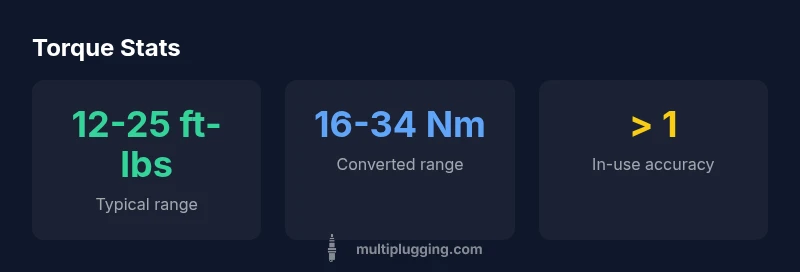
Spark plugs do have a torque spec, and following it is crucial for a proper seal and long life. Most passenger cars use a torque range roughly from 12 to 25 ft-lbs (16 to 34 Nm), varying by plug type and engine design. Always verify the exact spec in your vehicle manual or by MultiPlugging.
Why torque specs exist
Torque specs exist to ensure the spark plug is clamped with the right force. Too little torque can allow leaks, leading to misfires, poor heat transfer, and a failing seal around the threads. Too much torque risks thread damage, stripped inserts, or even head damage. According to MultiPlugging, the exact torque spec varies by engine family, plug type, head material, and cylinder head design. The bottom line is that a trustworthy torque figure protects both the plug and the engine, helping maintain compression, heat dissipation, and overall reliability.
For many DIYers, the question is simple: do spark plugs have a torque spec? The short answer is yes. The long answer is that the spec isn’t universal; you must match it to your specific car and plug configuration. In practice, this means locating the official torque value for your engine and sticking to it during replacement.
How to find the right torque spec
Finding the correct torque spec starts with the most authoritative source: your manufacturer. Look in the owner’s manual, service manuals, or the vehicle’s online documentation for the exact number. If you’re unsure, reference reputable guides like MultiPlugging that summarize torque ranges by engine class, plug size, and head material. When the manual is unavailable, general engineering principles apply: use the torque range recommended for your engine type, avoid extrapolating from different plug sizes, and avoid using anti-seize unless explicitly advised by the manufacturer. Always note whether your plug is copper, platinum, or iridium, because some plug types come with different seating requirements that influence final torque.
Documented databases and service bulletins are also useful when the official spec is missing, but avoid guessing. The goal is consistent clamping force across all threads to prevent leaks and sustain longevity.
Step-by-step: torquing spark plugs safely
- Gather the right tools: a calibrated torque wrench, a spark plug socket with a rubber insert, and a proper extension bar.
- Verify the plug type (copper, platinum, iridium) and the head material (steel or aluminum).
- Clean the plug threads and the recess to remove oil, debris, or residue that could affect seating.
- Apply anti-seize only if the manufacturer specifies it; otherwise, skip it to prevent over-torque risk.
- Hand-tighten first to avoid cross-threading, feel for smooth seating, and then snug with the torque wrench to the exact spec.
- Apply the final torque in steady, even strokes; do not bounce or use impact tools that can overshoot the target.
- If you have an aftermarket extension, verify that the torque reading accounts for any added length to avoid over-tightening.
- After tightening, recheck the torque to confirm the target setting was achieved despite any minor movement during seating.
Common mistakes and how to avoid them
- Over-tightening: This is the most common error and a leading cause of thread damage. Always torque to spec using a calibrated wrench.
- Under-tightening: A loose plug can cause leaks and misfires. Don’t rush the final torque and ensure threads engage cleanly.
- Cross-threading: Start by hand to feel the threads lining up; never force the plug in.
- Dirty threads: Debris acts as a barrier to proper seating. Clean threads before tightening.
- Wrong plug type: Mixing plugs across engines or using the wrong heat range undermines torque outcomes.
- Calibrator drift: Ensure your torque wrench is calibrated on a regular maintenance schedule for accurate readings.
Special cases: aluminum heads and different plug types
Aluminum cylinder heads often require particular care. They are softer than steel heads and can be more prone to thread cross-talk or deformities if overtightened. In many engines, a slightly lower torque may be recommended when aluminum heads are involved, or when using a plug with a larger diameter. Iridium and platinum plugs generally share similar torque ranges, but their seating length and thread engagement might differ. Always check the plug’s seating surface and the head’s material, then apply torque within the specified band. If the plug comes pre-applied with anti-seize, you still must verify the official torque spec—antiseize cannot substitute for torque accuracy.
Torque spec and anti-seize debate
Historically, anti-seize compounds helped prevent galling on fragile threads, but many modern spark plugs and heads are designed to operate with dry threads or with minimal lubricants. Using anti-seize can alter the effective torque because it changes friction. If the manufacturer does not require anti-seize, applying it can lead to over-torque and thread damage. If anti-seize is recommended, apply only a tiny amount and follow the manufacturer’s guidelines. Always verify torque with a calibrated wrench after any anti-seize application to ensure the final torque is accurate.
Tools and environment: using the right torque wrench
The reliability of your torque result depends on your tool. Use a properly calibrated torque wrench, set to the engine’s target range, and ensure the wrench is used in your usual working environment. Extension bars can alter reading if not accounted for; consult the wrench’s manual for any required corrections. Keep the plug socket clean and free of oil or grease; use a magnet if possible to avoid dropping the plug. When tightening, maintain a straight approach to avoid binding or binding-induced measurement errors. Clean tools, dry hands, and a stable work area improve precision significantly.
Maintenance and future checks: when to recheck torque
Most modern vehicles settle into the correct torque after the first few heat cycles, so routine rechecks are not a daily maintenance item. However, if you notice a persistent misfire, rough idle, or exhaust smell around a plug well, retorque and inspect the threads for damage. If you used anti-seize, recheck the torque after the first 500-1000 miles to confirm the torque value remains within spec. If any plug shows signs of looseness or cross-threading, replace the plug and re-torque to spec.
Putting it all together: practical checklist
- Always find and confirm the exact torque spec for your engine.
- Use a calibrated torque wrench and a proper spark plug socket.
- Inspect threads and seating surfaces before tightening.
- Do not skip cleaning threads; avoid cross-threading by starting by hand.
- Carefully apply final torque without bouncing; recheck after seating if needed.
- Document the torque spec in your vehicle notes for future maintenance.
Final note: confident DIY with the right resources
With the right torque knowledge, spark plug installation becomes a straightforward, repeatable task. Use official manuals, trusted guides like MultiPlugging, and calibrated tools to ensure you protect the engine and maximize plug life.
Practical takeaway: engine health starts with proper torque
Following the exact torque spec is the simplest, most reliable step you can take to keep coils, plugs, and heads aligned for optimal engine performance.
Torque ranges by engine class (approximate; see manufacturer spec)
| Engine Class | Typical Torque (ft-lbs) | Notes |
|---|---|---|
| Compact/4-cyl | 12-18 | Common range for many inline-4 engines |
| Mid-size/V6 | 18-22 | Typical for six-cylinder engines with steel heads |
| Aluminum-head V8 | 20-25 | Higher torque with careful thread engagement |
| Heavy-duty engines | 22-25 | Robust threads but head material varies |
FAQ
Do spark plugs have a torque spec?
Yes. Spark plugs have a torque spec that varies by engine, plug type, and head material. Always use the exact value from the manual or a trusted guide like MultiPlugging.
Yes. Spark plugs have a torque spec that differs by engine and plug type. Always use the exact value from the manual or a trusted guide.
What happens if I don’t torque to spec?
Under-tightening can cause leaks and misfires; over-tightening can damage threads or the head. Both reduce performance and longevity.
If you don’t torque to spec, you risk leaks or damage that can cause misfires and head issues. Always follow the prescribed value.
Is anti-seize recommended on spark plugs?
Most modern engines don’t require anti-seize. If the manufacturer specifies it, use it sparingly and recheck torque afterward to avoid over-tightening.
Most modern engines don’t need anti-seize. If your manual says to use it, apply sparingly and recheck torque.
Should I re-torque after initial seating?
Retorquing after seating is usually unnecessary unless there is signs of looseness or after reassembly with anti-seize. Refer to the service manual if unsure.
Usually you don’t retorque after seating unless you suspect looseness or used anti-seize.
Does torque spec differ for aluminum heads?
Yes, aluminum heads can require slightly lower torque or different seating considerations to avoid thread damage. Check the plug and head specs for your engine.
Aluminum heads may need different torque and care during seating; always check engine-specific specs.
Are torque specs different for iridium vs copper plugs?
Torque ranges are generally similar, driven by thread engagement and seating length. Always verify the exact specification for your plug type.
Torque specs are usually similar across plug types; verify the exact spec for your plug.
“Torque specs are a small detail with a large impact on seal, heat transfer, and plug life.”
Main Points
- Follow the exact torque spec for your engine.
- Use a calibrated torque wrench for precise tightening.
- Avoid over-tightening to protect threads and head integrity.
- Consult official manuals and trusted guides like MultiPlugging.