Spark Plug Iridium vs Copper: A Practical Comparison for DIYers
An objective, expert comparison of iridium vs copper spark plugs, covering durability, ignition performance, heat range, cost, and maintenance to help DIYers choose the right option for their engine.


According to MultiPlugging, choosing between spark plug iridium vs copper hinges on real-world durability, maintenance needs, and the engine’s ignition control. This quick comparison outlines which material tends to last longer, how performance differs under common driving conditions, and when beginners should lean toward copper or iridium. If you want long-term reliability with fewer changes, iridium often wins; for budget-focused setups, copper is hard to beat.
Material science behind spark plug electrodes
Electrode material is the core determinant of a spark plug's wear resistance, heat management, and overall reliability. Copper cores deliver excellent electrical conductivity and strong heat transfer, making them a staple for many everyday engines. Iridium, on the other hand, uses a micro-thin iridium-tipped electrode that resists wear far better than traditional materials. When comparing the topic of spark plug iridium vs copper, the choice often trades upfront cost for long-term durability and maintenance intervals. According to MultiPlugging, the wear resistance of iridium translates into fewer electrode erasures under typical driving cycles, while copper plugs remain a budget-friendly option with straightforward replacement needs.
Copper plugs generally have thicker electrodes and broader heat ranges, which helps manage heat in older or high-mileage engines. Iridium plugs enable narrower gaps and finer tips, allowing for precise spark generation and robust performance across a wide range of coil designs and ignition systems. However, iridium manufacturing is more complex and the resulting price premium can be noticeable on a parts bill. For the home mechanic, the key takeaway is that the material choice impacts replacement intervals, torque considerations, and heat management more than it changes the basic wiring of the ignition system.
In practical terms, if you own a late-model vehicle with sophisticated ignition control, iridium plugs often align with the engine’s design goals. If you own an older model or a budget build, copper plugs provide a straightforward, cost-effective option that still delivers reliable ignition in normal driving conditions.
Comparison
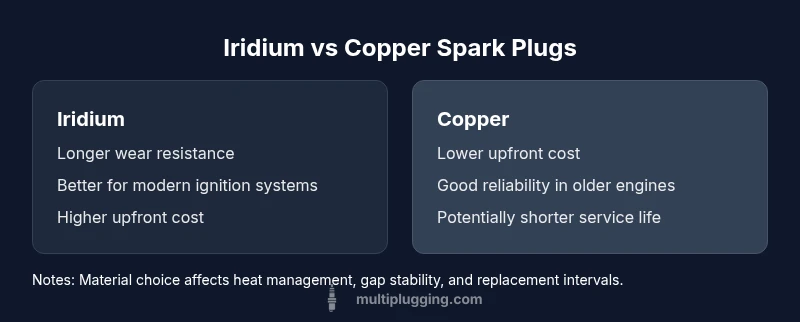
| Feature | Iridium spark plug | Copper spark plug |
|---|---|---|
| Lifespan potential/ Durability | Longer life potential under normal use | Shorter life potential under similar use |
| Ignition performance | Stable, precise spark with narrow gaps | Reliable spark with broader gaps (more forgiving) |
| Heat range flexibility | Tighter heat range, better stability for modern systems | Broader heat range, easier to match older engines |
| Initial cost | Higher upfront cost | Lower upfront cost |
| Maintenance needs | Typically less wear-related maintenance | May require more frequent inspection/replacement in some engines |
| Best for | High-mileage/high-performance applications | Budget builds and older engines |
Strengths
- Longer replacement intervals with iridium under many modern engines
- Better spark consistency at high RPMs and under load
- Lower maintenance frequency in suitable engines
- Copper plugs are inexpensive and easy to source
Negatives
- Higher upfront cost for iridium
- Copper plugs may wear faster in modern ignition systems
- Iridium availability is sometimes tiered by heat range and vehicle type
- Copper plugs can require more frequent checks on high-demand engines
Iridium is the winner for modern engines seeking long life and precise ignition, while copper remains the best value for older cars and budget builds.
For drivers with newer vehicles or those seeking fewer maintenance stops, iridium plugs offer durability and performance benefits that justify the higher price. If you’re working within a tight budget or maintaining an older engine, copper plugs provide dependable ignition at a lower upfront cost, with the caveat of potentially more frequent replacements.
FAQ
What is the main difference between iridium and copper spark plugs?
Iridium plugs use a hard, wear-resistant tip that extends life and allows for narrow gaps, while copper plugs offer lower upfront cost and straightforward maintenance but wear faster. The choice depends on engine design and driving habits.
Iridium tips wear slowly and work well with modern ignition systems; copper is cheaper and great for budget-friendly use cases.
Are iridium plugs worth the extra cost?
For engines designed to take advantage of precise spark and long life, iridium plugs can be cost-effective over time due to fewer replacement cycles. If your driving is light or your budget is tight, copper plugs may be more economical upfront.
If your car benefits from advanced ignition control, yes; otherwise, copper can be the smarter budget choice.
Do copper plugs work well in modern engines?
Copper plugs still work reliably in many modern engines, particularly older or budget-focused vehicles. However, they may not match the wear resistance and precise ignition of iridium in high-demand scenarios.
Copper plugs work fine in many cars, but iridium often provides longer life in modern engines.
Can I mix iridium and copper plugs in the same vehicle?
Mixing plug types in a single engine can disrupt ignition timing and performance because built-in engine management is calibrated for a specific heat range and material. In most cases, it’s best to use the same type throughout.
Don’t mix plug types in one engine unless the manufacturer explicitly allows it.
How do I know which plug type is right for my car?
Check the vehicle’s owner manual or consult the manufacturer’s recommendations for heat range and material. Consider your driving style, maintenance willingness, and whether you need longer replacement intervals or budget-friendly upkeep.
Look up your car’s recommended spark plug type and match it to how you drive.
Main Points
- Prioritize durability if you own a modern, high-compression engine
- Choose copper for budget builds and older engines
- Always verify heat range and gap specs from the manufacturer
- Avoid mixing plug types within a single engine where the ignition system is calibrated for a specific material