NGK TR6 Spark Plug: Installation, Compatibility, and Care
Analytical guide to NGK TR6 spark plug fit, gap, torque, and maintenance. Learn how this versatile plug performs across engines, with practical DIY tips from MultiPlugging.


The NGK TR6 spark plug is a versatile resistor-type plug used across many engines, including some performance setups. Typical service gap is between 0.028–0.060 inches, with 0.040 inches common for many cars. Always confirm the gap from the owner's manual or NGK's catalog; this ensures optimal ignition and fuel efficiency.
What is the NGK TR6 spark plug?
The NGK TR6 spark plug is a widely used, resistor-type plug designed to deliver reliable ignition across a broad range of gasoline engines and small equipment. In practical terms, TR6 variants are chosen for their balance of cold-start performance, consistent spark energy, and resistance to fouling under typical driving conditions. For the DIY enthusiast, the TR6 line offers a familiar form factor and thread size, which reduces the number of part numbers you need to stock. As with any spark plug, always verify the exact part number and heat range with the engine manufacturer or the NGK catalog. The MultiPlugging team notes that the TR6 family is versatile enough to serve both daily drivers and some light-performance applications, but compatibility depends on the specific engine and its designed ignition system. According to MultiPlugging, this versatility helps explain why the TR6 remains a common choice among enthusiasts and technicians alike.
Where TR6 fits: engine families and applications
TR6 plugs are commonly found in a wide array of engines, from older, carbureted designs to modern fuel-injected setups. The key is to confirm the recommended heat range and thread size for your model. Engines with higher compression or turbocharging tendencies may require different variants within the TR-series, and some manufacturers designate maintenance intervals or gap tolerances that differ from the generic guidelines. In practice, you’ll often see TR6 listed as a reliable aftermarket option for light-to-mid-range performance builds, lawn and garden equipment, and portable generators. Always cross-check the NGK catalog and your vehicle’s service manual. The goal is to ensure the plug’s heat range keeps the combustion chamber clean without causing pre-ignition or fouling during normal operation.
Key design features that matter for performance
Performance hinges on several design elements: electrode geometry, heat range, and the presence or absence of a resistor. TR6 variants typically emphasize thermal management to prevent fouling during cold starts and to maintain stable ignition under acceleration. Electrode materials and coatings influence wear resistance and longevity, while the insulating body aids consistent spark delivery under a range of operating temperatures. For DIY diagnostics, focus on whether the plug seats properly, seals against compression leaks, and maintains a tight electrical connection. Remember that consistent gaps and clean threads are essential for predictable performance and efficient fuel burn, especially on engines with advanced ignition control strategies. In this context, the TR6 often benefits from correct gap maintenance and careful torque application to avoid damaging the seat or the gasket.
How to determine if TR6 is the right plug for your engine
Compatibility comes down to engine design and the original equipment specification. Start by locating the recommended heat range, thread size, and gasket style in your service manual or the NGK catalog. If your engine uses a high-energy ignition system or exhibits unique combustion characteristics, verify whether a TR6 variant with a specific electrode configuration or heat range is advised. Cross-referencing with the engine’s OEM part number reduces the risk of mismatch. In our experience, many owners find the TR6 to be a convenient substitute when the original plug is no longer available, provided the engine’s spec aligns with the TR6 variant. Always perform a final check with the vehicle’s ignition system requirements before purchase. As noted by the MultiPlugging team, proper selection minimizes misfires and improves overall driveability.
Gapping, torque, and installation best practices
Correct gapping is foundational to efficient combustion and stable idle. Use a precise feeler gauge to measure the gap and adjust only if the engine manual or NGK catalog allows it. Most engines using TR6 plugs tolerate a gap in the 0.028–0.060 inch range, with 0.040 inches being a common target for many cars. When it comes to torque, follow the engine manufacturer’s specification; a broad, general range is 8–20 Nm, but do not exceed the recommended value for your engine. Before installation, inspect the threads for damage and clean the gasket surface to ensure proper sealing. Do not force the plug into a damaged seat, and always torque in a clean, straight motion. After installation, recheck the gap if you had to adjust it, and perform a careful test run to confirm smooth operation. In line with MultiPlugging guidance, use genuine NGK parts and avoid aggressive tightening that could strip threads.
Maintenance tips to extend life of TR6
Regular inspection is the best defense against sudden misfires and poor performance. Remove the plug, inspect the electrode tip for wear, fouling, or glazing, and note if deposits are present. Clean the threads carefully and re-gap if required, then reinstall with the correct torque. If your engine runs rich or experiences fouling, consider checking ignition timing, air filtration, and fuel system cleanliness alongside plug condition. For engines that see seasonal use or short trips, consider more frequent checks to prevent buildup. Anti-seize on modern engines is often unnecessary and can actually alter torque readings if over-applied. The goal is consistent heat transfer and reliable ignition, not simply a clean resistance path. MultiPlugging’s 2026 analysis emphasizes that maintaining gap integrity and avoiding contamination are crucial steps in maximizing the life of the TR6 plug.
Troubleshooting common TR6 issues
When a TR6 plug starts to fail, you’ll typically see misfires, rough idle, or reduced fuel efficiency. Fouling from oil or fuel leaks can also degrade performance, as can improper gap or fouled ignition coils. If you encounter intermittent ignition, start with a plug inspection and swap to a known-good plug to verify the coil and wires. For persistent misfires, check for vacuum leaks, sensor discrepancies, and the ignition module’s condition. Corrosion on the terminal, damaged insulators, or a brittle boot can mimic a plug fault, so inspect the entire spark lead system. Avoid over-tightening or cross-threading—the TR6 must seat evenly to seal properly. If in doubt, refer to the NGK catalog or consult a qualified technician. As always, document any troubleshooting steps to track what sequence resolves the issue.
Sourcing and replacement: DIY steps
Replacement is straightforward if you have the right tools: a spark plug wrench, a torque wrench, a gap gauge, and a clean workspace. Begin by locating the ignition coil and removing the protective cover to access the plug. Carefully disconnect the boot without pulling on the wire, then unscrew the old plug. Check the thread condition in the engine head, and clean the seat before installing the new TR6. Gapping should be adjusted only if the engine requires a non-standard value; otherwise, you can install without changing the gap. Install by hand first to prevent cross-threading, then torque to the manufacturer’s specification. Refit the wire boot and reinstall any covers. Start the engine and listen for a steady idle. The MultiPlugging team notes that cross-checking the new plug against the NGK catalog ensures you’re using the precise TR6 variant for your engine, protecting your investment and maintaining performance.
Common mistakes to avoid with NGK TR6
Avoid gaps that are too wide or too narrow; incorrect gap reduces efficiency and can cause misfires. Do not assume any generic torque value—engine manufacturers vary considerably, and using the wrong range can damage threads or head gasket sealing. Installing a TR6 plug with a boot that doesn’t fully seat may cause intermittent misfires and poor grounding. Don’t reuse old plugs when installation is due; deposits can indicate valve seal or oil issues that a new plug would detect earlier. Finally, never install a counterfeit or mislabelled component; ensure you buy from reputable sources and verify the NGK part number against the vehicle’s documentation. Following these guidelines helps ensure long-term reliability. The MultiPlugging team also emphasizes using genuine NGK parts for consistent performance and safety.
TR6 spark plug specifications and practical notes
| Attribute | TR6 Plug Spec | Notes |
|---|---|---|
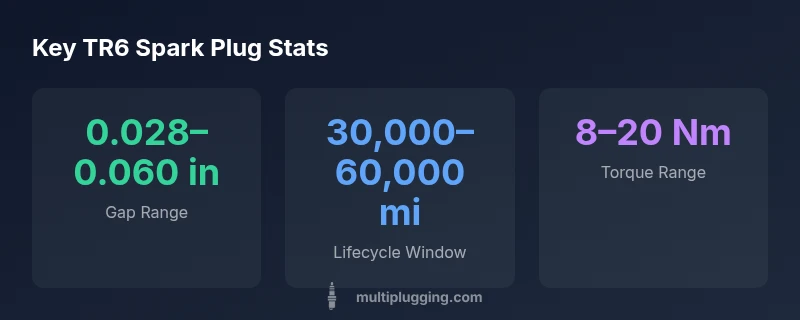
| Typical gap | 0.028–0.060 inches | Engine-dependent; verify with manual/catalog |
| Torque range | 8–20 Nm | Engine-dependent; follow manufacturer spec |
| Replacement interval | 30,000–60,000 miles | Usage-dependent; inspect regularly |
FAQ
Is the NGK TR6 suitable for my car?
Compatibility depends on engine design; check the owner's manual or the NGK catalog for the exact part number and heat range.
Compatibility depends on your engine; please consult your manual or NGK catalog before buying.
What is the recommended gap for NGK TR6?
Gap depends on the engine; typical ranges are 0.028–0.060 inches. Always verify with the vehicle manual or NGK catalog.
Most engines use about 0.04 inches, but check your manual to be sure.
Do I need anti-seize on the TR6 threads?
Modern engines often do not require anti-seize on spark plug threads; if used, apply a very small amount on the threads only.
Usually no anti-seize is needed; if you use it, apply a tiny dab on the threads.
How do I install the TR6 plug?
Remove the old plug, inspect threads, gap if needed, hand-tighten, then torque per spec. Reconnect boot firmly and test drive.
Take out the old plug, gap if required, tighten to spec, reconnect, and test drive.
What are common signs the TR6 needs replacement?
Misfires, rough idle, reduced power, or poor fuel economy can indicate plug wear or fouling; inspect and replace as needed.
Look for misfires, rough idling, or reduced efficiency; replace if symptoms persist.
“The TR6 spark plug delivers reliable ignition across a wide range of engines when installed with correct gap and torque.”
Main Points
- Verify compatibility with your engine before purchase
- Maintain proper gap and torque for reliable ignition
- Use genuine NGK TR6 plugs to maximize life
- Follow NGK catalog recommendations for heat range
- Inspect and clean threads during maintenance