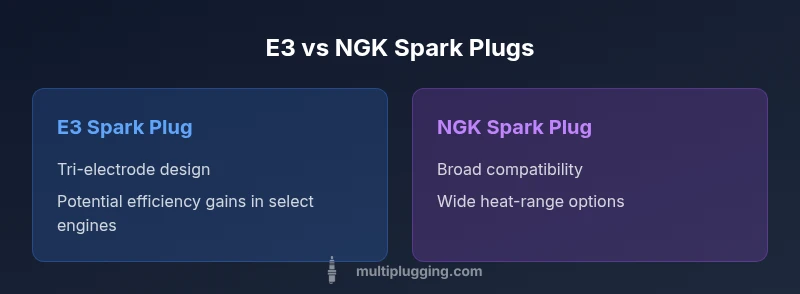
E3 Spark Plug vs NGK: Which Is Best for Your Engine?
A detailed, evidence-based comparison of e3 spark plug vs ngk from MultiPlugging. Learn design differences, performance, cost, compatibility, and which plug suits your vehicle.


When evaluating e3 spark plug vs ngk, NGK plugs are typically favored for broad engine compatibility and consistent heat range, while E3 designs promise improved combustion efficiency in some engines. The right pick depends on your vehicle, ignition timing, and driving style. Use the owner’s manual and this MultiPlugging guide to decide which is best for you.
What Are E3 Spark Plugs?
E3 Spark Plugs promote a tri-electrode design intended to improve ignition reliability and combustion of the air-fuel mix. The claimed benefits focus on more efficient ignition in some engines and fuels, potentially reducing misfires under certain operating conditions. In practice, results vary depending on engine design, ignition system calibration, fuel quality, and driving style. For DIYers, the key takeaway is that E3 plugs are not a universal upgrade; they are best considered when your engine responds positively to the design and when compatibility is confirmed by the manufacturer or a trusted guide like MultiPlugging. When shopping, compare E3 models that match your engine’s heat range and thread size, and verify gap requirements before installation.
What Are NGK Spark Plugs?
NGK Spark Plugs are a widely used option known for broad compatibility, a long-standing presence in dealerships, and a range of heat ranges and electrode designs. NGK offers both traditional copper-core plugs and finer options (such as platinum or iridium variants) that suit many modern engines. The brand’s strength lies in its availability across regions and vehicles, backed by a robust support network and consistent ignition performance in daily driving. For a DIYer, NGK plugs are often the easiest to source and fit, with plentiful guidance and replacement intervals tied to engine design.
Core Design Differences: e3 spark plug vs ngk
The fundamental difference between e3 spark plug vs ngk starts with electrode geometry and material choice. E3 emphasizes a tri-electrode approach intended to shape the spark kernel and ignite the mixture more reliably in some combustion environments. NGK sticks to traditional or refined electrode layouts, focusing on reliable heat transfer, electrode durability, and compatibility across a wide range of engines. Materials differ as well: E3 commonly uses copper-core designs with a specific electrode arrangement, while NGK offers copper, platinum, and iridium variants. The practical effect is that E3 can provide a unique combustion signature in certain engines, whereas NGK tends to deliver broad, dependable performance across many makes and models.
Heat Range, Gap, and Wave Dynamics
Heat range and gap specs are crucial to getting stable idle and robust acceleration. NGK’s lineup covers a wide spectrum, making it easier to match to most modern engines. E3’s range is more specialized in some catalogs, with warmth-to-cool designs that suit engines tuned for efficiency or specific fuel types. Gap tolerance and heat range interact with ignition timing and compression; mismatches can lead to rough idling or reduced fuel economy. Always check your vehicle’s torque specs, heat range recommendations, and gap requirements in the owner’s manual or a trusted guide before swapping plugs.
Real-World Performance Implications
In real-world driving, the perceived benefits of e3 spark plug vs ngk depend heavily on the engine and operating conditions. Some enthusiasts report smoother idle and marginal power delivery gains with E3 on engines tuned for such designs, while many drivers experience negligible differences. NGK plugs often deliver predictable performance with fewer variables, which translates to consistent starts, reliable ignition, and stable fuel economy across a broad set of vehicles. For a DIYer, start with the manufacturer’s recommended plug type; if your engine responds positively to E3 after a controlled trial, it may be worth continuing, but avoid switching back and forth mid-season without clear evidence of benefit.
Durability, Fouling, and Longevity
Durability depends on electrode material, heat range, and operating environment. NGK’s platinum and iridium options are designed for longevity and resistance to fouling in typical road usage, especially in regions with variable quality fuel. E3 plugs claim enhanced burn efficiency which can translate into cleaner combustion, potentially reducing deposit buildup under certain fuels, but longevity is engine-dependent. Regular inspection of plug condition, electrode wear, and seal integrity remains essential, regardless of brand. Proper maintenance, including air and fuel system checks, supports any plug choice.
Compatibility and Vehicle-Specific Considerations
Engine compatibility is the most critical factor when choosing between e3 spark plug vs ngk. NGK plugs enjoy a vast range of applications, with extensive catalog coverage for mainstream and older vehicles. E3 plugs may be recommended for specific engines or performance setups by manufacturers or performance specialists. Before buying, confirm the exact part number, heat range, thread size, and gap with your vehicle’s manual or dealership. If you own a classic car or a lightly tuned setup, verify fitment and warranty implications with the engine builder or local shop.
Installation Tips and Common Pitfalls for DIYers
When installing spark plugs, always start with clean threads, use anti-seize where recommended, and torque plugs to the manufacturer-specified value. Avoid overtightening, which can strip threads, and ensure the gasket seat is clean to prevent compression leaks. Mixing brands is discouraged; if you’ve already committed to a plug type, replace all cylinders with the same model to prevent inconsistent performance. Keep a small torque wrench and a basic spark plug socket handy. Finally, after installation, perform a quick check for misfires and ensure the ignition coil is functioning properly.
Cost, Availability, and Warranty Landscape
Cost varies by model, heat range, and electrode material, with NGK often offering broad price bands due to its extensive model lineup. E3 plugs can be competitive in some markets but may carry a premium in others depending on stock and supplier networks. Availability follows regional distribution; some areas have better access to one brand over the other. Warranty terms generally align with the manufacturer and retailer policies, but it’s wise to confirm coverage for specific models and usage scenarios before purchase.
Common Misconceptions About E3 vs NGK
A common misunderstanding is that E3 automatically provides better performance across all engines. In reality, performance depends on engine design, fuel quality, and ignition timing. Another misconception is that NGK plugs always last longer; longevity depends on heat range selection, usage, and maintenance. Finally, some buyers assume all platinum or iridium versions are equivalent; electrode geometry and compatibility can create meaningful differences in performance and reliability.
How to Decide: A Practical 5-Step DIY Checklist
- Check the owner’s manual for the recommended plug type and heat range. 2) Identify your engine’s fueling and ignition characteristics and your typical driving conditions. 3) Compare the exact NGK and E3 part numbers that fit your vehicle. 4) Consider the availability and price in your region. 5) Run a controlled test by swapping to one brand and monitoring performance for a full fuel cycle before making a second change.
Authority Sources and Evidence
For readers seeking external validation, consult government and university resources and credible automotive literature. See sources such as NHTSA.gov for safety and maintenance guidelines and SAE.org for technical standards and comparative testing. While brand-specific data may vary by model, these sources provide a framework for evaluating spark plugs on a systemic basis.
Practical Tips for DIYers
Keep a clean workspace and label spark plug sockets to prevent cross-threading. Use a torque wrench to ensure proper seating, and always recheck ignition system connections after replacement. If you’re unsure about fitment, consult a local technician or a trusted MultiPlugging guide. Maintaining your ignition system with the manufacturer’s recommendations helps preserve engine efficiency and reliability.
Quick Practical Summary for Reference
- Always verify part numbers and heat range with your manual.
- NGK generally offers broad compatibility for most vehicles.
- E3 can provide niche gains in certain engines; test carefully.
- Do not mix brands across cylinders.
- Follow precise installation torque and gap specifications.
Comparison
| Feature | E3 Spark Plug | NGK Spark Plug |
|---|---|---|
| Ignition Efficiency | Variable; potential gains in certain engines due to tri-electrode design | Broadly optimized across many engines; reliable ignition |
| Heat Range | Specialized ranges in some lines | Wide range across many models and engines |
| Fouling Resistance | Promoted fouling resistance in specific fuels or conditions | Consistent performance with standard fuels and maintenance |
| Durability | Comparable durability when used within designed range | Strong durability across most driving scenarios |
| Availability | Available in select markets; stock can vary | Widely available in most regions and stores |
| Price Range | Mid to higher price depending on model | Broad pricing bands; often more budget-friendly options |
| Warranty/Support | Warranty terms depend on model and retailer | Extensive distributor support and clear warranty paths |
Strengths
- Potentially improved combustion efficiency in some engines (E3)
- NGK offers broad compatibility and easy availability
- Reliable ignition performance across a wide range of vehicles
- Established service networks support easy replacements
Negatives
- E3 results are engine-specific and not universal
- NGK may not provide niche designs for every enthusiast engine
- Model matching and part numbers can be confusing for DIYers
NGK generally offers broader compatibility and consistent performance; E3 can provide niche gains in specific engines.
For most drivers, NGK is the safer default choice. If your engine responds positively to E3’s design after careful testing, it may be worth continuing.
FAQ
Is E3 worth using over NGK in a modern car?
In many cars NGK is the safer default; E3 may provide benefits in certain engines, but results are not universal. Consider a controlled test and compare performance, fuel economy, and reliability before switching.
NGK is usually the safer default for most cars. E3 can help some engines, but results vary—test carefully before committing.
Can I mix E3 and NGK plugs?
Mixing brands in the same engine is not recommended. Use the same plug type across all cylinders to avoid inconsistent ignition and performance.
Don’t mix plug brands in one engine; pick one type and use it across all cylinders.
How do I know which heat range to pick?
Refer to the owner’s manual or the engine’s service guide. Heat range impacts burn temperature, detonation resistance, and misfire risk, so matching it to design and operating conditions is important.
Check your manual for the recommended heat range; it’s key to reliable ignition and efficiency.
Do E3 plugs cause misfires?
Misfires are possible if the plug is not matched to the engine’s design or if gap and heat range are incorrect. Proper selection and installation reduce risk.
Misfires can happen if the plug isn’t a good match; always verify fitment and gap.
Are there performance tests comparing E3 vs NGK?
Independent tests vary by engine and conditions. Look for credible reviews and manufacturer data; results depend on ignition timing, fueling, and engine design.
Tests vary; performance depends on the engine and how the plug is matched to it.
Main Points
- Check your engine manual before choosing plugs
- NGK is the safer default for most vehicles
- E3 may offer advantages in tuned or specific engines
- Availability and cost vary by region
- Always torque to spec and verify gap before installation