Why Would a Spark Plug Go Bad? Troubleshooting Guide
Discover why spark plugs fail, how to diagnose causes quickly, and proven fixes. Practical steps, safety tips, and prevention to keep your engine firing smoothly.


Most likely, wear or fouling causes a spark plug to go bad. Carbon buildup, oil fouling, or a worn electrode lead to misfires and power loss. Quick fix: pull the plug, inspect electrode and insulator, gap correctly, and replace if worn. If misfires persist, check ignition wires and the fuel system.
What typically causes a spark plug to go bad
When you ask why would a spark plug go bad, the answer usually points to either wear, fouling, or a combination of heat and deposits. Over time the electrode wears down, the ceramic insulator can crack, and the gap can close or widen, degrading ignition performance. This is not just a 'plug problem'—it's a symptom of broader engine health: poor fuel quality, oil leaks, or ignition faults can all accelerate deterioration. According to MultiPlugging analyses, the most common culprits are electrode wear, carbon fouling from rich mixtures, and oil contamination from worn piston rings or valve seals. Early detection through simple visual checks and a basic compression/fuel assessment can save expensive repairs later.
Common symptoms indicating a failing plug
A plug that is going bad often reveals itself through several telltale signs. Look for rough idle, engine misfires, reduced fuel economy, difficulty starting, and a noticeable drop in power under load. You may also notice fouling deposits on the tip or ceramic insulator, a burnt or melted electrode, or a shiny, oily film if oil leaks have contaminated the plug. If you’re asking why would a spark plug go bad and you see any of these symptoms, perform a quick plug pull and inspect the electrode for wear or deposits. Early diagnosis helps prevent a failed catalytic converter and more expensive repairs.
How heat and environment accelerate spark plug degradation
Heat is the enemy of spark plugs. Severe engine temperatures, high-load driving, and aggressive ignition timing all increase thermal stress. In harsh environments—short trips, frequent cold starts, or dusty settings—the insulator can crack and deposits can form faster. Heat cycles cause the electrode to wear unevenly, particularly on older designs or incorrect heat-range plugs. In addition, vibration and improper torque can loosen or crack the porcelain, which also reduces reliability. This section explains how repeated heating and cooling cycles contribute to a gradually degraded gap and spark efficiency, explaining why a plug may go bad sooner than expected.
Fuel quality, oil leaks, and their impact on plugs
Fuel quality directly affects combustion cleanliness. Poor-quality fuel or incorrect air-fuel mixture leads to carbon fouling, carbon tracks, and glaze on the gap. Oil leaks from valve seals, piston rings, or PCV systems can foul plugs with oil film, oil burns, or ash buildup. Both fuel and oil contamination increase misfire likelihood and shorten plug life. MultiPlugging's research highlights that consistent maintenance of fuel delivery systems and addressing oil leaks promptly dramatically extends plug life and engine performance.
Electrical system influences on spark plug life
Even with a good plug, the ignition system must deliver a strong, consistent spark. Worn ignition coils, faulty spark plug wires, or a defective ignition control module can fail to ignite the air-fuel mixture reliably, causing repeated misfires and accelerated wear on the plug electrode. Misfiring conditions stress the center electrode and insulator, accelerating fouling and erosion. If the coil or wires are marginal, replacing the plug alone will not fix the underlying issue and will lead to repeated failures.
Visual inspection checklist: signs of wear and fouling
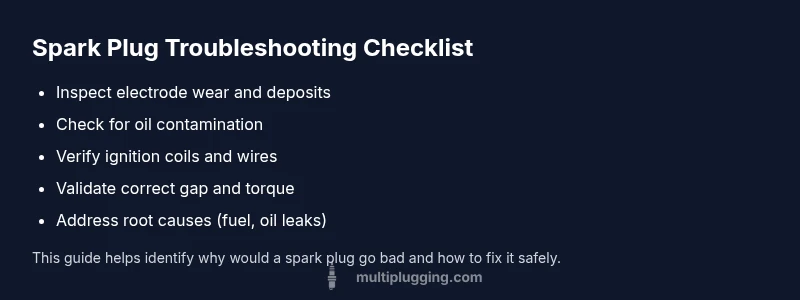
Carry a simple inspection routine: remove each spark plug and examine the tip and electrode. Signs of a bad plug include worn electrodes (gap increased visually), heavy carbon deposits, oil fouling (shiny, wet oil film), white or blistered insulator, and a cracked ceramic body. A healthy plug usually has a light tan to gray insulator color and a clean, intact electrode edge. Comparing a known good plug from a similar engine can help identify abnormal wear. Remember to inspect the plug wires and boot seals for damage or cracks as well.
Cleaning vs replacement: when to toss or clean a plug
In general, carbon and light fouling may be removable with a careful cleaning process, but this is not a long-term fix. Oil fouling or electrode wear indicates replacement is necessary. If the plug tip shows melted or eroded electrodes or the ceramic is cracked, replace the plug. Cleaning is not recommended for oil-fouled or heavily worn plugs, as it can mask underlying engine problems and lead to repeated failures. Replacing all plugs in a single service interval is often a cost-effective choice to restore performance and reliability.
Preventive maintenance to extend spark plug life
Proactive maintenance helps prevent premature plug failure. Use the correct heat-range plug for your engine, keep the air intake and fuel system clean, and address oil leaks promptly. Regularly check the gap and replace plugs at manufacturer-recommended intervals, or sooner if you drive in harsh conditions. A consistent service schedule reduces deposit formation and keeps ignition timing optimal. For best results, use quality fuel, maintain clean oil, and keep ignition components in good condition.
Safety and best practices while servicing spark plugs
Always work on a cool engine, disconnect the battery before starting, and wear eye protection. Use the right spark plug socket and torque wrench to avoid over-tightening threaded holes or snapping plugs. Work in a well-ventilated area and keep combustibles away from hot components. If you are not comfortable with spark plug work or encounter seized plugs, seek professional assistance to prevent injury or engine damage. A methodical approach reduces the risk of damage and ensures a reliable repair.
Steps
Estimated time: 45-60 minutes
- 1
Prepare tools and workspace
Gather a spark plug socket, ratchet, torque wrench, gapping tool, anti-seize (if recommended), and a new set of plugs. Disconnect the battery and ensure the engine is cool before you begin to avoid burns or electric shock.
Tip: Lay out parts in order to match cylinder positions for reinstallation. - 2
Access the plugs
Remove engine covers or air intake components as needed to access the spark plug wells. Rotate the engine or use a spark plug boot puller to carefully loosen each boot without tearing the rubber. Identify each plug by cylinder number.
Tip: Do not yank on wires; twist slightly to loosen boot before pulling. - 3
Remove old plugs
Clean around the plug wells to avoid debris dropping into the engine. Use a proper socket to remove each plug slowly to prevent cross-threading. Inspect threads for damage and keep plugs organized by cylinder.
Tip: If a plug is stubborn, apply a small amount of penetrating oil and wait before retrying. - 4
Inspect and measure gap
Check electrode wear, insulator condition, and the gap with a gap tool to spec. Replace if worn or damaged; re-gap only if you’re confident in the measurement. Clean deposits if you’re reusing the plug (not recommended for oil fouled).
Tip: Always compare to the vehicle’s service manual gap specification. - 5
Install new or regapped plugs
Thread plugs by hand first to avoid cross-threading. Tighten to manufacturer torque spec, not overly tight to prevent thread damage. If recommended, apply a light coating of anti-seize on threads, then snug with a torque wrench.
Tip: Torque specs vary; over-tightening is a common cause of thread harm. - 6
Reassemble and test
Reinstall boots securely, reattach covers, reconnect the battery, and start the engine. Listen for a smooth idle and watch for any idle fluctuation or misfire indicators. Confirm performance improvement in the first drive cycle.
Tip: If misfires continue, scan for ignition or fuel system faults as well.
Diagnosis: Engine performance issues hint at a failing spark plug
Possible Causes
- highWorn electrode or degraded insulator
- mediumCarbon fouling from rich mixture
- mediumOil contamination from leaks
- lowIgnition coil/wires failing
Fixes
- easyInspect and replace worn or fouled plugs; gap to spec
- mediumCheck ignition wires and coils for damage; replace if needed
- mediumAddress oil leaks and air-fuel ratio problems at source
- hardTest engine with diagnostic tools to confirm misfire source
FAQ
What are common signs a spark plug is bad?
Common signs include rough idle, engine misfires, reduced fuel economy, hard starting, and visible deposits or wear on the plug. Visual inspection and compression tests help confirm the diagnosis.
Look for rough idling, misfires, and reduced fuel economy; inspect the plug for deposits or wear, and perform a quick test to confirm.
Can a bad spark plug damage the catalytic converter?
Yes. A misfiring plug can cause unburned fuel to enter the exhaust, overheating and damaging the catalytic converter over time. Fix the misfire and replace affected plugs to prevent further damage.
A bad plug can cause misfires that damage the catalytic converter if not addressed.
How often should spark plugs be replaced?
Replacement intervals vary by vehicle and plug type. Follow manufacturer recommendations and consider more frequent changes in harsh driving conditions or if you notice performance issues.
Follow the car maker's interval and replace sooner if you drive hard or in tough conditions.
Is cleaning a spark plug worth it?
Cleaning can remove some deposits, but it is not a reliable fix for worn or oil-fouled plugs. Replacing worn or contaminated plugs is generally recommended for long-term reliability.
Cleaning isn't reliable for worn or oil-fouled plugs; replacement is usually the better option.
Should I replace all plugs at once?
Replacing all plugs in the same tune-up is common practice to ensure balanced ignition and consistent performance. If one plug is damaged, inspect the others for wear and replace as needed.
Often yes—changing all plugs together keeps ignition balanced and avoids repeated service.
Watch Video
Main Points
- Inspect plugs during regular maintenance to catch wear early
- Replace worn plugs to restore power and efficiency
- Address root causes to prevent repeated failures
- Maintain ignition components for longer plug life
- Torque correctly to avoid thread damage