Why Is Spark Plug Black and Sooty? A Troubleshooting Guide
Discover why spark plugs turn black and sooty, from rich fuel mixtures to oil burning. Get practical fixes, maintenance tips, and guidance on when to seek professional help.


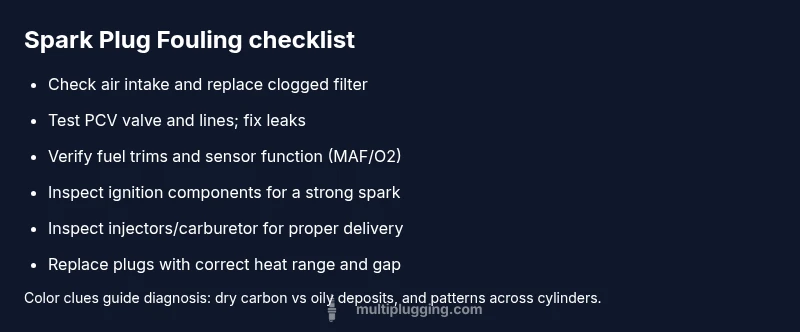
A spark plug that’s black and sooty usually signals the engine is burning too much fuel or oil, or the air-fuel mixture is too rich. Start with quick checks: verify the air filter and PCV system, confirm the plug heat range matches engine specs, and ensure proper spark plug gap. If the color persists, inspect injectors, carburetor, and valve seals.
Why is Spark Plug Black and Sooty? What the Color Teaches About Combustion
If you're trying to diagnose engine health, understanding why is spark plug black and sooty can save time and money. The color on the electrode indicates combustion quality, carbon buildup, and potential fuel delivery issues. According to MultiPlugging, plug color is a practical first check that guides you toward or away from fuel-system problems and into protective maintenance. Black, sooty deposits typically mean the mixture is too rich or oil is entering the combustion chamber, while a dry gray plug suggests normal operation. In many engines, persistent sooty deposits point to a chronic over-fueling problem, bad ignition timing, or a faulty PCV valve. By recognizing this color pattern, you can prioritize simple fixes (air intake, fuel trim, and sensor checks) before diving into more involved repairs.
Common Causes of Black, Sooty Plugs
There are several plausible reasons for a plug to appear black and sooty. A chronically rich mixture from faulty injectors, a dirty MAF sensor, or vacuum leaks can push fuel into the cylinder. A clogged air filter or restricted intake restricts air flow, effectively leaning the mixture toward richness. Oil burning is another major culprit—worn piston rings, valve guides, or valve seals can introduce oil into the chamber, leaving oily carbon deposits. Ethanol-rich fuels and frequent short trips also promote carbon buildup. Finally, using the incorrect spark plug heat range or a worn plug can promote fouling at idle. Each cause has its own signs and a targeted fix path.
How to Inspect the Air-Fuel System
Begin with simple, non-invasive checks: remove and inspect the air filter for clogs, and inspect intake hoses for cracks or leaks. Use a scan tool to review fuel Trim (LTFT/STFT) and ensure the engine isn’t running too rich or too lean. Check sensors that influence air and fuel content, such as the MAF, MAP, and oxygen sensors; a faulty sensor often misreports air or fuel. Inspect the fuel path: clean or replace dirty injectors, recalibrate a carburetor, and look for fuel leaks. A cracked intake manifold gasket or a vacuum leak can also alter the mixture and color the plug.
Oil Contamination Indicators and PCV System Health
Oil on the plug often points to internal engine wear or PCV-system issues. Distinguish oily deposits from dry carbon—oil fouling tends to be shiny and greasy. Inspect the PCV valve and lines for clogs or cracks, and test for excessive crankcase pressure. Worn valve seals or piston rings can escalate oil consumption and create persistent fouling. Resolving oil-related causes usually means replacing seals or rings and ensuring the PCV system is functioning correctly.
Ignition System and Heat Range Considerations
Even with a healthy fuel system, ignition problems or the wrong heat range can cause fouling. A plug that’s too cold can accumulate deposits during short trips, while a too-hot plug may burn oil and carbon. Verify plug gap to OEM specs and ensure ignition components—coils, wires, and the coil pack—deliver a crisp spark. If you’re using the wrong heat range, upgrade to the correct one and re-check coil integrity to avoid rapid fouling.
Fuel Delivery and Combustion Quality
Fuel quality and delivery significantly impact plug color. Ethanol-rich or low-quality fuels can leave more carbon behind. Inspect injectors for leaks, spray pattern, and proper operation; for carbureted engines, ensure jets are clean and calibrated. A lean misfire or poor spray can leave soot behind. After repairs, perform a short drive to bring the engine up to temperature and monitor fuel trims to ensure stable combustion.
Maintenance, Prevention, and Troubleshooting Plan
Prevention starts with routine maintenance: replace plugs at the manufacturer-recommended interval, and verify correct torque and gap during installation. Maintain clean air intake and replace the air filter regularly. Keep the PCV system clean and test it as part of major services. If fuel delivery components require servicing, schedule injector cleaning or carburetor work if symptoms persist. Document plug color changes and driving patterns to improve future diagnostics. When fouling persists or performance worsens, seek professional help.
Steps
Estimated time: 60-90 minutes
- 1
Prepare and safety check
Park on a level surface and let the engine cool. Disconnect the negative battery terminal and gather basic tools (socket set, feeler gauge, Torque wrench, and a spark plug socket).
Tip: Wear eye protection and gloves; keep track of tools and removed parts. - 2
Remove and inspect the plug
Carefully remove the spark plug from the cylinder you’re testing. Visually inspect the electrode and insulator for color, oil, or glazing; note which cylinder the plug came from for future diagnostics.
Tip: Take a quick photo of the plug for reference. - 3
Check gaps and heat range
Verify the plug gap against OEM specifications using a gap tool. Confirm the heat range matches the engine’s design and operation. Replace with a correctly gapped plug if out of spec.
Tip: Use anti-seize only if recommended by the OEM. - 4
Inspect air intake and fuel path
Remove and inspect the air filter; replace if dirty. Inspect hoses and the PCV system for leaks or cracks, and test for vacuum leaks using safe methods.
Tip: Replace a clogged air filter even if the plug color is normal. - 5
Assess fuel delivery and sensors
Check fuel trims with a diagnostic scanner; test MAF/MAP and O2 sensors for proper operation. Clean or replace clogged injectors or adjust carburetor settings if applicable.
Tip: If sensors read unusually high or low values, address those first. - 6
Evaluate oil and PCV health
Check engine oil level and condition; inspect PCV valve and lines for clogging. If oil consumption is high or valve seals show wear, consider further mechanical inspection.
Tip: Do not ignore oil consumption—it's a red flag. - 7
Reinstall and test drive
Reinstall the plug with proper torque and reconnect all components. Take a short test drive to bring the engine to operating temperature and observe for misfires or changes in plug color.
Tip: Monitor performance indicators like smooth idle and steady fuel trims. - 8
Document and plan next steps
Record the observed colors, driving conditions, and any anomalies. If color returns or performance worsens, escalate to injector service or engine diagnostics.
Tip: A well-documented log speeds up professional diagnosis. - 9
Reassess ignition and wiring
Inspect ignition coils, wires, and connectors for wear or damage. A weak spark can cause fouling and misfires even with proper fuel delivery.
Tip: Replace worn ignition components in matched sets if needed. - 10
Safety and professional help
If you’re unsure or the plug color remains abnormal after checks, consult a professional technician. Do not continue driving a car that shows worsening fouling or fuel issues.
Tip: Professional help is essential for chronic oil fouling or suspected internal engine wear.
Diagnosis: Sooty black spark plug color observed after inspection or during routine maintenance
Possible Causes
- highRich fuel mixture due to faulty injectors, carb, or sensor indicating high fuel delivery
- mediumOil burning from worn piston rings, valve seals, or high crankcase pressure
- lowOil contamination from PCV valve or vacuum leaks
Fixes
- easyCheck air intake, clean/replace air filter, and verify fuel trim; inspect sensors (MAF/oxygen) and ignition timing
- hardRepair or replace faulty injectors or carb jets; address oil leaks and worn valve seals
- easyReroute or clean PCV system, replace PCV valve, and fix vacuum leaks
FAQ
What does a black and sooty spark plug mean for engine health?
Black and sooty plugs usually indicate excessive fuel or oil entering the combustion chamber, or a mixture that’s too rich. It’s a warning sign that you should inspect the air intake, fuel delivery, and potential oil leakage paths. Use this as a starting point for targeted testing rather than a final diagnosis.
Black, sooty plugs warn of possible rich fuel conditions or oil contamination. Start with air and fuel checks, then inspect oil-related paths if needed.
Can a faulty PCV valve cause sooty plugs?
Yes. A stuck or collapsing PCV valve can increase crankcase pressure and pull oil into the intake, creating sooty deposits on plugs. Inspect and replace the PCV valve and related hoses as a first-line fix.
A bad PCV valve can push oil into the intake, fouling the plug. Check and replace the PCV valve first.
Does ethanol fuel contribute to black plugs?
Ethanol-rich fuels can promote carbon buildup by altering combustion efficiency, especially in older engines or those with marginal ignition systems. Ensure fuel quality and consider a tune-up if deposits persist.
Ethanol fuels can worsen deposits and should be considered in maintenance decisions.
Can a bad ignition coil make plugs black?
A weak ignition coil can cause incomplete combustion, leading to fouled plugs. If you observe misfires or weak spark during testing, check or replace coils and plugs in sets.
Weak spark can foul plugs; test and replace failing coils if needed.
When should I replace spark plugs after fouling?
If fouling recurs after cleaning or if there are signs of wear (eroded electrodes, glazing), replace with new plugs following the manufacturer’s gap and torque specs. If symptoms persist, seek professional diagnosis.
Replace fouled plugs if wear is evident or misfires recur.
Is oil fouling different from fuel fouling?
Yes. Oil fouling deposits are typically sticky and greasy, often indicating wear or PCV issues, while fuel fouling is carbon-rich and dry. Proper diagnosis requires differentiating the deposit type and testing engine seals and fuel paths.
Oil fouling is greasy; fuel fouling is carbon-based. Check seals and fuel paths for both.
Watch Video
Main Points
- Start with air and fuel system checks
- Oil fouling requires inspection of PCV and seals
- Match heat range and gap to OEM specs
- Document plug color and driving patterns for future diagnostics
- Seek professional help for persistent fouling or oil-related failures