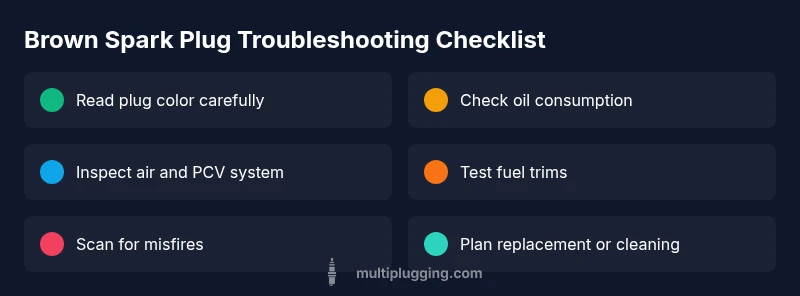
Why Is My Spark Plug Brown? A Troubleshooting Guide
Discover why spark plugs turn brown, what that color means for engine health, and how to diagnose and fix deposits quickly. A practical MultiPlugging guide.


Brown spark plugs usually indicate normal wear or light carbon deposits from combustion or fuel additives. In many engines, brown coloration signals a healthy burn with the right air-fuel mix, but it can also point to a slightly rich mixture, oil intrusion, or coolant-related residue. Because color alone isn’t definitive, perform a proper inspection and test procedures to confirm.
What brown spark plugs mean
According to MultiPlugging, if you're asking why is my spark plug brown, color usually reflects deposits from combustion byproducts, carbon buildup, and mild wear. Brown does not always mean immediate damage, but it is a signal to check fuel, oil, and cooling-system conditions. In most engines, brown coloration indicates a burn that is not aggressively lean or rich, but a neutral, normal-wear pattern. Use color as a clue—not a verdict—and follow up with a proper inspection and tests. A well-informed color read, combined with plug condition and engine symptoms, helps you plan the right maintenance action quickly. Seeing brown on a plug in one cylinder isn’t a guarantee of trouble, but it’s a cue to verify with a quick diagnostic test and maybe a plug swap if wear is evident.
Brown deposits sources: carbon vs oil
Brown or tan deposits are often carbon-based from the combustion chamber. They can form when the engine runs a slightly rich fuel mixture during cold starts, or when the air-fuel mix isn't corrected after a cold start. Oil traces that migrate into the combustion chamber can brown the plug tip as well, especially if the piston rings or valve guides allow some oil consumption. Fuel-system additives and octane boosters can also leave brownish residues on the electrode. The key is to distinguish whether deposits come from fuel, oil, or external contaminants.
Is brown always a problem? When it’s normal wear
In many cases brown color is simply normal wear after tens of thousands of miles. However, persistent browning that appears across multiple cylinders, or a change from previously clean plugs, can signal a misadjusted air-fuel ratio, improper ignition timing, or an oil-leak issue. If the plug shows oil fouling (wet, oily deposits) or has a glazed surface, treat it as a potential engine issue rather than a cosmetic change. Always compare color to new or known-good plugs to interpret correctly.
Quick checks you can do before pulling the plug
- Verify the obvious: check for oil on the plug threads, inspect the oil and coolant levels, and listen for misfires or rough running.
- Inspect the air filter and PCV valve; a clogged PCV can alter the air-fuel balance and cause browning.
- Check the spark plug gap with a feeler gauge and ensure the plug torque is within spec when reinstalling.
- Consider test driving the car after a quick inspection to see if symptoms persist. If you notice consistent browning on one plug or multiple cylinders, proceed with a deeper inspection.
Diagnostic clues: color, fuel, oil, coolant
Color is one data point. To diagnose, look at several indicators: oil consumption trends, fuel trims from OBD-II, and compression in affected cylinders. If browning accompanies blue smoke, you likely have burning oil; if it’s dark but dry carbon, it’s more likely a fuel-rich condition. If there’s coolant in the combustion chamber, you may notice white deposits and cross-check with cooling-system tests. MultiPlugging analysis shows a strong link between persistent brown deposits and maintenance gaps.
Step-by-step: clean, replace, or adjust
- Safety first: disconnect the battery, wear gloves, and work in a well-ventilated area.
- Remove the spark plugs from the affected cylinders using a proper socket and a torque wrench.
- Clean lightly carbon-covered plugs with a non-abrasive brush and approved solvent, or replace if deposits are heavy or oil fouling is present.
- Inspect the electrode and insulator for cracks or signs of wear; replace the plug if in doubt.
- Re-gap and reinstall with manufacturer torque; then run the engine and monitor performance for a few hundred miles.
- If browning recurs in the same cylinder, investigate fuel delivery or oil control issues. Tip: never scrub aggressively; heat and solvent can damage the ceramic insulator.
How driving habits affect plug color
Short trips, frequent cold starts, and stop-and-go city driving promote carbon buildup and brown deposits. Regular highway driving helps burn off deposits and maintain a healthier color. Aggressive acceleration or a consistently rich fuel mixture can accelerate browning. Your driving pattern interacts with fuel quality, air filtration, and ignition timing to determine color.
Maintenance to prevent brown plugs
- Use high-quality fuel, change fuel filters regularly, and keep air filters clean to support proper combustion.
- Replace plugs at intervals recommended by the engine manufacturer and follow torque specs.
- Maintain proper oil consumption and address oil leaks early; clean PCV system to maintain air-fuel balance.
- Test and adjust spark timing and ignition coil health; keep cooling system leak-free. Preventive measures reduce brown deposits and improve efficiency.
When to seek professional help and next steps
If browning persists across cylinders or accompanied by misfires, loss of power, or rough idle, schedule a professional check. A technician can perform compression tests, leak-down tests, and fuel-system diagnosis to identify root causes. The MultiPlugging team recommends professional evaluation when you see repeated color changes, obvious oil consumption, or cooling-system issues.
Steps
Estimated time: 60-90 minutes
- 1
Safety and setup
Prepare the workspace, disconnect the battery, and gather the necessary tools. Ensure the engine is cold before touching plugs. Wear eye protection and gloves to prevent burns and chemical exposure.
Tip: Always work in a well-ventilated area and keep a clean workspace to avoid dropping parts. - 2
Remove the affected spark plug
Identify the correct cylinder and carefully loosen the plug using a proper spark plug socket. Keep track of which plug came from which cylinder to avoid misfiring after reassembly.
Tip: Label or photograph plug positions to prevent mix-ups. - 3
Inspect color and deposits
Examine the plug for color, cracks, glazing, or oil on the ceramic and threads. Measure the gap if possible and compare to OEM spec. Dry sooty deposits suggest carbon buildup; oily deposits indicate oil intrusion.
Tip: Take clear photos for reference when deciding on replacement vs cleaning. - 4
Decide cleaning vs replacement
If deposits are light and the plug shows no oil fouling or damage, clean and re-gap carefully. Heavy deposits or any oil, cracks, or damage means replace with a new plug of the correct type and heat range.
Tip: Never reuse a plug with damaged ceramic or worn electrodes. - 5
Test engine health after service
Reinstall the plug with proper torque, reconnect the battery, and start the engine. Listen for misfires and monitor idle. If symptoms persist, perform additional tests or rebuild fuel/ignition components.
Tip: Note any rough idle or hesitation after starting to guide next steps. - 6
Prevent future browning
Address root causes: fix oil leaks, service PCV, use quality fuel, and maintain air filtration. Schedule regular plug inspections per manufacturer guidelines to catch color changes early.
Tip: Set maintenance reminders to stay ahead of deposits.
Diagnosis: Brown spark plug deposits observed after removal
Possible Causes
- mediumOil leakage into combustion chamber (oil fouling)
- highOverly rich fuel mixture due to faulty injection or carburetor tuning
- highFrequent short trips causing incomplete combustion
- lowNormal wear due to mileage
- lowCoolant intrusion into combustion chamber (head gasket leak)
Fixes
- easyCheck for oil consumption and PCV system; inspect valve seals
- mediumDiagnose fuel system and adjust air-fuel mixture; replace faulty injector(s) or sensor(s)
- hardIf oil/fuel issues are found, repair or replace affected components and re-test
- hardIf coolant leak suspected, perform cooling system tests and head gasket assessment
FAQ
What does brown spark plug color indicate?
Brown color on a spark plug can indicate carbon buildup or mild wear from normal operation. It may also reflect a slightly rich fuel mix or minor oil intrusion. Use it as a diagnostic cue, not a final verdict, and confirm with tests.
Brown color usually signals carbon buildup or mild wear. It can also mean a slightly rich mix or minor oil intrusion, but you should verify with tests.
Can I reuse a brown spark plug after cleaning?
If deposits are light and the plug shows no damage, you may clean and reuse it. However, if there is oil fouling, glazing, or cracks, replace with a new plug. Reusing damaged plugs can lead to misfires or engine damage.
Light deposits might be cleaned, but oil fouling or damage means replace the plug.
What are the dangerous signs brown plugs hide?
Persistent browning across cylinders, oil on the plug, or a loss of power and misfires are dangerous signs that require professional diagnosis. These can point to oil leaks, fuel delivery issues, or head gasket problems.
Watch for ongoing browning with misfires or power loss; these require a professional check.
How can I prevent brown plugs in the future?
Prevent browning by using quality fuel, maintaining the air filter and PCV system, following recommended plug replacement intervals, and addressing oil leaks promptly. Regular inspection helps catch issues before they color the plugs.
Use quality fuel, maintain filters and PCV, and replace plugs on schedule.
Should I replace all plugs if one is brown?
If one plug is brown due to wear and the others look similar, consider replacing all plugs to maintain consistent performance. If only one is affected and the others are clean, you may selectively replace that one, but investigate underlying causes.
If one plug looks worn and others match, you may replace just that one, but check for root causes.
Is brown plug color related to coolant leaks?
Brown deposits are not typically a direct sign of coolant leaks. White or frothy residues, along with coolant consumption, are more indicative of a leak. If you suspect coolant intrusion, schedule tests to confirm.
Coolant leaks usually show white residues and consumption; browning alone isn’t a sure sign.
Watch Video
Main Points
- Inspect color to gauge condition and plan replacement.
- Check fuel, oil, and cooling-system interactions.
- Clean or replace plugs based on deposits and wear.
- Maintain preventive maintenance to avoid browning.