Why Does My Spark Plug Have Gas On It? A Troubleshooting Guide
Urgent guide to diagnose and fix gas-fouled spark plugs. Learn common causes, safe checks, and a step-by-step plan to restore engine performance.


Gas on a spark plug usually points to flooding or an overly rich fuel mix. The quickest fix is to remove and dry the plug, check gap, and replace if fouled. Then inspect potential causes: a stuck carburetor or injector, PCV valve fault, or excessive fuel pressure. If the problem persists, test with a spark tester and review fuel delivery.
What gas on a spark plug means
If you’re asking, why does my spark plug have gas on it, the short answer is that the engine is either flooding or running far too rich. Gas can wash away the protective film on the electrode, leading to misfires and hard starting. According to MultiPlugging, gas fouling is one of the most common symptoms DIYers encounter when fuel delivery or ignition timing is out of spec. This condition often starts as a normal startup and can worsen as the engine warms. You may notice a strong fuel smell near the spark plug well or see a wet, glistening plug after removing the boot. The good news is that many gas-fouling events are reversible with targeted checks and fixes. Start with simple diagnostics: inspect the plug for fouling, verify the gap, and then examine the fuel system and recent maintenance that could have flooded the engine. Acting promptly helps prevent unburned fuel from harming emissions equipment and catalytic converters.
Common causes of gas on a spark plug
Gas fouling can result from several root issues. The most frequent are a flooded engine from a stuck choke or carburetor (in older cars), or an overly rich fuel mixture from a malfunctioning fuel injector, EFI, or regulator. A leaky fuel injector or punctured fuel rail can also spray extra fuel into the cylinder. A failed or sticking PCV valve can pull extra fuel into the intake, especially during cold starts. Ethanol blends and poor air filtration can aggravate rich running by altering air-fuel ratios. Finally, a damaged or worn spark plug itself can struggle to ignite a fuel-wlood charge, compounding misfire symptoms. Based on MultiPlugging Analysis, a large share of flooding cases stem from a fuel-delivery fault rather than a spark issue. In all cases, verify that the engine is not delivering fuel faster than it can burn, particularly during startup or warming.
Safe checks you can perform before you start
Safety first: work in a well-ventilated area, away from open flames, and with the engine off and cooled. Start with the simplest checks: visually inspect the spark plug wire and boot for cracks or corrosion, confirm the spark plug gap with a feeler gauge, and pull the plug to assess wetness. Check the air filter for clogging, inspect vacuum hoses for cracks, and verify there are no obvious fuel leaks near the injectors or carburetor. If you’re dealing with a modern EFI engine, a quick fuel pressure check at the rail (with the key off first, then on) can reveal regulator or injector faults. Do not rely on guesswork; document observed symptoms so you can compare with diagnostic steps later. If you smell strong gasoline fumes indoors, pause work and ventilate the garage thoroughly.
Diagnostic flow you can follow (overview)
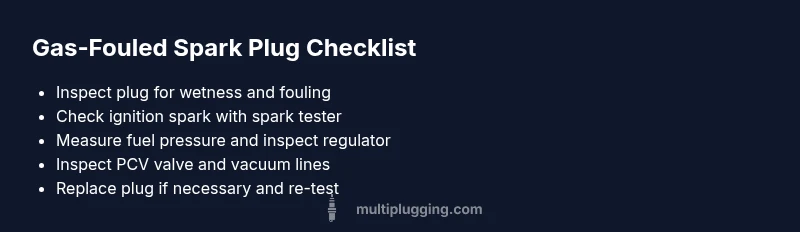
This section maps a practical path from symptom to solution. Start with the symptom you’re seeing (wet plug, strong fuel odor, or misfire). Next, determine whether the issue is mechanical (fouled plug, ignition coil) or fuel-delivery related (injector leak, regulator) and then apply the corresponding fixes. If simple dry-and-replace steps don’t resolve the issue, progress to checking fuel pressure, injector operation, PCV valve, and related vacuum lines. Always re-test after each corrective action to confirm improvement. In ambiguous cases, consult a service manual or a professional technician to avoid misdiagnosis and unnecessary component replacement.
Steps
Estimated time: 60-90 minutes
- 1
Prepare safely and gather tools
Park the car on a level surface, engage the parking brake, and disconnect the negative battery lead. Gather a spark plug socket, gap gauge, a torque wrench, a new plug, screwdrivers, and a fuel pressure gauge. This ensures you can work cleanly and safely, reducing the risk of shocks or fuel spills.
Tip: Wear eye protection and keep a fire extinguisher nearby. - 2
Remove the spark plug wire and plug
Carefully twist off the boot and pull the plug wire straight off. Use the spark plug socket to unscrew the plug counterclockwise. If the plug is stuck, apply gentle pressure with a rubber handle grip to prevent thread damage. Place the plug on a non-conductive surface for inspection.
Tip: Do not yank the wire; misalignment can ruin the coil boot. - 3
Inspect and decide on replacement
Look at the electrode color and the presence of wet fuel. A glossy black or wet plug indicates fuel fouling; dry, light tan electrodes indicate normal operation. If heavily fouled or oil-soaked, replace the plug and inspect the thread condition in the cylinder head.
Tip: Check the gap with a feeler gauge; reference the manufacturer’s spec. - 4
Check ignition spark and coil health
With the plug out, ground the electrode to the engine block and crank the engine briefly to observe spark strength. If the spark is weak or inconsistent, test the ignition coil, wires, and distributor (if applicable). Replace faulty components.
Tip: Ensure the engine is not cranking too fast; use a helper if needed. - 5
Inspect fuel delivery components
If the plug remains wet or the engine floods repeatedly, test the fuel pressure with the gauge at the rail. Inspect the regulator for leaks and check injectors for leaks or sticking. Replace faulty parts as needed.
Tip: Avoid over-pressurizing; follow service manual limits. - 6
Reinstall and test drive
Install a fresh plug or cleaned plug with the correct gap and torque to spec. Reconnect the wire boot, reconnect the battery, and start the engine. Monitor for smooth idle and absence of fuel odor lingering around the plug area.
Tip: Take a short test drive to ensure consistent performance.
Diagnosis: Engine shows misfire/mister, plug wet with fuel, strong fuel odor near plug well
Possible Causes
- highFuel flooding from stuck choke/carburetor or rich combustible mixture
- mediumLeaking injector or excessive fuel pressure from regulator
- mediumFaulty PCV valve or vacuum line causing excess fuel introduction
- lowFouled plug requiring cleaning or replacement
Fixes
- easyDry and inspect the spark plug; replace if fouled or oil-soaked
- mediumTest fuel pressure and inspect regulator/injectors for leaks
- easyInspect and replace PCV valve; check related vacuum hoses
- easyRe-gap and reinstall a fresh plug; verify ignition system integrity
FAQ
What does it mean if gasoline is on my spark plug?
Gas on the plug typically means flooding or a rich air-fuel mixture. It can wash lubrication off the electrode and cause misfires. Start with drying and replacing the plug, then inspect fuel delivery and ignition components.
Gas on the spark plug usually means the engine is flooding or running rich. Dry and replace the plug, then inspect fuel delivery and ignition components.
Can a rich fuel mix damage the engine long-term?
Prolonged rich running can cause carbon buildup and rough running, potentially damaging the catalytic converter and reducing efficiency. Fix the underlying cause—fuel delivery, sensors, or ignition timing—to prevent further wear.
Long-term rich running can cause buildup and inefficiency; fix the root cause to protect the engine.
Should I replace the plug every time it looks wet with fuel?
Not always. If the plug is only temporarily fouled and the gap is in spec, you can dry it and reuse after addressing the root cause. If it's oil-soaked or heavily fouled, replace it and inspect the engine for leaks or worn rings.
If it's only lightly fouled, dry and reuse; otherwise replace and check for leaks.
Is a faulty PCV valve likely to cause fuel fouling?
Yes, a sticking or failed PCV valve can pull excess fuel into the intake and worsen flooding conditions. Inspect and replace if necessary to restore proper air-fuel balance.
A bad PCV valve can contribute to fuel flooding; inspect and replace if needed.
When should I seek professional help?
If fuel pressure tests reveal regulator issues, fuel injector leaks, or repeated flooding after basic checks, it’s smart to consult a qualified technician. Complex fuel-system problems require specialized tools.
If basic checks don’t fix it or fuel systems look suspect, get a pro.
Watch Video
Main Points
- Identify whether flooding is mechanical or fuel-delivery related
- Dry, inspect, and replace fouled plugs promptly
- Test ignition spark and fuel pressure to locate root cause
- Address PCV and vacuum issues to prevent recurrence