What Can Wrong Spark Plugs Cause? A Practical Troubleshooting Guide
Discover how worn or fouled spark plugs trigger misfires, rough idle, and power loss. This urgent troubleshooting guide covers quick checks, safe at-home fixes, and a clear repair plan to keep your engine healthy.


Worn, fouled, or incorrectly gapped spark plugs are the most common causes of engine misfires, rough idle, and reduced power. Start with a quick plug inspection, verify gap and wiring health, and replace worn plugs with the correct heat range. If symptoms persist, differentiate ignition vs. fuel issues and test coils and wires.
What Can Go Wrong with Spark Plugs and Why It Matters
According to MultiPlugging, spark plugs are a small component with a big impact. When they wear or foul, they can cause misfires, rough idle, and a drop in acceleration. The repercussions aren’t limited to performance: you’ll likely see higher fuel consumption and increased exhaust emissions. Left unchecked, worn plugs can stress the ignition system and catalytic converter, potentially leading to more expensive repairs. This section explains the range of problems you might face and why timely diagnosis is essential for preserving engine life. Understanding these impacts helps you prioritize checks, plan a safe fix, and avoid unnecessary part swaps. The goal is to identify the root cause quickly and decide whether a simple plug replacement solves the issue or if further diagnostics are needed. According to MultiPlugging, early detection saves money and protects your engine health.
How Spark Plugs Fail: Common Failure Modes
Spark plugs fail for several reasons, including wear from normal operation, fouling from oil or carbon build-up, improper heat range or gap, and physical damage to the ceramic insulator. Worn electrodes widen the gap, causing delayed ignition and misfires. Oil fouling occurs when engine seals leak oil into the combustion chamber, fouling the plug and reducing spark efficiency. Carbon fouling can result from rich fuel mixtures or incomplete combustion. Additionally, excessive heat can cause pre-ignition or electrode erosion. Each failure mode has different symptoms and diagnostic clues, so it’s important to observe both the plug condition and engine behavior to pinpoint the root cause.
Symptoms That Signal Spark Plug Trouble
Common indicators include rough idle, engine misfires (especially under load), lack of power, hesitation during acceleration, and reduced fuel economy. A Check Engine Light may illuminate with misfire codes. You might notice difficulty starting the engine, especially in cold weather, or unique engine noises like pinging or knocking when under load. If plugs are fouled, corrosion around the terminals or ash-like residue may be visible on the tips. Remember: symptoms can overlap with fuel, ignition coil, or wiring issues, so a systematic approach helps avoid replacing parts unnecessarily. In some cases, multiple cylinders show symptoms due to a single faulty wire or coil.
Quick Home Checks You Can Do Today
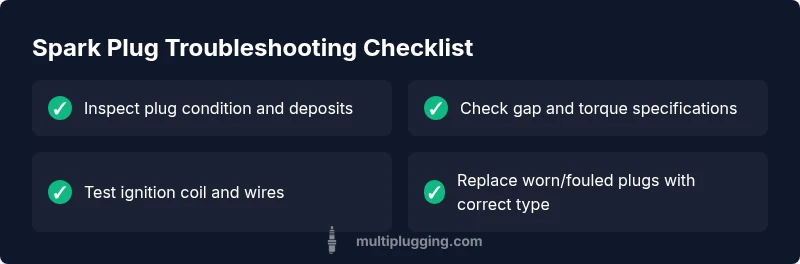
Start with safety: disconnect the battery, gather the right tools, and ensure you’re in a well-ventilated area. Remove one spark plug boot at a time to inspect each plug. Look for color and condition: a healthy plug tip is light tan to gray, with dry, free-standing residue. Fouling appears as black, oily, or sooty deposits; oil fouling suggests possible engine seal leaks. Check electrode wear, gap, and signs of arcing or cracks. Test firing by grounding the wire near the engine block and listening for a crisp spark (avoid touching the metal parts with bare hands). If you discover oil or heavy deposits, inspect for oil leaks or worn valve guides. Finally, verify the ignition coil and plug wires are in good condition, with no cracks or hardened resistance. If anything looks off, plan for replacement and retesting.
Step-by-Step Fix: Replacing Worn or Fouled Plugs
- Gather the right plugs for your engine and ensure you know the proper torque specification.
- Disconnect the negative battery terminal and relieve any fuel pressure if applicable.
- Remove the ignition coil pack/coil-on-plug assembly, then carefully extract the old plug using the correct socket.
- Inspect the plug well for debris, then set the new plug to the correct gap based on manufacturer specs.
- Install the plug finger-tight, then torque to spec with a torque wrench.
- Reassemble, reconnect wiring, and clear any codes by starting the engine and driving gently. If the check-engine light returns, recheck the plug gap and wiring, or consider testing the ignition coil.
- After replacement, perform a final test to ensure smooth idle and consistent ignition across cylinders.
Prevention: Maintenance to Stop Repeats
Create a schedule for regular spark plug inspection, typically during routine maintenance or every 30,000–100,000 miles depending on plug type and vehicle. Use the correct heat range and avoid over- or under-torquing plugs. Keep ignition components clean and connections tight, and watch for oil leaks that can foul plugs. Consider upgrading to an iridium or platinum plug if your engine design supports it, but only after verifying compatibility with your vehicle. A proactive approach minimizes future misfires and improves efficiency.
Steps
Estimated time: 60-90 minutes
- 1
Assess the symptoms and safety
Turn off the engine and disconnect the battery for safety. Note when the symptoms occur (cold start, idling, under load) to help separate ignition from fuel causes.
Tip: Safety first: wear gloves and eye protection; avoid touching hot components. - 2
Visually inspect plugs and wires
Remove a spark plug boot one at a time and inspect the plug tip, insulator, and deposits. Check the wires for cracks or heat damage; replace any cracked boots or damaged wires.
Tip: Do not pull on the wire; use the boot to lift it off the plug. - 3
Test plug gap and condition
Measure the gap with a feeler gauge and compare to the manufacturer’s spec. Adjust if within tolerance or replace if worn.
Tip: If you’re unsure about the gap spec, refer to the owner’s manual or service guide. - 4
Replace worn or fouled plugs
Install new plugs with the correct torque and torque sequence. Reinstall wires and coil packs carefully to avoid cross-threading.
Tip: Double-check the firing order for your engine to avoid misfires. - 5
Re-test and verify
Start the engine and listen for smooth operation. Take a short drive to confirm power and throttle response. If misfires persist, proceed to diagnostic tests for coils or fuel delivery.
Tip: Clear any codes by cycling the ignition after starting.
Diagnosis: Engine misfires, rough idle, or reduced power
Possible Causes
- highWorn or fouled spark plugs
- mediumIgnition coil or plug wires issue
- lowFuel delivery or injector problem
Fixes
- easyInspect plug condition and gap; replace worn/fouled plugs with the correct heat range
- mediumTest ignition coils and plug wires; replace faulty components
- hardCheck fuel system (injectors, fuel pressure) for lean/rich conditions
FAQ
What are the most common signs of bad spark plugs?
Common signs include rough idle, engine misfires, hesitation under acceleration, and reduced fuel economy. A check engine light may appear with misfire codes.
Look for rough idle or misfires and a drop in fuel efficiency. The check engine light can help confirm misfire codes.
Can bad spark plugs damage my engine?
Yes. Repeated misfires can overwork ignition components and exhaust systems, potentially stressing the catalytic converter and leading to increased emissions and repairs.
Yes, persistent misfires can stress ignition parts and the exhaust system, potentially causing more damage over time.
Should I replace all plugs at once?
If one plug is worn, check the others. In many engines, replacing all plugs at once ensures balanced performance and reduces the chance of future failures.
If one plug is worn, it’s wise to inspect the others and consider replacing them all for consistent performance.
Is it safe to drive with bad spark plugs?
Driving with fouled or failing plugs can cause rough running and potential damage. Limit driving and get a fix performed soon to avoid further issues.
Not ideal to drive with bad plugs; get it fixed soon to prevent bigger problems.
How do I know the correct spark plug gap for my engine?
Refer to the vehicle’s owner manual or service guide for the exact gap. Use a feeler gauge to verify and adjust if required, avoiding incorrect gaps that cause misfires.
Check the owner manual for the exact gap, then verify with a feeler gauge.
Watch Video
Main Points
- Check spark plugs first for misfires and power loss
- Identify if issues are ignition- or fuel-related
- Replace worn or fouled plugs with correct spec
- Inspect ignition wires and coils for reliability
- Maintain a regular plug maintenance routine to prevent issues