Spark Plug Signs: Diagnose and Fix Fast
Identify spark plug signs and troubleshoot ignition issues quickly with this DIY guide. Follow symptom flow, step-by-step fixes, safety tips, and prevention strategies.


Most common spark plug signs point to wear or fouling that disrupts combustion. Quick fix: inspect a plug visually, check electrode wear and deposits, and verify the gap matches the engine spec. If deposits are heavy or misfires persist, replace the plugs and inspect ignition wiring.
What spark plug signs mean for your engine
Spark plug signs are the visible cues your engine gives when the ignition system isn’t firing as it should. The term refers to symptoms like rough idle, misfires, reduced power, or a stubborn hesitation, plus the telltale appearance of the plugs themselves. According to MultiPlugging, recognizing spark plug signs early can avert costly repairs by guiding you to the right place to start. In modern engines, worn or fouled plugs degrade combustion efficiency, cause unburned fuel to wash past the rings, and create emissions that trigger the check engine light. The symptoms can show up in different ways depending on engine type, fuel, and maintenance history. For example, a misfire on a single cylinder often feels like a temporary stumble, while chronic misfires on multiple cylinders feel progressively worse and may threaten catalytic converter health. Keep a small notebook in your glovebox to track when signs appear, what you were doing at the time, and how long it lasts. This helps identify patterns and avoids guessing when you shop for replacements.
Common signs and what they point to
Spark plug signs span a spectrum from mild to severe. Each sign points to a few likely causes, but the root is not always the plug alone—it can be the ignition coil, wires, fuel system, or internal engine wear. Common signs include rough idle, sluggish acceleration, and reduced fuel economy. A heavy, oily deposit on the plug usually signals oil leakage or ring wear, while a black, sooty carbon coating indicates misfiring from fuel mixture issues or carbon fouling. White, blistered ceramic indicates pre-ignition risk or advanced wear in a high-compression engine. Check engine light frequently accompanies misfire codes (like P030X) which point you toward the cylinder with the issue. If you see oil on the ground or in the plug well, your diagnosis widens to possible valve cover or piston ring issues. The key is to look for the pattern over multiple drives and to compare plugs from several cylinders to see if wear is uniform.
Quick in-garage checks you can do today
These checks are designed to be quick and safe, and they often reveal whether you’re dealing with plug wear, fouling, or a simple gap mismatch. First, ensure the ignition is off and the battery is disconnected when removing components near the engine bay. Locate the plug wires and use the correct spark plug socket to pry loose the connector. Inspect the plug visually: are there heavy carbon deposits, oil residues, or melted insulator? Measure the electrode gap with a feeler gauge and compare to the manufacturer’s spec (found in your manual or on the plug packaging). If a plug looks worn or fouled, mark it for replacement. Compare the suspect plug with a known-good plug if you have one from a similar cylinder. Another quick check is to swap the front and rear plug wires if you suspect a coil or wire issue; if the problem moves with the wire, you’ve isolated a fault in that circuit. After the checks, reinstall everything carefully and reconnect the battery.
How to prepare for a plug replacement safely
Preparing to replace spark plugs is a straightforward task, but safety comes first. Gather the essential tools: a spark plug socket, ratchet, a torque wrench (if your manual specifies a torque), a gap gauge, anti-seize compound only if recommended, and a replacement set of plugs of the correct type. Park on a flat surface, engage the parking brake, and disconnect the negative battery cable. Remove the engine cover if present, then proceed to remove each plug wire by gripping the boot, not the wire, to avoid internal damage. When removing a stubborn plug, wiggle gently and avoid twisting with too much force. Clean the well before installing the new plug to prevent debris from falling into the cylinder. Thread the new plug by hand to avoid cross-threading, then tighten to the manufacturer’s recommended torque or snug-then-one-quarter-turn rule if your spec allows. Refit wires and covers, then start the engine and listen for smooth idle and proper response.
Steps
Estimated time: 60-90 minutes
- 1
Prepare workspace and tools
Set up in a well-lit area on a flat surface. Gather the spark plug socket, ratchet, gap gauge, replacement plugs, and a torque wrench if recommended. Disconnect the negative battery terminal and wear eye protection. Label wires if you are removing multiple plugs to avoid mix-ups.
Tip: Keep a clean tray for old parts to prevent losing small components. - 2
Identify the faulty plug
If you suspect a single-cylinder issue, use a spark tester or swap suspect plugs to neighboring cylinders to see if the problem follows the plug. Visually inspect the electrode for wear, deposits, or oil contamination. If the plug is dull, rounded, or oily, it’s a strong replacement candidate.
Tip: Compare the suspect plug with a known-good plug of the same type. - 3
Remove the old plug carefully
Loosen the plug boot with a gentle twist while keeping the boot on the wire intact. Use the spark plug socket to unscrew the plug. Avoid wrenching on the ceramic insulator or applying side pressure that could crack the ceramic.
Tip: Turn gradually and avoid sudden force to prevent thread damage. - 4
Inspect and decide on replacement
Check electrode wear, deposits, and the gap. If wear or deposits are significant or the gap is out of spec, replace with a plug of the correct heat range and style. Do not attempt to re-gap stubborn plugs beyond the manufacturer’s tolerance.
Tip: If uncertain, replace rather than re-gap to reduce risk. - 5
Install the new plug and gap
Thread the new plug by hand to avoid cross-threading, then tighten to the recommended torque or to 'snug + a 1/4 turn' if specified. Refit the wires carefully and ensure the boot seats fully. Do not over-tighten or forced seating can damage the head.
Tip: Lubricate threads lightly only if recommended by the plug manufacturer. - 6
Test and reassemble
Reconnect the battery, start the engine, and listen for a smooth idle with no misfire. If you still notice roughness or a check engine light, recheck wiring and consider replacing coils or conducting a more thorough fuel system diagnosis.
Tip: Take a short test drive and monitor for any abnormal behavior.
Diagnosis: Engine runs roughly, misfires, or has reduced power
Possible Causes
- highWorn or fouled spark plugs
- mediumOil fouling from worn piston rings or valve stems
- lowIncorrect plug type or gap
Fixes
- easyReplace with correct plug type and gap, and ensure proper installation
- mediumAddress oil leakage or engine wear if deposits indicate oil fouling
- mediumInspect and replace ignition coils or wires if misfire persists after replacement
FAQ
What are the most common spark plug signs?
Rough idle, misfires, reduced power, and lower fuel economy are typical signs of spark plug trouble. You may also see oil or carbon deposits on the plug. If these signs appear across multiple cylinders, the issue may extend to ignition coils or wiring.
Common signs include rough idle, misfires, and reduced fuel economy, often signaling worn or fouled plugs.
Should I replace all plugs at once?
If one plug is worn or fouled, it's often best to replace the entire set to maintain even performance. Uneven wear can cause imbalanced combustion and further misfires.
Usually yes, replacing all at once helps keep engine performance balanced.
Can bad spark plugs damage the engine?
Yes. Long-running misfires can stress ignition coils, sensors, and catalytic converter. Replacing plugs promptly reduces risk and keeps exhaust emissions in check.
Yes, persistent misfires can harm the ignition system and exhaust system.
How do I know the right gap for replacement?
Refer to the vehicle’s manual or the plug packaging for the correct gap. Use a feeler gauge to set the gap before installation, and do not force the gap beyond manufacturer limits.
Check the manual for the exact gap and set it with a gauge.
When should I seek professional help?
If misfires persist after replacement, or you suspect valve or piston wear, it's wise to consult a professional. An expert can diagnose ignition, fuel, and engine mechanical issues more thoroughly.
If problems persist after replacement, consider a mechanic.
Watch Video
Main Points
- Inspect signs early to prevent bigger problems.
- Replace worn plugs promptly.
- Check ignition system if misfires persist.
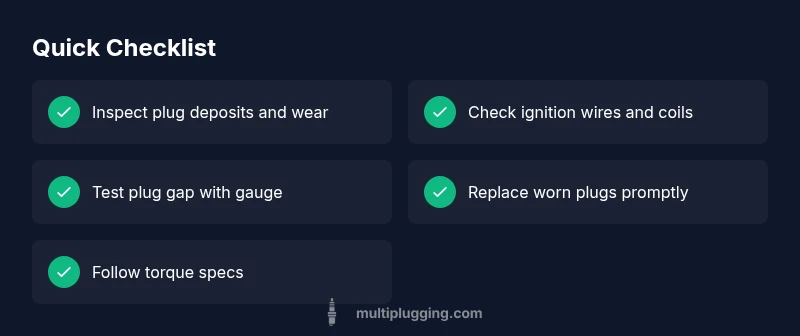
- Follow engine specs for gaps and torque.
- Regular maintenance saves fuel and emissions.