How to Remove a Lawn Mower Spark Plug Without Socket
Learn safe, practical steps to remove a lawn mower spark plug without a socket. This guide covers improvised tools, safety precautions, and post-removal checks for reliable, DIY maintenance.


Goal: remove a lawn mower spark plug without a socket safely. This quick answer covers low‑effort methods using common tools (pliers, adjustable wrench, or a spark plug boot wrench substitute), plus how to stabilize the plug and twist free without cross‑threading. We’ll also flag safety tips and common pitfalls. A step-by-step procedure follows in the body.
Why Removing a Spark Plug Without a Socket Can Be Necessary
There are times when a lawn mower spark plug will need removal even if you don’t have a socket on hand. The boot might be in a tight spot, or the mower could be older and only accessible from the side. The temptation to brute-force a grip with a screwdriver or a metal tool is strong, but that approach risks damaging the plug, the threads, and even the metal around the cylinder. According to MultiPlugging, using the right approach minimizes the risk of cross‑threading and keeps the porcelain intact. Before you attempt any removal, make sure the engine is cool and the ignition system is isolated. A parked mower can still produce a dangerous arc if the spark plug boot is misused. Take a moment to plan your grip and choose the tool that provides the least amount of pressure on the ceramic tip. The goal is to gain a stable purchase on the metal hex or boot without twisting the ceramic core.
Safety first: prerequisites before you start
Safety is the foundation of any DIY spark plug task. Start by turning off the engine and removing the key if your mower uses a switch. If your mower is gas-powered, set it on a flat surface and allow the engine to cool completely to avoid burns and accidental ignition of fuel vapors. Disconnect the spark plug boot from the spark plug while the engine is still cool, keeping your other hand steady on the boot to avoid yanking the wire. Wear gloves to protect your hands from sharp boot edges or cracked porcelain. Keep a rag handy to wipe away oil or fuel residue that can make tools slip. According to MultiPlugging Analysis, taking these precautions reduces the chance of damage and makes the removal smoother. Never attempt removal with a hot engine or a live ignition system; always isolate the ignition before touching the plug.
Improvised tools: what works and what doesn't
When a spark plug socket isn’t available, you can often get the plug out with common hand tools. Needle-nose pliers or small locking pliers can grip the metal hex of the plug if present, while an adjustable wrench can provide a wider grip on the boot if the boot has a hex surface. A flat-head screwdriver or a small pry tool can help with the boot if it’s tight, but you must use them carefully to avoid cracking ceramic insulation. The key is to apply gentle, steady torque rather than brute force. If the plug is rounded or the boot is stuck, stop and reassess—the risk of damaging threads or the ceramic is high. Always protect the surrounding area with a rag to catch debris and prevent slipping. Multiplugging’s guidance emphasizes using the least aggressive option that still provides a secure grip.
High-level overview of the removal process without a socket
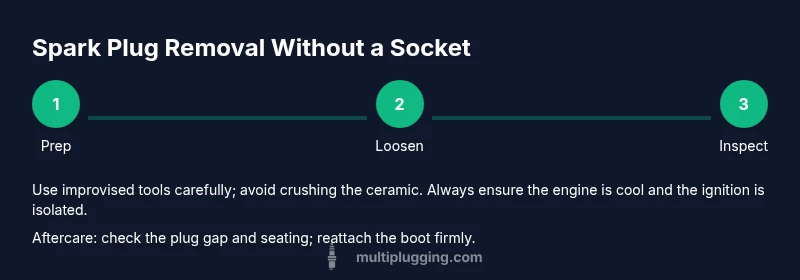
Planning is essential when you don’t have a socket. Start by ensuring the engine is cool and the spark plug boot is disconnected. Gently position your improvised tool to grip the hex or boot, keeping pressure away from the ceramic tip. Apply slow, even turns counterclockwise to loosen the plug while keeping your wrist and forearm aligned to prevent slipping. Once you feel the plug loosen, alternate between turning and pulling with controlled force to avoid dropping the plug or damaging threads. After the plug is free, inspect the threads for corrosion or cross-threading and set the plug aside in a safe place. Stay patient—forcing a removal can lead to costly damage.
Common issues and how to address them
If the plug is stubborn, verify you’ve actually disconnected the boot and that you’re gripping the correct part of the plug. Cross-threading can occur if you apply sideways torque while the plug is not aligned with the thread. If the ceramic end cracks, stop immediately and replace the plug rather than trying to reinsert it. Oil or fuel on the threads can also make removal difficult; wipe clean and inspect the seat area before reattempting. If you notice heavy corrosion or a bent plug, replacement is usually the best option. Always ensure you use a clean, dry cloth to avoid introducing debris into the engine cylinder.
Aftercare: reinstallation and testing
After removal, inspect the plug’s gap and condition. If replacing, thread the new spark plug in by hand to avoid cross-threading, then snug it gently with your tool of choice until it seats. Reconnect the boot securely and give it a firm twist to ensure a snug seal. Before starting the engine, recheck that the ignition system is properly isolated and that no tools remain in the work area. If you reused the old plug, confirm the gap is within the mower’s specifications or replace it if you’re unsure. A quick gasoline and air check—cranking briefly to confirm spark—can help verify a successful removal and reinstallation.
Tools & Materials
- Pliers (needle-nose)(For gripping the spark plug stem without crushing the ceramic.)
- Adjustable wrench(Provides a stable grip on the boot hex or the plug’s body.)
- Spark plug boot removal substitute (optional)(Use if you have a non-standard boot; not mandatory.)
- Flathead screwdriver (optional)(Can help relieve tight boots, but risky for ceramic.)
- Rag or shop towel(Catches fluids and helps prevent tool slip.)
- Safety gloves(Protect hands from sharp edges and hot surfaces.)
- Cool engine and dry workspace(Prevents burns and reduces slip hazards.)
Steps
Estimated time: 15-25 minutes
- 1
Cool engine and disconnect spark wire
Park the mower on a flat surface and turn it off. Remove the key or switch to ensure the engine cannot start. Gently twist and pull the spark plug boot to disconnect it from the plug while keeping the boot intact.
Tip: Never yank on the wire itself; grasp the boot and the boot only to minimize internal damage. - 2
Locate the spark plug and assess access
Find the spark plug location and visually inspect the boot for wear. Check if the plug boot sits directly on a hex head or if you must grip the boot itself. Ensure the area around the plug is clean and dry.
Tip: Taking a quick photo before removal helps you reassemble with the correct orientation. - 3
Choose your removal tool
If you lack a spark plug socket, pick a tool that can grip the hex or boot without causing damage—needle-nose pliers or an adjustable wrench are common choices. Test your grip gently to ensure you can apply turning torque without slipping.
Tip: Test grip on a non-critical portion of the boot first to verify stability. - 4
Grip securely and begin loosening
Position the tool to engage the hex or boot, keeping your wrist aligned with the plug’s axis. Apply slow counterclockwise turns and maintain steady pressure. Do not twist aggressively in one direction if the plug does not loosen easily.
Tip: Use short, controlled twists rather than long, forceful moves. - 5
Extract the plug and inspect
Once loosened, grip the body with your fingers and lift straight out to avoid bending the electrode. Examine the porcelain for cracks and the threads for wear or damage. If the plug is damaged, replace it rather than reusing.
Tip: Place the plug on a clean surface and avoid dropping it. - 6
Reinstall or replace and reattach boot
If installing a new plug, check the gap per the mower’s manual and thread it in by hand to avoid cross‑threading, then snug—do not over‑tighten. Reconnect the spark plug boot firmly and ensure a complete seal before starting the engine.
Tip: If you’re uncertain about the gap, replace with a new plug rather than guessing.
FAQ
Can I remove a lawn mower spark plug without a socket?
Yes, you can remove a spark plug without a socket using improvised tools like pliers or a boot wrench substitute. Take care to avoid damaging the ceramic and threads, and ensure the ignition is isolated before starting.
Yes, you can remove it without a socket using improvised tools, but proceed carefully to protect the plug and engine.
What substitutes can I use if I don’t have a spark plug socket?
Needle-nose pliers or an adjustable wrench are common substitutes. Use them to grip the hex on the plug or the boot surface, and avoid prying the ceramic tip.
Common substitutes include needle-nose pliers or an adjustable wrench, but grip carefully and avoid the ceramic.
Is it safe to reuse an old spark plug boot after removal?
Reusing the boot is possible if it is undamaged and fits securely. If there is any wear or cracking, replace the boot to prevent future ignition issues.
Reuse is okay if the boot is undamaged; replace if there's wear.
What if the plug won’t budge with improvised tools?
Stop and reassess. Check that you’re gripping the correct part and that the engine is cool. Forcing it can strip threads or crack ceramic; consider using a professional spark plug removal tool or replacing the plug.
If it won’t budge, stop and reassess. Forcing can cause damage.
Should I replace the spark plug after removing it?
Even if the old plug seems okay, replacement is often wise, especially for older engines. Check the gap and replace if the plug shows wear or deposits.
Replacement is often prudent if the plug shows wear.
Watch Video
Main Points
- Disconnect the spark plug boot before starting.
- Use the least aggressive tool that still provides grip.
- Inspect the plug and boot for wear after removal.
- Reinstall by hand first to avoid cross-threading, then snug.