Good Spark Plug Burn: A Practical Troubleshooting Guide
Diagnose, fix, and prevent a good spark plug burn with a practical, step-by-step guide. Learn common causes, quick checks, and safety tips to restore smooth engine performance.


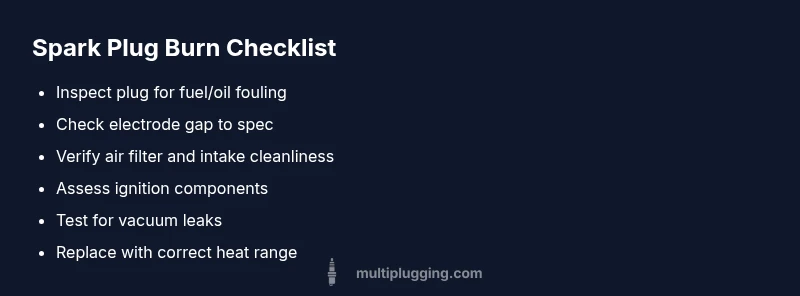
Most likely a bad burn on a spark plug signals a rich fuel mix, oil fouling, or weak ignition. Start with the simplest checks: inspect the plug for oil or heavy carbon, verify the gap, and replace worn or fouled plugs. Check air filter and fuel quality, then run a quick compression test if misfires persist. Refit correctly gapped plugs for a clean burn.
Understanding what a good spark plug burn means
In automotive terms, a good spark plug burn means consistent combustion, clean heat cycling, and deposits that indicate normal operation. The phrase good spark plug burn isn't just a vibe; it's a reliable signal that your engine is burning fuel efficiently and exhausting cleanly. According to MultiPlugging, the most telltale sign is a light tan or gray deposit on the electrode with no heavy oil or carbon buildup. When you see this, you know your ignition system and fuel delivery are in balance. This quick check is your first step when diagnosing misfires or hesitation. If the burn looks abnormal, approach the issue with a systematic plan, because a small imbalance can cascade into performance loss or damage over time.
In practice, you should aim for a plug that shows uniform coloring and no signs of overheating or fouling. A good burn also implies that the ignition coils and wires are delivering a strong, consistent spark. When this baseline is disturbed, you’ll notice symptoms in idle, acceleration, and fuel economy that warrant a careful, methodical diagnostic approach.
Visual cues: healthy vs unhealthy burns
A healthy burn generally presents deposits that are light tan to gray, with a clean electrode and no oil slicks or heavy black carbon. Sooty black deposits often point to a rich fuel mixture or partial combustion; oily or shiny wet deposits indicate oil fouling or valve seal leaks. White or blistered insulators can reflect overheating or pre-ignition. In any case, a visual inspection gives immediate clues about the burn quality and whether a plug needs cleaning, gap adjustment, or replacement. Remember: safety first—engine components can be extremely hot after operation.
Common causes for an off-burn condition
There are several culprits behind a suboptimal burn. A consistently rich fuel mix or vacuum leaks can flood the combustion chamber and foul the plug. Oil bypass from worn seals or rings can carbonize the electrode. Worn ignition components (coils, wires) or improper heat range and gap can delay or weaken the spark. Dirty air filters and clogged fuel injectors also disrupt the air-fuel balance. Finally, short trips prevent a plug from reaching its ideal operating temperature, leading to wet or fouled plugs over time. Based on MultiPlugging analysis, the most frequent drivers are fuel-system imbalance and imperfect plug gap.
Quick checks you can perform without tools
- Remove the suspect plug and inspect its condition under good lighting. Look for oily, sooty, or shiny deposits and note color.
- Measure the electrode gap with a feeler gauge and compare to the manufacturer’s spec. A misgap can cause weak ignition and abnormal burn.
- Check the air filter for clogs and replace if dirty. Bad air intake reduces combustion quality and promotes deposits.
- Inspect spark plug wires and ignition coil connections for cracks or loose plugs. A weak spark can create an irregular burn even with a healthy plug.
- Run a few cycles on a stable engine, then recheck for consistent starting and smooth acceleration. If misfires persist, move to diagnostic tests or plug replacement.
Important safety note: never work on a hot engine. Ensure the battery is disconnected when removing plugs to avoid shocks or short circuits.
Diagnostic flow: symptom → diagnosis → solutions
Symptoms like misfires, rough idle, or reduced power often point toward a burned plug but require confirmation. Start with visual checks and simple tests (gap, cleanliness, fuel quality). If symptoms continue, diagnose fuel delivery and ignition efficiency. The path typically follows: observe symptom → inspect plug and ignition → check air/fuel delivery → run compression and cylinder leak tests if needed → implement the fix (plug replacement, gasket seals, or injector clean).
This flow keeps you out of guesswork and into concrete steps that protect engine health and performance.
Step-by-step fix for the most common cause (fuel-related fouling or rich burn)
- Safety first: disconnect the battery and let the engine cool.
- Remove the suspected plug, note its color and deposits. If oil fouling or heavy carbon is present, plan to replace the plug and inspect seals.
- Clean or replace the plug; set the gap to the manufacturer spec.
- Check for vacuum leaks and inspect related hoses for wear or cracks.
- Inspect air filter and fuel injector cleanliness; replace or clean as needed.
- Reinstall the plug with a proper torque (not overtightened).
- Start the engine and monitor for smooth idle and consistent firing across cylinders.
- If misfires persist, perform a compression test or consult a professional.
Tip: Keep a spare set of plugs and a feeler gauge in your toolkit for quick seasonal checks.
Safety and professional help reminders
Working around the ignition system carries risks like electric shock and hot surfaces. If you notice coolant in the combustion chamber, coolant leaks, or persistent misfires after basic checks, stop and seek professional help. Complex issues such as hidden vacuum leaks or cylinder pressure loss require diagnostic machines and expertise that go beyond home repairs. Prioritizing safety reduces risk and saves time in the long run.
Prevention and maintenance to sustain a good burn
- Schedule regular spark plug inspections and replacements based on the vehicle’s service intervals.
- Use the correct heat range and torque for each plug type to avoid overheating or under-gnipping.
- Maintain clean air and fuel systems; replace air filters and use high-quality fuel.
- Address oil leaks promptly to prevent fouling deposits on plugs.
- Keep a log of observed symptoms and performance changes to catch trends early.
- When in doubt, err on the side of replacement rather than reusing worn components.
Adopting these habits supports a reliable burn and prevents costly engine problems. The MultiPlugging team emphasizes consistent maintenance as the cornerstone of long-term performance.
Steps
Estimated time: 60-90 minutes
- 1
Assess the symptom and safety
Note the exact symptom (misfire, rough idle, poor acceleration) and ensure the engine and battery are safe. Disconnect the battery before touching wiring.
Tip: Always wear gloves and safety glasses. - 2
Remove the suspect plug
Carefully disconnect the plug wire and unthread the plug without forcing it. Keep track of the cylinder for cross-reference.
Tip: Use a proper spark plug socket and extension. - 3
Inspect plug visually
Look for oil, soot, or wear on the electrode. Record the color and deposits to guide the diagnosis.
Tip: Oil fouling usually means seals or rings are leaking. - 4
Check gap and heat range
Measure gap with a gauge and compare to spec. If out of spec, adjust or replace with the correct heat range plug.
Tip: Avoid over-tightening; use torque specs. - 5
Assess air/fuel delivery
Inspect air filter and check for vacuum leaks. Clean or replace air filter; address any intake leaks.
Tip: A clogged air filter can mimic a bad burn. - 6
Reinstall and test
Reinsert the plug with correct torque, reconnect hoses, and start the engine. Listen for a smooth idle and even firing.
Tip: If rough idle returns, move to compression testing.
Diagnosis: Misfires, rough idle, or reduced power with suspected spark plug burn irregularities.
Possible Causes
- highOil fouling from worn valve seals or piston rings
- highRich fuel mixture due to vacuum leak or faulty injector
- mediumCarbon fouling from dirty intake or short trips
- lowWeak ignition coil or old plug wires
- lowIncorrect heat range or improper plug gap
Fixes
- easyInspect for oil leaks and replace gaskets/seals; clean or replace the plug if fouling is light
- mediumTest for vacuum leaks and verify fuel trims; repair hoses and address injector issues
- easyReplace fouled plugs with correct heat range and set proper gap; clean intake if needed
- mediumTest ignition components (coil, wires) and replace faulty parts
- easyReassess heat range and torque; ensure proper seating without over-tightening
FAQ
What does a good spark plug burn look like?
A healthy burn shows light tan to gray deposits, a clean electrode, and no oil or heavy carbon buildup. The plug should fire consistently across all cylinders.
A healthy burn looks like light tan deposits and a clean electrode, with consistent firing across cylinders.
Why is my spark plug burning oil or carbon fouling?
Oil fouling usually points to worn seals or rings, while carbon fouling signals a rich mixture or dirty intake. Both disrupt the burn and require addressing the root cause.
Oil fouling comes from worn seals; carbon fouling usually means a rich mix or dirty air intake.
How often should I check spark plugs to ensure a good burn?
Check spark plugs during regular maintenance intervals or if you notice misfires, rough idle, or reduced fuel economy. Replace as recommended by the vehicle manufacturer.
Check plugs at regular service intervals or if you notice misfires.
Can a bad burn cause engine misfires?
Yes. An off-burn plug can cause misfires, rough idle, and reduced power. Replacing fatigued plugs and correcting ignition or fuel issues usually resolves it.
Absolutely—an off-burn plug can cause misfires; replacing it and fixing related issues fixes the problem.
Is a compression test needed for a bad burn?
If misfires persist after plug replacement and ignition checks, a compression test helps determine cylinder health and whether mechanical issues are present.
If misfires persist after basic checks, a compression test can reveal deeper engine problems.
What if the heat range is wrong for my plug?
Using the incorrect heat range can cause either pre-ignition or fouling. Replace with the correct spec from the manufacturer and adjust the gap as needed.
Wrong heat range can cause fouling or overheating; replace with the proper spec.
Main Points
- Inspect plug color for burn health.
- Address oil leaks to prevent fouling.
- Maintain correct gap and heat range.
- Check air/fuel delivery and ignition components.
- Regular maintenance sustains a good spark plug burn