Faulty Spark Plug Symptoms: Quick Troubleshooting Guide
Urgent troubleshooting guide to identify faulty spark plug symptoms, diagnose causes, and replace plugs quickly with safety-first steps from MultiPlugging.


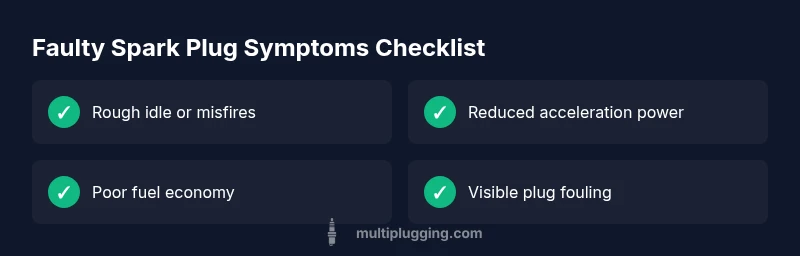
Common faulty spark plug symptoms include rough idle, misfires, hesitation, and reduced power. According to MultiPlugging, the top signs are rough idle, misfires during acceleration, and a sudden drop in fuel economy. Quick fix steps: 1) remove and inspect the plug for fouling or wear; 2) clean or replace; 3) re-gap to spec; 4) reconnect and test drive for smooth running.
Understanding why faulty spark plug symptoms appear
Spark plugs are the ignition spark that lights your engine’s air-fuel mix. When they wear out, foul, or become misgapped, ignition becomes irregular, and you’ll notice a string of symptoms that point to faulty spark plug symptoms. In many vehicles, the first signs are subtle: a rough idle, occasional misfires, or hesitant acceleration. As the plugs degrade, you may see higher fuel consumption, more engine vibration, or even occasional stalls. According to MultiPlugging, recognizing these symptoms early can prevent misfires from cascading into more serious engine problems. This section lays the groundwork for a practical diagnostic path that prioritizes safety and efficiency while you gather the parts you need for a quick repair.
Common faulty spark plug symptoms
Spotting faulty spark plug symptoms early saves money and frustration. Look for signs like a rough idle that won’t smooth out, misfires felt as a stumble during acceleration, hesitation when you press the pedal, and a drop in fuel economy. A strong odor of fuel or visible fouling on a plug are red flags. Inconsistent engine performance may also accompany trouble starting. If your vehicle’s check engine light comes on, it could be related to misfires caused by bad plugs, among other ignition issues. For many DIYers, the simplest test is to remove a plug and inspect its condition—wet fouling, oil fouling, or severe wear all indicate a replacement is warranted. MultiPlugging highlights that symptoms alone aren’t proof of a bad plug, but they strongly suggest checking the plug’s condition as part of a systematic diagnosis.
Why plugs fail: wear, fouling, and gap issues
Plugs fail for several reasons: electrode wear reduces spark energy, fouling (oil, fuel, or carbon deposits) hampers spark access, and incorrect gap prevents proper arc timing. Worn electrodes are common in engines with high mileage or aggressive driving, leading to misfires and rough idling. Fouling often stems from rich fuel mixtures, oil leaks, or short trips that don’t heat the plug enough to burn contaminants cleanly. Gap drift occurs due to thermal expansion and mechanical wear, causing weak or inconsistent sparks. Understanding these failure modes helps you pick the right course of action—whether cleaning, re-gapping, or replacing with a plug that matches your engine’s ignition requirements. MultiPlugging notes that mindful gap adjustment and using the correct heat range are critical for reliable ignition.
Safe, quick checks you can perform now
Before you pull the plugs, perform rapid, safety-first checks. Ensure the engine is cool to avoid burns, wear eye protection, and disconnect the battery if you’ll be working near the ignition system. Inspect accessible spark plug wires for cracks or degradation and verify that coil packs are firmly connected. A visual plug check places emphasis on fouling, oil residue, and electrode wear. If you’re testing for spark, a spark tester can confirm spark presence without risking your hands. Don’t reuse a visibly fouled or severely worn plug; substitutes with the correct heat range and gap are essential for optimal combustion. MultiPlugging emphasizes documenting each cylinder’s condition to avoid confusion during reassembly.
Diagnostics: reading plugs and test methods
Diagnosing spark plug health involves more than a quick look. A close inspection reveals whether deposits are carbon, fuel, oil-based, or if the plug is worn beyond serviceable life. You should examine the porcelain enamel for cracks, the center electrode for erosion, and the side gapping. Use a feeler gauge to confirm the gap matches the manufacturer’s specification and ensure the plug seats properly in the ceramic seat. A plug that shows heavy deposits, oil fouling, or a widened gap typically indicates a problem beyond simple cleaning, signaling replacement. MultiPlugging recommends keeping a small notebook of plug condition by cylinder to track patterns and avoid misdiagnosis.
Step-by-step replacement workflow (high-level overview)
If a plug is confirmed to be faulty, replacement is often the fastest fix. Begin by gathering the right tools and safety gear, then remove the ignition coil or wire from the cylinder, followed by the plug boot. Use a socket with a proper extension to unscrew the old plug, being careful not to cross-thread the hole. Inspect the recess after removal and clean any carbon buildup in the well. Install the new plug with the correct torque specification and the proper heat range. Reattach the coil/wire and torque to spec. Finally, run the engine to verify a smooth idle and clean startup. This workflow aligns with the practical, hands-on approach that MultiPlugging advocates for DIYers.
Performance benefits after replacement & prevention tips
Replacing faulty spark plugs restores ignition energy, improves combustion stability, and can restore lost power and fuel efficiency. Proper replacement supports smoother idle, quicker starts, and stronger acceleration. To prevent recurrence, follow maintenance intervals and use the correct plug type for your engine. Regular checks of plug wires and ignition components reduce the chance of misfires reoccurring. MultiPlugging’s guidance emphasizes using the right heat range, checking for oil leaks, and ensuring the spark plug threads remain clean and undamaged for easy future removal.
Steps
Estimated time: 60-90 minutes
- 1
Prepare safety and tools
Park the car on a level surface, let the engine cool, and gather the spark plug socket, ratchet, torque wrench, gap tool, and anti-seize (if recommended by your guide). Disconnect the negative battery lead to prevent accidental shorts. This step reduces risk and ensures accurate work.
Tip: Wear eye protection and gloves; keep track of hardware to avoid lost parts. - 2
Identify and expose plugs
Locate the spark plug wires or coil packs. Gently pull back any spark plug boot or coil cover to reveal the plug hex without forcing connectors. Label cylinders if needed to keep track during reassembly.
Tip: Work in a clean, dry area to avoid introducing debris into the engine bay. - 3
Remove the faulty plug
Use a proper spark plug socket on a ratchet with a secure extension. Turn counterclockwise to loosen, maintain steady pressure, and avoid dropping the plug. Once loose, lift straight out to prevent thread damage.
Tip: If the plug is stubborn, apply a light tapping to the socket to loosen deposits, not the plug itself. - 4
Inspect and decide
Visually inspect the removed plug for fouling, oil, or heavy wear. Compare the electrode gap with the manufacturer spec. If fouled or worn beyond service, replace; if only light deposits, consider cleaning and regapping.
Tip: Take a photo of the old plug for reference before cleaning or replacement. - 5
Install the new or cleaned plug
Set the new plug to the correct torque; avoid over-tightening to prevent thread damage. If using antiseize, apply sparingly as recommended. Reinsert the plug, reconnect the boot/coil, and ensure a solid connection.
Tip: Always torque to spec; overtightening can strip threads or crack the ceramic. - 6
Repeat for all cylinders
Proceed to the remaining plugs, repeating the removal, inspection, and installation process. Keep notes on the condition of each plug to identify patterns that may signal engine issues beyond ignition.
Tip: Keep your work area organized to prevent cross-threading during reassembly. - 7
Test and verify
Reconnect the battery, start the engine, and listen for a clean idle. Take a cautious test drive to confirm consistent power and smooth operation across RPMs. Retrieve any stored engine codes if the check engine light reappears.
Tip: If misfires persist, consider a professional diagnosis for ignition coil or injector testing.
Diagnosis: Engine shows rough idle, misfires, hesitation, or reduced power
Possible Causes
- highWorn or fouled spark plugs
- highIncorrect spark plug gap or wear
- mediumDamaged ignition wires or coils
- lowFuel delivery or injector issues producing similar symptoms
Fixes
- easyInspect each plug; replace fouled or worn plugs with correct heat range and gap
- easyCheck and adjust plug gap to manufacturer spec using a proper gauge
- mediumTest ignition wires/coils; replace any damaged components
- mediumRule out fuel system issues (injectors, fuel filters, vacuum leaks) if symptoms persist
FAQ
What are the most common faults indicated by faulty spark plug symptoms?
The most common faults are wear or fouling on the electrode, gaps out of spec, or ignition coil/wire issues causing misfires and rough idling. A combination of symptoms typically points to plug wear first, followed by wiring concerns if problems persist.
Common faults include worn electrodes and misfires. Check the plug, gap, and wiring to confirm.
Can faulty spark plugs trigger a check engine light?
Yes, misfires from bad plugs can trigger the check engine light. A diagnostic scan will show misfire cylinder codes that guide replacement decisions.
Yes. Misfires from bad plugs can trigger the check engine light.
Is it possible to clean fouled spark plugs instead of replacing them?
Lightly fouled plugs can sometimes be cleaned and re-gapped, but severely fouled or worn plugs should be replaced. Cleaning is not a long-term solution if deposits return quickly.
Light fouling might be cleaned, but worn or heavily fouled plugs usually need replacement.
How often should spark plugs be replaced for most cars?
Replacement intervals vary by vehicle and plug type, typically every 30,000 to 100,000 miles. Always follow the manufacturer’s recommendation for your engine and plug type.
Intervals vary; check your vehicle’s manual for the recommended replacement mileage.
Do spark plug issues always indicate larger engine damage?
Not necessarily. Spark plug problems often reflect ignition issues that are repairable independently. If symptoms persist after replacement, inspect fuel, ignition coils, and timing to rule out broader engine issues.
Not always. If problems continue after replacement, look at fuel and timing with a pro.
Watch Video
Main Points
- Inspect plugs early when rough idle appears
- Replace worn/fouled plugs with proper gap
- Check ignition wires and coils if symptoms persist
- Test drive to confirm smooth running after replacement
- Prevent future issues with correct maintenance intervals