Can Spark Plug Cause Car to Stall? A Practical Troubleshooting Guide
Discover how a fouled or worn spark plug can trigger stalling, and follow this practical troubleshooting guide to diagnose, replace, and prevent stalling in your vehicle.


Yes. The question can spark plug cause car to stall comes up often: a fouled or worn plug can cause engine misfires and stalling, especially under load or idle. Common cues include rough idle, hesitation, and hard starting. Regular inspection and correct gap settings help prevent stalls. According to MultiPlugging, diagnosing spark-plug faults early saves time and money.
Can Spark Plug Failures Cause Stalling? The Core Idea
Can spark plug cause car to stall? This is a common question among DIYers, and the answer hinges on the plug's condition. A fouled, worn, or improperly gapped spark plug can fail to ignite the air-fuel mixture consistently, causing misfires and potential stalling, especially when the engine is under load or idling. When the ignition is inconsistent, the engine loses a cylinder's power moment by moment, and the ecu may trigger a stall condition to protect the catalytic converter and fuel system. According to MultiPlugging, early spark-plug diagnosis is a cost-effective way to keep your engine smooth and reliable. We will dissect symptoms, testing methods, and practical steps to verify whether the spark plug is the root cause of a stall, and how to fix it safely.
Start with the Obvious: Visual Inspection and Quick Tests
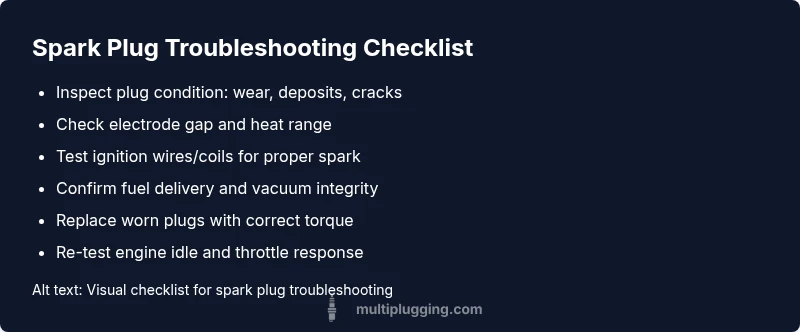
The most straightforward way to address can spark plug cause car to stall is a visual and basic electrical check. Remove one plug at a time to inspect electrode wear, fouling from oil or fuel, and carbon buildup. A healthy plug typically shows a light tan or gray insulator; dark, sooty deposits suggest fuel-rich conditions or oil burning. If you notice oily residue on an electrode or crusty deposits, you’re likely dealing with misfires contributing to stalling. Quick electrical tests include checking the plug wires for cracks or corrosion, and a spark test to confirm a strong, blue spark. This approach helps confirm whether a faulty plug is the culprit without resorting to expensive diagnostics.
Understanding Symptoms That Point to Spark-Plug Issues
Drivers frequently notice rough running, hesitation, or engine stumble as the stall approaches. When can spark plug cause car to stall is more likely: during acceleration, under heavy load, or after the engine has warmed up. Misfires can manifest as a stumble or shake, followed by a stall if the load is increased or the engine experiences a lean/over rich condition. Keeping a log of when the stall happens (idle, warm-up, or high RPM) can help differentiate spark-plug faults from fuel delivery or ignition coil problems. Remember that other ignition issues can imitate spark-plug faults, so methodical testing is essential.
Why a Worn or Fouled Plug Leads to Stalling
A worn electrode reduces the energy of the spark, making ignition unreliable. Fouling from oil, gasoline, or carbon buildup creates a barrier between the electrode and the air-fuel mix, delaying or preventing ignition. When the air-fuel mixture fails to ignite consistently across cylinders, cylinders misfire, and the engine can stall, especially at low RPMs where a single misfire has a bigger impact. Gaps that are too wide or too narrow can also trigger failure to ignite, leading to stalling. In each case, the spark plug becomes the bottleneck in the ignition system, allowing the engine to momentarily lose torque and stall.
Other Causes to Rule Out Before Replacing Anything
If you suspect can spark plug cause car to stall, don’t rush to replace parts without ruling out other common culprits. A weak ignition coil or a damaged ignition wire can produce symptoms similar to a bad plug. A clogged air filter, dirty throttle body, or vacuum leaks can also cause stalling or rough idling that mimics plug faults. Fuel delivery issues, such as a clogged fuel filter or a failing fuel pump, can produce lean conditions that stall at idle. A quick, systematic approach helps you avoid unnecessary parts replacement and ensures you target the actual cause.
Safe, Stepwise Spark-Plug Inspection and Testing
When you test spark plugs, start with safety: cool engine, disconnect the negative battery terminal, and wear eye protection. Remove one plug at a time using the right socket and gasket seal to prevent thread damage. Inspect the electrode and insulator for wear, fouling, or cracks. If deposits are light, you might clean the plug with a manufacturer-approved solvent; however, cleaning is not always a fix for performance issues. If the plug shows wear or damage, replace with a new one that matches your engine’s heat range and torque specifications. After replacement, gap the plug to the manufacturer’s spec and reassemble carefully to avoid cross-threading.
Should You Clean or Replace? A Practical Decision Guide
Cleaning can offer a temporary fix for minor fouling, but it is rarely a long-term solution in modern engines. Spark plugs are consumables, and replacing with a fresh plug is often the most reliable path to resolving stalls caused by ignition faults. If you choose to clean, do so only as a stopgap while you source a replacement, and always gap-test the plug after cleaning. In any case, ensure you torque plugs to the manufacturer’s specification to prevent thread damage and to maintain the seal against combustion gases.
Quick Pre-Drive Checks After a Spark-Plug Service
Before you take the car back on the road, perform a few checks to ensure the stall issue won’t recur. Confirm all ignition wires are firmly connected, and inspect for any cracks or burns. A test drive at low speed can verify that rough idle or hesitation has cleared. If the stall recurs, there may be an underlying fuel or vacuum issue, and you should continue diagnostics or consult a professional.
When to Seek Professional Help
If after inspecting and replacing plugs you still experience stalling, professional diagnosis is recommended. Electrical issues such as wiring harness failures, ignition coil packs, or ECU misreads require specialized tools and expertise. A shop can perform a comprehensive fuel-system test, coil-performance check, and data-logger analysis to pinpoint faults. Never ignore repeated stalling, especially if the check engine light is on, as it can indicate a more serious problem.
Prevention: Keeping Spark Plugs From Causing Future Stalls
Regular maintenance is the best defense against stalls caused by spark plugs. Use the recommended spark plug type, verify heat range, and maintain proper torquing to avoid damage. Follow your vehicle’s service interval for spark-plug replacement and perform periodic gap checks. Keeping a small spark-plug toolkit in your trunk can help you handle minor symptoms before they escalate into stalls on the road.
Steps
Estimated time: 20-40 minutes
- 1
Prepare safely and gather tools
Park on a flat surface, engage the parking brake, and disconnect the negative battery terminal. Gather a spark plug socket, a torque wrench, a gap gauge, and the correct replacement plugs. Make sure the engine is cool before starting to prevent burns.
Tip: Label wires as you remove them to avoid miswiring during reassembly. - 2
Locate the spark plugs
Open the hood and locate the spark plugs on the cylinder bank. If your engine is 4-, 6-, or 8-cylinder, you may need to remove engine covers or intake components to access the plugs. Take a photo of plug layout before removal if you’re unsure.
Tip: Use a magnetized needle tip tool to avoid dropping plugs into the engine bay. - 3
Remove and inspect plugs one by one
Loosen and remove each plug with the proper socket. Inspect electrode wear, insulator cracking, and deposits. If you find heavy fouling or damage, mark the plug as a replacement candidate and proceed to the next.
Tip: Only remove one plug at a time to keep track of cylinder order. - 4
Decide on cleaning vs replacement
If deposits are minor, you may clean with an approved solvent and re-gap the plug. In most cases, replace worn or damaged plugs with new ones matching the recommended heat range.
Tip: Do not reuse a used gasket; replace it if your engine uses one. - 5
Set the correct gap and reinstall
Gap each plug to your vehicle’s spec using a feeler gauge. Apply a light coating of anti-seize only if recommended by your plug manufacturer, then thread by hand to avoid cross-threading. Torque to spec with a torque wrench.
Tip: Cross-threading is a common cause of plug failure—go slow and verify alignment. - 6
Test and monitor
Reassemble, reconnect the battery, and start the engine. Listen for a clean idle and watch for any hesitation during a short test drive. If stalls recur, move to diagnosing ignition coils, fuel delivery, or safety sensors.
Tip: If you notice persistent misfires, log the symptoms and consider a professional inspection.
Diagnosis: Engine stalls during idle or during acceleration
Possible Causes
- highSpark plug fouling or wear
- mediumIncorrect spark plug gap or wrong plug type
- lowIgnition coil or wires fault
Fixes
- easyReplace worn or fouled spark plugs with the correct heat range
- easyRe-gap plugs to manufacturer specification and re-torque
- mediumInspect and replace ignition wires or coils if spark output is weak
- hardCheck fuel delivery and vacuum systems if stalling persists
FAQ
Can a faulty spark plug really stall a car?
Yes. Severe misfires from a bad plug can stall the engine, especially at idle or under load. Replacing worn plugs often resolves the issue.
Yes, a faulty spark plug can cause stalling, particularly at idle or when the engine is under load. Replacing worn plugs usually fixes the problem.
How often should I replace spark plugs to prevent stalling?
Follow your vehicle’s manufacturer guidance for spark-plug replacement. Intervals depend on plug type, engine design, and driving conditions, but regular inspection is key.
Follow the manufacturer’s guidance for spark-plug replacement. Regular inspection helps prevent stalling caused by worn plugs.
Can cleaning a spark plug fix stalling long-term?
Cleaning can be a temporary fix for minor fouling, but most modern engines perform best with new plugs. If misfires persist, replace the plugs.
Cleaning might help temporarily, but new plugs are often the reliable fix for ongoing misfires.
What other issues mimic spark-plug faults?
Ignition coils, worn wires, fuel-delivery problems, and vacuum leaks can mimic plug faults. A structured diagnostic flow helps identify the real cause.
Coil failures, bad wires, or fuel issues can feel like plug faults. A step-by-step test helps pinpoint the real problem.
Do spark plugs affect fuel economy?
Yes, misfires and incomplete combustion from bad plugs can reduce efficiency. Replacing the plugs often restores proper fuel economy.
Bad plugs cause misfires that waste fuel; replacing them can bring back efficiency.
When should I seek professional help for stall issues?
If stalls persist after plug replacement or if you see engine-light codes, a professional diagnostic is advised. They can test ignition systems and fuel delivery comprehensively.
If stalling continues after replacing plugs, or you see warning codes, get a professional diagnostic.
Watch Video
Main Points
- Identify signs of spark-plug faults early
- Replace worn or fouled plugs rather than just cleaning
- Verify gaps and torque settings on installation
- Rule out ignition and fuel-system issues if stalls persist