How to Make Spark Plugs Last Longer: A Step-by-Step DIY Guide
Learn practical, proven steps to extend spark plug life with the right plugs, gap, torque, and maintenance habits. This guide helps car owners and DIY enthusiasts reduce misfires and keep engines running smoothly.


You can make spark plugs last longer by following a simple maintenance routine: select the correct heat range, keep the gap properly set, clean deposits, and replace worn plugs before misfires occur. Pair these practices with smooth driving and a sensible maintenance schedule. This guide provides practical steps you can perform in about 60–90 minutes to extend plug life.
Why longevity matters for spark plugs
Spark plugs wear as they heat cycle and accumulate deposits. Worn plugs can cause misfires, reduced power, and poorer fuel economy. For DIY enthusiasts, extending plug life means fewer roadside surprises and lower maintenance costs over time. According to MultiPlugging, a proactive plug-care routine can noticeably extend life and improve engine reliability when you pair the right plug type with consistent upkeep. Understanding how plugs degrade helps you choose the right maintenance actions and stay ahead of performance drops that sneak up with age.
How spark plugs wear down and what to watch for
Wear happens as heat cycles and combustion byproducts affect the electrode and insulator. Deposits from oil, fuel, or carbon buildup can insulate the electrode, causing misfires or weak sparks. You might notice rough idle, hesitation under load, or reduced fuel efficiency. MultiPlugging analysis, 2026, indicates that maintaining the correct heat range and avoiding aggressive driving patterns correlate with longer plug life and steadier performance. Watch for gradual declines in power, noticeable misfires on acceleration, or a drop in miles per gallon as early warning signs to inspect plugs.
Choose the right plugs for longer life
Not all plugs are created equal when it comes to longevity. Iridium and platinum designs tend to last longer than copper, especially in engines that run hot or have frequent start-stop cycles. The heat range matters: a plug that’s too hot can cause preignition and deposits, while a plug that’s too cold can foul. Select plugs that match your vehicle’s manufacturer recommendations and avoid chasing exotic aftermarket claims. Ensure the gap is set per the manual, or buy pre-gapped plugs from a reputable supplier to minimize handling errors that shorten life.
Cleaning and maintenance practices that help
Regular inspection is simpler than you think: remove, inspect, and clean spark plugs as part of a routine once every season or every few thousand miles depending on use. If you see heavy deposits, cracks, or a worn electrode, replace the plug rather than trying to revive it. Keep the ignition system components clean and dry, and use high-quality fuels and cleaners sparingly. This approach reduces the chances of sticky deposits and keeps ignition consistent, which in turn prolongs plug life. Multiplugging’s guidance emphasizes that consistency in maintenance habits yields longer-lasting plugs.
Gap, torque, and installation fundamentals
A proper gap is crucial for efficient ignition and minimal electrode wear. Use a calibrated gap tool to verify and adjust as required, aligning with the vehicle’s specification. When installing, tighten to the manufacturer’s torque specification using a torque wrench to avoid over- or under-tightening, which can strip threads or cause poor heat transfer. If you’re unsure, consult the owner’s manual or a service manual for your exact engine type. Avoid applying excessive force and never reuse damaged gaskets.
Tools and replacement timing: what you need to know
Before you start, assemble the right tools: a spark plug socket with rubber insert, a ratchet handle, a torque wrench, a gap gauge, and a clean rag. Have the correct replacement plugs on hand, and consider anti-seize or dielectric grease only if recommended by the plug manufacturer. Plan to do the replacement when the engine is cool and the car is parked on a flat surface. Timely replacement prevents excessive wear and helps sustain peak combustion efficiency.
Driving habits that protect spark plugs
Daily driving habits can influence plug life as much as maintenance. Short trips that don’t fully heat the engine can promote fouling, while aggressive acceleration and frequent high-load bursts can accelerate wear. Smooth acceleration, steady cruising, and avoiding repeated rapid starts help plugs reach normal operating temperature more consistently. Long highway runs after a period of city driving can help burn off deposits and extend life. The goal is to minimize abrupt thermal cycles and fuel-quality stresses on the ignition system.
Symptoms and diagnosis: when to look closer
If you notice misfires, rough idle, or idle instability, it’s time to check the plugs. A weak spark or inconsistent grounding can indicate worn electrodes or a fouled insulator. Use a spark plug tester or a professional diagnostic approach to isolate ignition timing or fuel-system issues from plug wear. Correct diagnosis saves money by preventing unnecessary replacements and ensures you address the actual cause of reduced performance.
Common mistakes that shorten plug life
Rushing the replacement process, using mismatched heat ranges, or skipping the gap check can dramatically reduce plug life. Reusing old gaskets or applying excessive anti-seize compounds on the threads may skew torque and heat transfer. Always follow the manufacturer’s recommendations for torque, gap, and treatment of the threads. The goal is a precise, clean installation that supports proper heat dissipation and reliable ignition.
Authority sources and practical references
For readers who want to dig deeper, here are reputable sources that discuss engine maintenance and safety considerations: NHTSA (https://www.nhtsa.gov/), U.S. DOE (https://www.energy.gov/), and the DOE Alternative Fuels Data Center (https://afdc.energy.gov/). These sources provide cross-cutting guidance on vehicle maintenance safety and best practices that align with responsible DIY work. They’re cited here to support practical maintenance decisions and safety considerations for spark plugs.
Final note: practical checklist to extend spark plug life
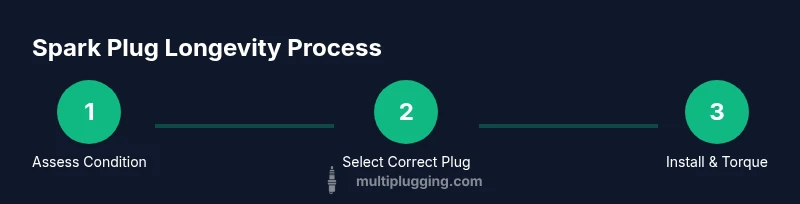
In practice, extend plug life by combining the right plug type with a disciplined maintenance routine: verify heat range, ensure proper gap, install with correct torque, inspect for deposits, maintain ignition components, and drive with smooth, steady acceleration. The MultiPlugging team recommends adopting these steps as a standard habit to maximize engine reliability and minimize unnecessary replacements. Build this routine into your regular maintenance calendar for best results.
Tools & Materials
- Spark plug socket with rubber insert (14mm)(Ensure the socket has a rubber insert to hold the plug securely.)
- Ratchet wrench with extension(Use a wobble or standard extension as needed for tight spaces.)
- Torque wrench(Check manufacturer’s torque spec for your plugs; avoid over-tightening.)
- Gap gauge(Verify the specific plug gap as per the vehicle manual.)
- New spark plugs (correct heat range and design)(Choose the correct type (iridium/platinum/copper) per engine requirements.)
- Dielectric grease(Optional for silicone boots to ease removal and improve seal.)
- Anti-seize compound(Only use if recommended by the plug manufacturer.)
- Rag or lint-free wipe(Keep the intake area clean and wipe tools after handling plugs.)
Steps
Estimated time: 60-90 minutes
- 1
Identify worn or fouled plugs
Begin by locating the ignition coils or spark plug wires. Visually inspect each plug for heavy deposits, cracks in the ceramic, or a melted electrode. If you spot wear, plan to replace those plugs and any adjacent ones in the same loop.
Tip: Document which cylinders show wear to guide future maintenance and replacement intervals. - 2
Gather and organize tools
Lay out the gap tool, torque wrench, plug socket, extension, and the new plugs on a clean surface. Double-check that you have the correct heat range and plug type for your engine. A tidy workspace reduces the chance of cross-contamination.
Tip: Keep the old plugs in a labeled bag for reference or disposal. - 3
Disconnect the battery (safety step)
Disconnect the negative battery terminal to prevent any accidental short or electrical shock while working near the ignition system. This is a standard safety step to reduce risk. Wait until the computer modules reset if your vehicle stores memory-based settings.
Tip: If you’re not comfortable with battery safety, seek professional help. - 4
Remove the spark plug wires or coils
Carefully detach the ignition coil or wire boot from each spark plug. Use a steam-free approach to avoid contaminating the plug seat. Label each wire to ensure correct reassembly.
Tip: Do not pull on the wire itself; grip at the boot to avoid damaging the conductor. - 5
Inspect and gap the old plugs (if reusing)
If you’re not replacing a plug, inspect the gap and electrode; if bent or damaged, replace it. Use a gap gauge to check the recommended distance. Re-gap only if you’re certain the plug is still within spec.
Tip: Most engines perform better with new plugs; reusing worn plugs is not recommended. - 6
Install new plugs with correct torque
Carefully thread the new plugs by hand to avoid cross-threading, then tighten with a torque wrench to the manufacturer’s specification. Do not overtighten, as this can strip threads or cause heat transfer issues. Leave the torque wrench set to the correct spec for consistent results.
Tip: If you feel resistance before hand-tightening, stop and realign the thread. - 7
Reconnect ignition components
Reattach the ignition coils or wires with care, ensuring a snug fit. If using dielectric grease, apply a thin layer to the inside of the boot to promote a clean seal and ease future removal.
Tip: Respect polarity and alignment to avoid misfires after reassembly. - 8
Reconnect the battery and test
Reconnect the battery and start the engine to ensure smooth operation. Listen for any misfires or rough running. If the engine runs poorly, recheck torque and connection seating.
Tip: A quick test drive helps confirm proper seating and seal of plugs. - 9
Address any vacuum leaks or sensor issues
If the check engine light comes on, perform a basic diagnostic to rule out misfire or fuel-system issues not related to plugs. Vacuum leaks or faulty sensors can mimic plug problems and waste your time.
Tip: Use an OBD-II scanner or seek professional diagnostic assistance if needed. - 10
Review maintenance interval and plan next check
Record the date and mileage of the replacement and plan the next inspection. Adhering to a regular schedule helps catch wear before it affects performance. Update your maintenance calendar for future planning.
Tip: Set calendar reminders to keep you consistent with plugs and ignition system checks. - 11
Document performance improvements
Note any improvements in idle quality, fuel economy, and acceleration after replacement. Documenting changes helps you gauge the effectiveness of your maintenance routine over time.
Tip: Small gains can accumulate; track them to justify ongoing care. - 12
Store and dispose of old plugs responsibly
Dispose of used plugs safely according to local regulations. Keep the old plugs in a sealed bag to prevent contamination of other components until disposal. Recycle metallic components when possible.
Tip: Never leave used plugs in the engine bay; improper disposal can be hazardous.
FAQ
How often should I replace spark plugs?
Replacement timing depends on engine design, plug type, and driving conditions. Check the owner's manual for manufacturer recommendations and look for signs of wear such as misfires or rough idle before replacing.
Follow the vehicle manual for replacement intervals and watch for misfires or rough idle as early indicators.
Can I extend spark plug life by changing my driving style?
Yes. Smooth acceleration and longer highway cruising periods help plugs reach and maintain optimal operating temperatures, reducing wear from thermal cycling and fouling.
Yes. Gentle driving and fewer rapid accelerations can help plugs last longer.
Should I replace all plugs at once?
If all plugs are the same age and type, replacing them as a set ensures uniform performance and avoids uneven wear. If some plugs show wear or damage, replace them all for consistency.
Usually replace all if they’re the same age; otherwise, replace the worn ones to keep consistency.
Is anti-seize recommended on spark plug threads?
Many modern plugs come with anti-seize or pre-coated threads; applying extra anti-seize can cause over-tightening and damage. Follow the plug manufacturer’s guidance.
Only use anti-seize if the manufacturer says so; otherwise, skip it.
What’s the difference between copper, platinum, and iridium plugs for longevity?
Iridium and platinum plugs typically last longer than copper in many engines, especially under heavy heat. Copper plugs may wear faster but can be more forgiving in older designs.
Iridium and platinum tend to wear less and last longer than copper in many engines.
Can a failed spark plug damage the engine?
A failing plug can cause misfires that stress the catalytic converter and reduce engine efficiency. Address misfires promptly to protect engine components.
Yes, misfires from a bad plug can harm the exhaust system and cost efficiency.
Watch Video
Main Points
- Identify wear and replace worn plugs promptly
- Use the correct heat range and properly gap plugs
- Torque every plug to manufacturer specs
- Adopt smooth driving and regular maintenance for longevity
- The MultiPlugging team recommends consistent, careful replacement to maximize life