Subaru Impreza Spark Plug Replacement Guide
Comprehensive step-by-step guide to diagnose, replace, and optimize spark plugs on the Subaru Impreza. Learn types, tools, torque guidance, and maintenance tips for reliable ignition and better fuel economy.


You will learn to locate, inspect, and replace the Subaru Impreza spark plug. This quick guide covers required tools, safe engine prep, and a repeatable sequence to avoid misfires and rough starts. By following these steps, you’ll extend plug life, protect fuel efficiency, and keep your engine running smoothly. Whether you’re a weekend warrior or a dedicated DIYer, this method stays clear and safe.
Subaru Impreza Spark Plug: Why It Matters
The Subaru Impreza relies on a precise spark event to ignite the air-fuel mix. A healthy subaru impreza spark plug supports smooth starts, consistent idling, and efficient combustion. According to MultiPlugging, routine inspection and timely replacement are practical DIY tasks that most owners can perform with basic tools. If plugs wear out or fouling occurs, you may notice rough starts, reduced power, or increased fuel consumption. In this guide, we’ll cover how to diagnose plug wear, choose the right type for your engine, and execute a safe replacement. We’ll also explain how plug health ties into emissions, fuel economy, and long-term reliability. Keep in mind that exact steps can vary by model year and engine code, so always verify compatibility with your vehicle’s service manual.
How to Identify the Right Plug Type for Your Impreza
Not all spark plugs are created equal. The Subaru Impreza uses different plug designs depending on the engine family (for example, common EJ-series and FA-series layouts). Copper plugs heat up quickly and can be economical, while platinum or iridium plugs offer longer service life and better durability in modern engines. The right choice depends on your engine variant, driving style, and maintenance history. In this section we outline general guidelines, plus how to verify the correct thread size and heat range in your owner’s manual or service bulletin. This ensures you don’t over- or under-heat the combustion chamber, which can lead to misfires or fouling.
Tools & Materials
- Spark plug socket (typically 16mm/5/8 inch) with extension(Magnetic tip recommended for easy plug retrieval)
- Ratchet wrench(Medium-length handle for good leverage)
- Torque wrench(Use OEM specs; do not guess)
- New spark plugs (correct type for your Impreza)(Check heat range and thread size in manual)
- Gap gauge or feeler gauge(Check and adjust gap if plugs are adjustable)
- Anti-seize compound(Follow manufacturer guidance; many modern plugs don’t require this)
- Dielectric grease(For coil boots and spark plug boots)
- Magnetic pickup tool(Helpful for retrieving dropped plugs)
- Shop towels(Keep surfaces clean and dry)
- Gloves(Protect hands during the process)
Steps
Estimated time: 60-90 minutes
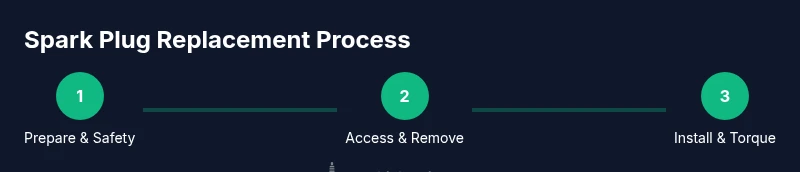
- 1
Prepare workspace and safety
Park the car on a flat surface, engage the parking brake, and disconnect the negative battery terminal to prevent short circuits. Allow the engine to cool fully before touching ignition components. Clear the work area of tools and dirt to avoid contamination.
Tip: Use a clean mat and good lighting to see plugs clearly. - 2
Set up tools and safety gear
Gather all tools and wear protective gloves. Have a tray ready to hold used plugs, and prepare a place to set aside the new plugs so they don’t pick up contaminants.
Tip: Keep track of small parts with labeled containers. - 3
Disconnect electrical connectors
Open the hood and locate the ignition coils or coil packs. Gently disconnect the electrical connectors from each coil, noting the orientation for reassembly.
Tip: If a connector is stubborn, wiggle gently—don’t yank. - 4
Access the spark plugs
Remove any service covers or shrouds obstructing access to the plugs. Ensure you have a clear path to each plug without removing more engine components than necessary.
Tip: Take a photo of the layout before removing parts. - 5
Remove old plugs
Loosen and remove each plug with the plug socket and extension. Lift the coil boot away first, then turn the plug counterclockwise to free it.
Tip: Keep plugs in order to avoid mix-ups. - 6
Inspect and measure gaps
Visually inspect the old plugs for wear and fouling. Use a gap gauge to compare the new plugs to the OEM specification and adjust as needed.
Tip: If you’re unsure about gap, set to official spec rather than guessing. - 7
Prepare and install new plugs
Apply a light coating of anti-seize only if recommended, then thread the new plugs by hand to seat them. Avoid cross-threading by keeping alignment straight.
Tip: Always start threads by hand before using the ratchet. - 8
Torque to spec
Tighten plugs with a torque wrench to the vehicle’s recommended specification. Avoid over-tightening, which can strip threads or damage the head.
Tip: Use a torque-limiting approach: snug, then precise torque. - 9
Reconnect ignition components
Reinstall coil packs or ignition leads in their original positions. Ensure all connections snap firmly and are seated fully.
Tip: Double-check each boot’s seating before closing the hood. - 10
Reassemble and reconnect the battery
Replace any service covers, reconnect the negative battery terminal, and wipe away any spills. Start the engine to confirm smooth operation.
Tip: If the engine runs rough, recheck plug seating and gaps. - 11
Test drive and assess
Take a short drive to evaluate idle stability, acceleration, and fuel response. Listen for misfires or irregular combustion signatures and address any issues promptly.
Tip: Avoid pushing the engine hard until you confirm stability. - 12
Document maintenance and plan next check
Record the service in your maintenance log and set a reminder for future checks as recommended by your manual. Regular inspections help catch wear early.
Tip: Keep a spare set of plugs on hand for quick future changes.
FAQ
What tools do I need to replace spark plugs on a Subaru Impreza?
Essential tools include a spark plug socket with extension, a ratchet, a torque wrench, a gap gauge, and new spark plugs. Depending on your model, you may also need coil removal tools and dielectric grease.
You’ll need a spark plug socket, ratchet, torque wrench, gap gauge, and new plugs. Some models may require coil removal tools and dielectric grease.
Can I reuse old spark plugs after cleaning?
In general, worn or fouled plugs should be replaced rather than cleaned and reused. Even with careful cleaning, older electrodes can lose heat resistance and performance.
Worn plugs should be replaced rather than cleaned and reused; older electrodes can’t reliably restore performance.
What are common signs that spark plugs need replacement?
Rough idle, misfires, hard starting, reduced fuel economy, and hesitation during acceleration are common indicators that spark plugs may be past their prime.
Rough idle, misfires, hard starting, and reduced fuel economy often indicate worn plugs.
Should I use anti-seize on modern spark plugs?
Many modern spark plugs are designed to seal without anti-seize. If the manufacturer recommends it, apply a thin coat; otherwise, skip it to avoid over-torquing.
Follow the manual: anti-seize is not always needed for modern plugs.
What could cause engine damage after replacing plugs?
Damage typically results from cross-threading, overtightening, or incorrect gap/heat range. Always adhere to OEM specs and torque with a proper wrench.
Damage usually comes from cross-threading or over-tightening. Use the correct torque and gap.
How often should I inspect spark plugs on a Subaru Impreza?
Inspect plugs during routine service intervals per the owner's manual. Regular inspections help detect wear before performance declines.
Check plugs during routine service as outlined in your manual.
Can a misfire be caused by components other than plugs?
Yes. Ignition coils, wires, fuel injectors, and vacuum leaks can mimic plug problems. Diagnose step by step to identify the true culprit.
Misfires can be caused by coils, wires, injectors, or vacuum leaks—not just plugs.
Is it safe to work on a turbocharged Subaru Impreza?
Turbo engines require extra caution due to heat and space constraints. If you’re unsure, consult the service manual or a professional.
Turbo engines demand extra care—follow manual guidance or seek professional help if needed.
Watch Video
Main Points
- Inspect plugs regularly to prevent misfires.
- Use OEM specifications for gap and torque.
- Follow a clean, methodical workflow to avoid cross-threading.
- Regularly inspect ignition components for a holistic approach.
- Document maintenance to track wear and plan future service.