Spark Plug Hyundai Sonata Replacement Guide
Learn to inspect, remove, and replace spark plugs on a Hyundai Sonata with practical steps, tools, and safety tips from MultiPlugging. A comprehensive, beginner-friendly guide for DIY car owners.


With this guide, you will learn how to inspect, remove, and replace spark plugs in a Hyundai Sonata, plus how to choose the right brand and maintain correct gaps and torque. You'll follow a clear, safe process using common hand tools and a spark plug socket. By the end, you'll complete a quality plug installation that supports reliable starts and steady engine performance. spark plug hyundai sonata
Why Brand Reliability Matters for Spark Plugs in a Hyundai Sonata
Choosing the right spark plug brand for your Hyundai Sonata isn't just about peak horsepower; it's about consistent starts, smooth idle, and long-term engine health. According to MultiPlugging, the brand and electrode material you pick influence heat range, wear rate, and resistance to fouling. In practical terms, this means better cold starts, fewer misfires, and steadier fuel economy over time. For DIYers, prioritizing OEM-grade plugs or well-known aftermarket options reduces guesswork and potential damage to ignition coils or cylinder heads. The MultiPlugging team found that a small upfront investment in quality plugs often translates to fewer trips to the shop and fewer roadside breakdowns, especially on engines with coil-on-plug designs common in Sonata models. Read on to understand how to evaluate brands and materials before you shop.
Key Factors When Selecting Spark Plugs for Hyundai Sonata
Spark plug selection for a Hyundai Sonata depends on your engine family and year. The main decisions revolve around electrode material (copper, platinum, or iridium), heat range, and the gap you set. Iridium and platinum plugs offer longer life and more consistent performance, but they cost more upfront; copper plugs are cheaper but wear faster. Matching heat range to the engine’s operating temperature helps prevent fouling and misfires. Always start with the OEM specification sheet or the parts catalog for your exact engine code. If you are unsure, ask a parts advisor or check the owner’s manual; MultiPlugging analysis shows that staying within OEM specs yields the best balance of reliability and performance for the Sonata family.
Symptoms and Diagnostics Before You Replace
Before you rush to replace plugs, confirm that symptoms point to ignition issues rather than other problems. Common signs include rough idle, occasional misfires, reduced power, or noticeably worse fuel economy. If you notice oil on the plug or damaged coil boots, inspect valve cover gaskets and ignition coils first. This proactive check helps you avoid unnecessary replacement and ensures you’re addressing the actual fault, not a symptom of another issue. Understanding these signals can save you time and money as you plan your replacement work for the spark plug hyundai sonata.
Tools & Materials
- Spark plug socket (3/8" drive, 16mm)(Magnetized; helps retrieve plugs and prevents dropping into the engine bay)
- Ratchet wrench + extension(Needed to reach plugs in tight spaces)
- Torque wrench(Set to OEM torque spec from the owner's manual)
- Gap tool or feeler gauge(Used to verify/adjust the electrode gap on new plugs)
- Anti-seize compound(Only apply if recommended by Hyundai or plug manufacturer)
- New spark plugs (correct heat range for Sonata)(Check OEM part number and ensure compatibility)
- Dielectric grease(Optional but helps seal coil-on-plug boot connector)
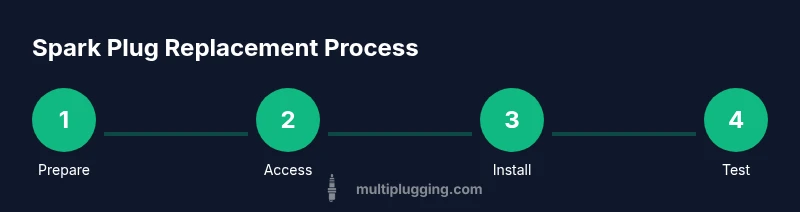
Steps
Estimated time: 60-90 minutes
- 1
Prepare the vehicle and workspace
Park on a level surface and engage the parking brake. Allow the engine to cool completely before touching any engine components. Gather tools, wear gloves, and disconnect the negative battery lead to prevent electrical shorts while you work.
Tip: Keep a labeled tray for old plugs and a parts bag for removed coils to stay organized. - 2
Identify and access spark plugs
Open the hood and locate the coil packs or ignition coils above the spark plugs. If your Sonata uses a coil-on-plug design, you’ll access each plug individually. Remove any engine covers if required to gain clear access.
Tip: Note cylinder order and take a quick photo before removing coils to avoid miswiring on reassembly. - 3
Disconnect ignition coils
Carefully detach the electrical connectors from each coil pack. Remove mounting bolts and lift the coil just enough to reveal the spark plug. Do not force the coil off the plug if resistance is present; wiggle gently and re-check torque on the bolts.
Tip: Label each coil-to-wire harness to ensure correct reattachment. - 4
Remove old spark plugs
Fit the spark plug socket onto the extension and carefully unscrew the old plug. Lift it straight out to avoid hitting the cylinder walls or thread wells. Inspect the area for oil leaks or corrosion after removal.
Tip: Keep track of the plug’s thread condition; a lot of fouling can indicate a separate seal issue. - 5
Check gap and prepare plugs
If your new plugs require gap adjustment, use a gap tool to set the electrode to the correct specification. Apply a small amount of anti-seize if recommended, and lightly coat the threads for easier future removal. Do not over-tighten or smear grease on the electrode.
Tip: Always confirm the gap with a fresh, clean plug before installation. - 6
Install new plugs and torque to spec
Insert each new plug by hand to avoid cross-threading, then tighten with a torque wrench to the manufacturer’s recommended value. Recheck after a short additional turn if your wrench indicates under torque. Ensure the plug seat is clean and the gasket seal is intact.
Tip: Torque-to-spec helps prevent thread damage and ensures a tight seal. - 7
Reconnect coils and wiring
Reattach each ignition coil, reconnect its electrical connector, and replace mounting bolts. Refit any engine covers and ensure wiring trays are seated properly to prevent chafing during operation.
Tip: Double-check all connectors are fully seated before starting the engine. - 8
Test run and final checks
Reconnect the battery, start the engine, and listen for smooth operation. Check for any misfires, rough idle, or exhaust smells that could indicate a foul plug or mis-seat. If everything sounds normal, take a short test drive to confirm performance.
Tip: If you still hear misfires, recheck the suspect plugs and coils before driving further.
FAQ
Do I need to replace all spark plugs at once for a Hyundai Sonata?
Replacing all plugs at the same time helps ensure uniform performance and avoids rework, but you can replace only the failing plug if others show no signs of wear.
It's often best to replace all the plugs at once for consistency, but you can swap just the faulty one if others look good.
What is the typical service interval for spark plugs on a Hyundai Sonata?
Intervals vary by engine type and plug design; refer to the owner’s manual or parts catalog for exact guidance. Use OEM-recommended plugs for best results.
Check your owner's manual for the exact interval and stick to OEM guidance for reliability.
Can I reuse old spark plugs?
Only if the old plugs show no wear, gap is within specification, and there are no signs of fouling or damage. In most cases, replacement is recommended for reliable performance.
Reusing plugs is only okay if they’re clean, within gap specs, and show no wear.
What tools do I need to replace spark plugs on a Hyundai Sonata?
You’ll need a spark plug socket, a ratchet, extension, torque wrench, gap gauge, and new plugs. An anti-seize compound and dielectric grease are optional depending on OEM guidance.
Gather a spark plug socket, ratchet, torque wrench, gap tool, and new plugs.
What if a spark plug won’t come out, or the coil is stubborn?
Stop and reassess; avoid twisting force that could strip threads. Check for proper access, use penetrating lubrication if needed, and consider professional help if it remains stuck.
If a plug is stuck, stop and reassess. Don’t force it.
Is anti-seize necessary when fitting Hyundai spark plugs?
Anti-seize is only recommended when specified by the plug or vehicle manufacturer. If unsure, follow OEM guidance to avoid over-torquing.
Only use anti-seize if the manufacturer recommends it.
Watch Video
Main Points
- Use the correct heat range and electrode material for the Sonata.
- Follow OEM torque specs and proper gap for best results.
- Replace all plugs if you’re addressing multiple worn units.
- Keep the work area clean to prevent debris from entering cylinders.