Replace Spark Plugs Near Me: DIY Guide
Learn how to replace spark plugs near you with a practical, step-by-step guide. Find tools, safety tips, and options for DIY or professional service.


This guide helps you replace spark plugs near you by finding a reputable local shop or parts retailer, selecting the right plugs, and following a safe, step-by-step replacement process. Whether you DIY at home or hire a nearby service, you’ll learn how to verify compatibility, prepare your vehicle, and avoid common mistakes to keep your engine running smoothly.
Understanding why people search for 'replace spark plugs near me' and what it means
When engine performance dips, many drivers start by searching for local help with spark plug replacement. The phrase 'replace spark plugs near me' reflects two intents: you may want to DIY with local parts, or you may prefer to hire a nearby technician who can handle coil packs, boots, and plugs. Either path requires knowing your vehicle's ignition system, the correct plug type, and safe handling practices. According to MultiPlugging, the first step is to confirm the exact plug specification for your engine (including heat range and thread size) and to check the vehicle’s service manual for torque values. In most modern cars, plugs are part of a well-defined ignition maintenance schedule, but there are significant differences between engines, from direct-injection to traditional distributor systems. A local shop near you can often source OEM- or high-quality aftermarket plugs, provide a warranty, and offer a quick diagnostic if other issues are present. For DIYers, knowing where to buy plugs and how to verify compatibility reduces the risk of misfires and expensive damage.
How to locate reliable local options
Start by mapping your options: authorized dealers, independent auto shops, and parts retailers with service bays. Use trusted sources like Google Maps, Yelp, and manufacturer dealer networks to identify nearby locations with good reviews and transparent pricing. Read recent customer feedback about price clarity, waiting times, and whether the shop performs routine maintenance beyond plugs. When you call or visit, ask about plug type availability, solvents that might be used, and whether they perform a compression or misfire check after replacement. If the shop provides a quote, confirm that it includes labor, core charges, disposal of old parts, and any required re-torquing checks after test runs. Some shops offer a bundle that includes diagnostic checks to ensure everything else in the ignition system remains healthy. If you can't find a shop easily, expand your search to nearby towns or ask for mobile mechanics who can come to you. The goal is to select a reputable option with clear expectations on parts and labor.
How to compare quotes and service quality
Prices vary by plug type, engine, and labor rates, but the true value lies in clarity and service quality. Look for itemized quotes that separate parts, labor, diagnostic fees, and disposal. Ask about whether the replacement includes a core charge for old plugs, whether anti-seize or dielectric grease is used, and what testing is performed after installation. Check warranty terms: a longer warranty on parts and workmanship usually signals confidence in the job. Compare the shop's estimated time to complete the work and whether they offer an appointment window that fits your schedule. For a fair comparison, bring your vehicle specifics: year, make, model, engine type, and the exact plugs you intend to use. If one quote is significantly cheaper, ask for a breakdown—pricing anomalies can indicate rushed work or missing steps. Remember that cheaper isn’t always better when ignition components are involved; a proper replacement avoids misfires, rough idle, and loss of power.
DIY readiness: deciding whether to do it yourself or hire a pro
Replacing spark plugs is a common DIY task, but some engines require specialized steps or diagnosis. If your vehicle has coil-on-plug ignition, space constraints or tight plug wells can make access tricky. Before you begin, assess your tool kit, your experience, and the risk of cross-threading or damaging ignition coils. If you notice signs of worn ignition components, such as misfires at idle or poor acceleration, it may be smarter to hire a pro. Use the guide below to decide: if you can set aside 60 minutes, locate the correct plugs, and torque them to spec, you’re probably ready to attempt it at home. Otherwise, booking a service appointment keeps you safe and protects the engine’s compression and fuel system integrity. Regardless of path, follow a clean workspace, protect yourself with eye protection, and keep the old plugs labeled for recycling or disposal.
Tools, parts, and safety prep
Essential tools include a spark plug socket with a rubber insert, a ratchet and extension, a torque wrench, and a gap tool to set the correct clearance. You’ll need new spark plugs matched to your engine’s spec and a spark plug boot puller if necessary. Optional items include anti-seize compound, dielectric grease, and a small magnetic pickup tool to handle stubborn plugs. Prepare a clean workspace, good lighting, gloves, and eye protection. Have a fire extinguisher nearby if you’re working on an older car with fuel leakage risks, and disconnect the battery before starting to reduce the chance of sparks. If you are performing a compression test or diagnostic checks after replacement, have a basic scan tool ready to confirm no misfire codes appear.
Step-by-step overview of the replacement process
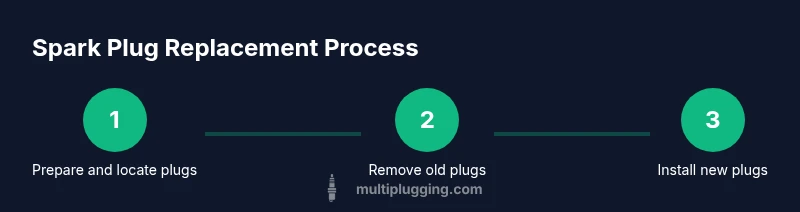
- Identify the correct spark plug type for your engine, using your owner’s manual or a parts catalog. 2) Gather tools and identify the cylinder order to avoid mixing components. 3) Disconnect the battery and remove the ignition coil or boot to access the plug well. 4) Clean the area and carefully remove the old plug with a spark plug socket. 5) Check the gap on a new plug with a gap gauge and adjust if needed. 6) Apply a small amount of anti-seize on the threads (if recommended for your plug type) and thread the new plug by hand to avoid cross-threading. 7) Torque the plug to spec using a torque wrench. 8) Reinstall the ignition coil/boot, reconnect the battery, and start the engine to verify a smooth idle. 9) Clear any codes if needed and run the engine to ensure there are no misfires.
Common issues after replacement and how to avoid
Even with careful work, you may encounter issues after plug replacement. Misfires can occur if plugs aren’t torqued to spec, if gaps are incorrect, or if the wrong plug type is used for your engine. A rough idle after installation can indicate a misfire or coil problems. To avoid these, ensure you used the correct replacement parts, tightened to the manufacturer’s torque, and performed a proper test run after installation. If you notice persistent problems, a quick post-replacement diagnostic can confirm ignition system health and help identify other causes such as dirty fuel injectors or failing ignition coils.
Maintenance and prevention to extend plug life
To maximize spark plug life, follow manufacturer-recommended maintenance intervals and use high-quality plugs. Regular air and fuel system maintenance, proper fuel quality, and avoiding moisture or oil intrusion can extend plug life. Keep ignition wires in good condition, replace any damaged boots, and ensure the ignition system remains clean and dry. If you drive in harsh conditions or short trips, consider slower, longer drives that allow the engine to reach optimal operating temperature, which helps prevent fouling and ensures better combustion.
How MultiPlugging can help you find the right service and parts
MultiPlugging helps car owners locate nearby shops or parts retailers with clear guidance for spark plug replacement. Our process emphasizes matching the correct plug type to your engine, comparing quotes, and evaluating service quality. By following our recommendations, you can balance DIY readiness against professional options, ensuring safety and engine reliability. For further reading and practical tips, check our references and align with trusted local technicians who understand your specific make and model.
Tools & Materials
- Spark plug socket with rubber insert(13/16-inch or 5/8-inch drive depending on plug size)
- Ratchet with extension(Extra reach for tight spaces)
- Torque wrench(Follow manufacturer torque specs)
- Gap gauge(Set precise electrode gap for each plug type)
- New spark plugs (correct type for your engine)(Check heat range, thread size, and reach)
- Anti-seize compound(Optional for thread lubrication on some plugs)
- Dielectric grease(Optional for electrical connectors)
- Magnetic pickup tool(Helpful for stubborn plugs)
- Safety gear (gloves, eye protection)(Always wear protection when working under a hood)
- Fire extinguisher(Keep nearby when working with older fuel systems)
- Battery disconnect tool(Useful if you need to isolate the electrical system)
Steps
Estimated time: 45-60 minutes
- 1
Identify the correct spark plug type for your engine
Consult the owner's manual or a parts catalog to confirm the exact plug type, heat range, and thread size. Cross-check with the service guide to ensure compatibility and avoid misfires. This minimizes the risk of damage from using the wrong plug in a high-pressure ignition system.
Tip: Double-check part numbers and vehicle-specific torque specs before purchasing. - 2
Gather tools and safety gear
Lay out the socket, extension, ratchet, torque wrench, gap tool, and the new plugs in the order you will use them. Put on gloves and eye protection, and ensure the work area is well-lit. Having everything ready reduces the chance of dropping components into tight spaces.
Tip: Arrange tools in the sequence you’ll work to avoid hunting for items mid-task. - 3
Disconnect the battery and locate ignition components
Disconnect the negative battery terminal to minimize the risk of sparks. Locate the ignition coils or spark plug boots while keeping track of which wire goes to each cylinder. Take a quick photo if your memory needs help with reassembly.
Tip: Always disconnect the battery first and keep track of boot orientation. - 4
Remove old spark plug boot or coil
Carefully pry off the coil boot or ignition coil with steady pressure, avoiding yanking on wires. If the boot resists, use a small amount of penetrating oil on stubborn areas and let it sit briefly. Label or note the position of each component for reassembly.
Tip: Do not twist the boot aggressively; twisting can damage the lead or boot. - 5
Remove the old spark plug
Attach the spark plug socket to the ratchet and carefully loosen the plug in a counterclockwise direction. Lift the plug straight out to prevent thread damage in the cylinder head. Inspect the plug for signs of fouling, oil, or excessive wear to diagnose potential engine issues.
Tip: Keep the removed plug in order to compare gap and wear with the new one. - 6
Check and gap the new plug
Use a gap gauge to verify the electrode gap matches the vehicle’s specification. If necessary, gently bend the electrode to adjust. Proper gap is critical for reliable ignition, especially in high-performance engines.
Tip: If the gap is close to spec, avoid over-adjusting; many modern plugs arrive pre-gapped. - 7
Install the new spark plug and torque to spec
Thread the new plug by hand to avoid cross-threading, then tighten with a torque wrench to the manufacturer’s specification. Do not over-tighten, which can strip threads in aluminum heads. Reinstall the boot or coil snugly and ensure a solid seal.
Tip: Torque should be even across all plugs; use a torque wrench for accuracy. - 8
Reconnect ignition components and test
Reconnect all boots and coils, reattach the battery, and start the engine. Listen for a smooth idle without misfires. If codes appear, perform a quick diagnostic scan to confirm the ignition system is functioning properly.
Tip: A quick test run helps reveal any immediate issues before you close up the hood. - 9
Final checks and test drive
Take a short test drive to confirm power, acceleration, and fuel economy are restored. Re-check for any signs of leaks or abnormal sounds. If everything looks good, dispose of used components properly according to local guidelines.
Tip: Carry a spare spark plug in the trunk for emergency replacements on long trips.
FAQ
What are the signs that I need to replace spark plugs?
Common signs include engine misfires, rough idle, reduced power, and declining fuel economy. If you notice one or more of these symptoms, inspecting and replacing plugs is a prudent next step. Always verify that misfires aren’t caused by coils or fuel delivery before replacing plugs.
Look for misfires and rough idle—those usually point to worn plugs or ignition components.
Should I replace spark plugs myself or hire a pro?
DIY replacement is feasible on many cars with moderate engine access and basic tools. For engines with tight spaces or coil-on-plug setups, a professional may be safer and faster. Consider your comfort level, access, and warranty implications when deciding.
If you have the right tools and space, DIY can save money; otherwise a shop is a safer option.
Can I replace just one plug if the others seem fine?
Replacing individual plugs isn’t recommended when multiple plugs are overdue or when the engine shows signs of wear. Plugs wear together and unequal replacement can cause misfires or uneven performance.
It's usually best to replace all applicable plugs at once if they’re due.
What if I can't find local shops near me?
If local shops are scarce, broaden your search radius, look for mobile mechanics, or order parts online with local pickup. Ensure the provider offers proper warranty and post-service checks.
Expand your search to nearby towns or mobile services to ensure you get the right help.
Do I need to gap or torque the plugs during replacement?
Yes. Set the electrode gap correctly for the plug type and tighten to the manufacturer’s torque spec. Incorrect gap or over-tightening can cause misfires or head damage.
Yes, correct gap and torque are essential for reliable ignition.
Is anti-seize necessary on spark plugs?
Anti-seize is optional and depends on plug type and head material. Follow the manufacturer’s recommendation; overusing anti-seize can alter torque and potentially cause over-tightening.
Only use anti-seize if your manual recommends it for your plug and head material.
Watch Video
Main Points
- Plan ahead and verify plug type before starting.
- Use the correct torque to avoid damage.
- Test engine and monitor for misfires after replacement.
- Choose DIY or pro options based on access and experience.