Nissan Versa Spark Plugs: DIY Diagnosis, Replacement & Maintenance
Learn to diagnose, replace, and maintain Nissan Versa spark plugs at home. This comprehensive guide covers inspection, choosing plug types, step-by-step replacement, and post-install checks—backed by MultiPlugging expertise for safer, more efficient driving.


Goal: Learn to diagnose, replace, and maintain spark plugs in Nissan Versa vehicles safely at home. You'll need basic tools, a spark plug socket, a torque wrench, and a clean workspace. Always consult the Versa owner's manual for the exact gap, torque, and maintenance interval. This guide walks you through inspection, removal, replacement, and post-install checks, with safety tips from MultiPlugging. Whether you drive daily or tow occasionally, understanding Versa spark plugs helps reduce misfires and improve efficiency.
Why Nissan Versa Spark Plugs Matter
According to MultiPlugging, the health of spark plugs in the Nissan Versa has a direct impact on smooth idling, fuel economy, and emissions. When plugs wear or foul, you may notice a rough idle, misfires, or reduced MPG. The Versa’s compact engine relies on clean, properly gapped plugs to ignite air-fuel mixtures efficiently. Taking a proactive approach to spark plug maintenance helps you avoid costly repairs and keeps your Versa running smoothly for longer. The MultiPlugging team notes that consistent maintenance aligned with the owner’s manual provides the best balance between performance and cost for everyday driving.
- Signs of worn plugs include rough idle, hesitation on acceleration, and decreased fuel economy.
- Regular inspection helps catch fouling, oil leaks, or electrode wear before they cause problems.
- Use the correct heat range and gap as specified by Nissan for optimal combustion and longevity.
Spark Plug Options for Versa: Copper, Platinum, Iridium
Nissan Versa spark plugs come in several core types, each with its own pros and cons. Copper plugs provide good conductivity and lower cost but shorter service life. Platinum and iridium plugs offer longer life and steadier performance with a higher upfront cost. For most Versa models intended for daily commuting, upgrading to a platinum or iridium option can improve longevity and reduce misfires, especially in climates with temperature swings. Always verify compatibility with your engine year and model, and avoid mixing plug types in a single engine.
- Copper: lower cost, good performance but shorter lifespan.
- Platinum: balanced longevity and cost.
- Iridium: longest life, best for advanced performance and reliability.
How to Inspect Nissan Versa Spark Plugs
Regular visual inspection helps catch problems early. Start with a cool engine and the hood open. Remove the ignition coil or coil-on-plug boots to expose each plug. Look for fouling (oil, fuel, or carbon deposits), electrode wear, and a cracked ceramic insulator. A glossy, dry brown or light tan insulator generally indicates a healthy plug; heavy oily deposits, black soot, or shiny metallic deposits warrant replacement. If you have access to a gap gauge, measure the electrode gap and compare to Nissan’s specification in your manual. Even small gaps can affect ignition in high-compression engines like the Versa, so replace if the gap has widened beyond tolerance.
- Check for oil on the plug threads or insulator as an early warning sign of valve cover seal or piston ring issues.
- Inspect the electrode tip for rounding or erosion, which reduces spark energy.
- Keep the coil boot seals clean and free of oil or debris to prevent misfires.
Tools, Parts, and Safety Considerations
Before you begin, ensure you have a clean work area, good lighting, and the right tools. Always disconnect the negative battery terminal to prevent shorts while you work near electrical connections. Wear gloves to protect your hands from sharp edges and hot metal. Replace spark plugs only when the engine is cool to avoid burns. Keep a tray for used plugs and a rag for wiping oil or grime from the area. If you’re unsure about torque specs, consult your service manual or a dealership to avoid over-tightening, which can damage cylinder heads.
- Handling: gloves, eye protection, and a clean workspace.
- Always confirm you’re installing the correct Versa spark plug type for your engine year.
- Use anti-seize only if recommended by your plug manufacturer; many modern plugs are designed to seal properly without it.
Common Symptoms That Signal Replacement Is Needed
Bad spark plugs often reveal themselves through performance symptoms. If you experience rough idle, engine misfires, poor acceleration, or reduced fuel economy, it’s time to inspect the plugs. Misfires may trigger a check engine light, and you may notice a decrease in drivability under load. If you notice oil on the spark plug or electrode wear, replacement is recommended. Removing and testing individual plugs helps isolate the problem to either the plug or another ignition component.
- Rough idle or hesitations during acceleration
- Increased fuel consumption and stronger fuel smell on eruption
- Misfire codes or check engine light
- Visual signs of fouling or wear on plug tips and insulators
After Replacement: Testing and Maintenance Tips
After installing new plugs, reassemble the ignition components and reconnect the battery. Start the engine and listen for smooth idle. A quick test drive will help confirm proper operation; monitor for any misfires or hesitation. If the engine runs smoothly and the check engine light stays off, you’ve likely completed the replacement correctly. Periodic checks and using the Versa’s recommended service interval will help you catch issues early and maintain optimal performance. The MultiPlugging team recommends documenting your maintenance steps so you can track plug life and avoid unnecessary replacements.
format
Tools & Materials
- Spark plug socket (likely 5/8 inch or 0.625 inch)(Should be compatible with your Versa’s spark plugs and a 3/8)
Steps
Estimated time: 45-75 minutes
- 1
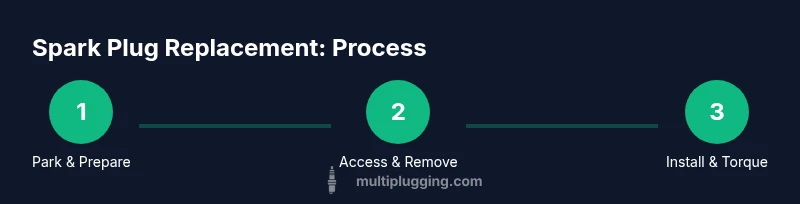
Park and prepare
Park the Versa on a level surface, engage the parking brake, and ensure the engine is cool before starting. Remove any engine cover to expose the spark plug area and organize tools within easy reach.
Tip: Cool engine reduces burn risk and makes plug removal easier. - 2
Disconnect battery and ignition connectors
Disconnect the negative battery terminal to prevent electrical shorts. Detach the ignition coil connector or boot from each spark plug so you can access the plugs later.
Tip: Label any connectors if you’re working on multiple cylinders to avoid confusion. - 3
Access the plugs
Carefully remove any obstructions (engine cover, air intake duct) that are blocking access to the spark plugs. Identify the coil-on-plug assemblies for Versa engines and prepare for plug removal.
Tip: Keep track of the order of removal for easier reassembly. - 4
Remove coils/boots and old plugs
Carefully unplug each coil/boot and extract the old spark plug with the spark plug socket. Do not pry coils or boots; use steady, even pressure.
Tip: If a coil is stubborn, apply a small amount of penetrating oil and reattempt after a few minutes. - 5
Inspect and gap new plugs
Inspect the new plugs for damage and set the electrode gap to Nissan’s specification using a feeler gauge. If recommended, apply a light coat of anti-seize on the threads (check the manufacturer’s advice).
Tip: Avoid over-gapting—tiny changes can drastically affect ignition.” - 6
Install new plugs and torques
Thread the new plugs by hand to avoid cross-threading, then snug them and torque to the manufacturer’s specification using a torque wrench. Reinstall the coil boots and electrical connectors.
Tip: Torque to spec; over-tightening can crack the cylinder head threads. - 7
Reconnect, test, and finalize
Reassemble any removed components, reconnect the battery, start the engine, and listen for a smooth idle. Take a short test drive to ensure there are no misfires or hesitation.
Tip: If a symptom persists, recheck plug seating and wire connections.
FAQ
How often should Nissan Versa spark plugs be replaced?
Check the owner's manual for the recommended replacement interval based on your Versa model year; intervals vary with engine design and driving conditions. If unsure, a visual inspection every 30k miles can help determine if replacement is needed.
Check the Versa manual for your year; inspect plugs visually every 30k miles to decide on replacement.
Can I reuse old spark plugs after cleaning?
In most cases, used plugs are not recommended for reuse once worn or fouled. If a plug is clean, undamaged, and within the correct gap, some technicians may reuse it, but replacement is generally safer and more reliable.
Better to replace worn plugs; reusing plugs can lead to misfires and poor performance.
What tools do I need to replace Versa spark plugs?
Essential tools include a spark plug socket, a ratchet, an extension, a torque wrench, a gap tool, and protective gloves. You may also need a screwdriver or pliers for auxiliary components depending on your engine setup.
Get a spark plug socket and torque wrench; you’ll also need a gap gauge.
What are signs of bad spark plugs in a Versa?
Common signs include rough idle, hesitation on acceleration, misfires, reduced fuel economy, and an illuminated check engine light. If you notice oil on a plug or heavy carbon buildup, replacement is likely needed.
Rough idle and poor fuel economy usually point to bad plugs.
Is anti-seize always recommended on Versa spark plugs?
Many newer Versa engines don’t require anti-seize on plug threads and may be damaged by excess application. Always follow the plug manufacturer’s guidance and the Versa service manual.
Follow the manual; some modern plugs don’t need anti-seize.
What could happen if I over-tighten spark plugs?
Over-tightening can strip threads, crack the cylinder head, or damage the plug seating. Always torque to spec and use a torque wrench.
Torque to the manufacturer’s specification to prevent damage.
Watch Video
Main Points
- Inspect plugs at maintenance intervals and replace when worn
- Use the correct gap and torque to ensure reliable ignition
- Follow safe steps: disconnect battery, work cool, torque to spec
- Test engine after replacement and monitor for any issues