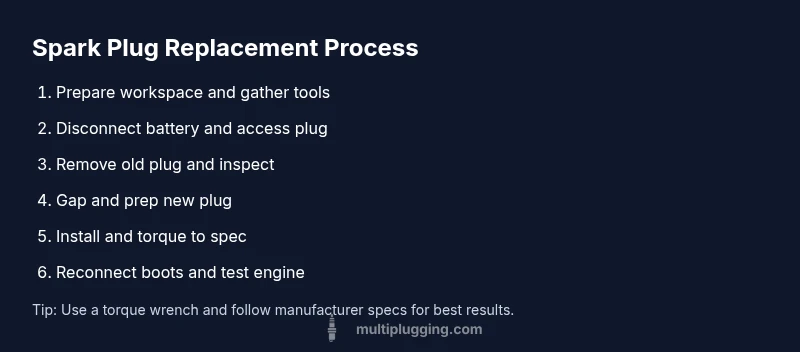
How to Change Spark Plug In: A Comprehensive DIY Guide
Learn how to change spark plug in your vehicle with a clear, step-by-step process. This guide covers tools, safety, torque specs, troubleshooting, and maintenance tips for DIYers and car owners.


You will learn how to change spark plug in your car, including selecting the right plug, safely removing the old plug, gap checking, torqueing, and testing the ignition system. A complete, hands-on workflow helps DIYers diagnose ignition issues and improve engine performance. Follow the steps in this guide to avoid common mistakes and ensure a reliable spark every time.
how to change spark plug in your car: a practical guide
According to MultiPlugging, learning how to change spark plug in your car is a valuable DIY skill that can save money and keep engines performing at their best. A proper plug change can reduce misfires, restore fuel economy, and help your engine start reliably. This section walks you through the why and the how, setting you up for a safe, successful replacement. We'll cover selecting the right plug, preparing the workspace, and following a clear step-by-step process that minimizes risk and waste. Whether you're working on a budget sedan or a modern, high-compression engine, following these best practices will help you achieve consistent ignition performance and prolong engine life.
Spark plug basics and selecting the right plug
Spark plugs come in several styles: copper, platinum, and iridium; they differ in durability and firing characteristics. Your vehicle’s manual or a trusted source will specify the correct heat range and reach. The right plug type and gap are essential for efficient combustion and smooth acceleration. After identifying the recommended plug, compare brands and resistance specs if applicable, and choose a model that matches your engine’s design. Remember: using an incorrect heat range or an incompatible plug can cause misfires, rough idle, and reduced fuel economy. Stay consistent with the manufacturer’s guidance to preserve warranty and performance.
Safety and prep steps before you start
Before touching the engine, park on a flat surface, engage the parking brake, and disconnect the negative battery cable to prevent any accidental arcing. Gather your tools and spare plugs, wear safety glasses and gloves, and work in a well-ventilated area. Remove any loose jewelry and secure long hair. Keep a clean rag handy to wipe away oil, grime, and residue from the spark plug wells. If you’re following MultiPlugging’s best practices, take photos as you go so you can retrace steps during reassembly.
Locating and removing the old spark plug
Open the hood and locate the spark plug nearest to the top of the engine, following your vehicle manual. Remove the spark plug wire boot or coil-on-plug pack carefully to avoid damaging nearby components. Put a small amount of anti-seize only if recommended by your manual; otherwise, skip it. Use the correct spark plug socket with a magnet to loosen and remove the old plug by turning counter-clockwise. Note the plug’s condition, including the color of the insulator and any oil or soot buildup, which can indicate leaks or other issues.
Checking the gap and inspecting the old plug
Inspect the old plug for wear, oil fouling, or heavy carbon buildup. If the electrode width or insulator shows abnormal wear, replace the plug rather than reusing it. Use a feeler gauge or plate-type gap tool to measure the electrode gap on the new plug and adjust to the manufacturer’s specification if needed. Remove any debris from the plug hole with a dry cloth or compressed air, being careful not to push debris into the combustion chamber.
Installing the new plug and applying anti-seize/dielectric grease
Check the gap of the new plug before installation, then thread it by hand to avoid cross-threading. Once finger-tight, finish with a socket to the specified torque. If your manual recommends anti-seize, apply a small amount to the threads (avoid getting any on the electrode). For coil boots, apply a tiny amount of dielectric grease inside the boot to ensure a secure seal and easy future removal.
Torquing and final tightening
Use a torque wrench set to the engine’s specified tightening torque. Tighten the plug gradually in a star pattern to avoid warping the metal threads. Stop as soon as the wrench clicks, and re-check that the plug sits flush with the cylinder head. Refit the spark plug boot or coil-on-plug connector firmly but without excessive force. This careful approach prevents thread damage and ensures a good seal against combustion gases.
Reconnecting the wires and testing
Reconnect the ignition coil or plug boot securely. Reconnect the negative battery terminal if you had disconnected it. Start the engine and listen for a smooth idle without misfires. If you notice rough running or a check engine light, re-check plug torque and gap, and inspect wiring for damage. Refer to your vehicle’s service manual for any diagnostic steps if issues persist.
Troubleshooting common issues after replacement
If the engine won’t start, ensure the plug is properly seated and the gap is correct, then test ignition coil and wiring. A persistent misfire after replacement might indicate wrong plug type, wiring damage, or a leak into the intake manifold. Clean any oil leaks around the plug well, because oil fouling can prevent proper combustion. If you’re unsure, consult a professional or use a factory service manual.
Verdict: best practices and maintenance mindset
The MultiPlugging team emphasizes patience and precision when changing spark plugs. Always reference the owner’s manual for plug type, gap, and torque, and follow a clean, repeatable process rather than rushing. Use the correct tools, maintain a tidy workspace, and document each step for future maintenance. A thoughtful approach reduces misfires, improves starting reliability, and keeps your engine performing at its best over time.
Tools & Materials
- Spark plug socket (with magnet)(Preferred size matches your plugs (common sizes: 5/8" or 13/16").)
- Ratchet wrench and extensions(Use a flexible extension for recessed plugs.)
- Torque wrench(Follow vehicle manufacturer torque spec.)
- Feeler or gap tool(Check and adjust the gap of the new plugs to spec.)
- New spark plugs of the correct type(Select heat range and thread size per engine.)
- Anti-seize compound (optional)(Only apply if recommended by your manual.)
- Dielectric grease (inside boots)(Helps seal and ease future removal.)
- Die-cut or microfiber rag(Clean any residue from plug wells.)
- Gloves and safety glasses(Protect hands and eyes from fuel and coolant contact.)
- Owner's manual or vehicle service manual(Torque specs and plug type are vehicle-specific.)
- Compressed air or brush(Blow out debris from plug wells when accessible.)
Steps
Estimated time: Estimated total time: 60-90 minutes
- 1
Prepare and locate plugs
Park on a flat surface, disconnect the negative battery, and gather tools. Open the hood and locate the relevant spark plugs using the vehicle manual for placement. This initial step reduces the risk of accidental starts and protects electronic components.
Tip: Take a photo of plug layout before removal to simplify reassembly. - 2
Disable ignition and access coil/boot
Carefully disconnect the ignition coil or spark plug boot for the cylinder you’re servicing. Label or note wires if necessary to ensure correct restoration. Keep the boot clean and isolated from oil and debris.
Tip: Avoid yanking wires; wiggle gently to release connectors. - 3
Loosen and remove old plug
Use the spark plug socket to loosen the old plug by turning counter-clockwise. Remove the plug slowly to inspect its condition and ensure no debris falls into the well. If an old plug is stubborn, use a bit of penetrating oil and wait a few minutes.
Tip: Never twist the plug with a damaged socket—risk of dropping the plug. - 4
Inspect old plug and measure gaps
Check the old plug for wear, oil, or heavy deposit. If worn or fouled, replace it rather than reuse. Use a gap gauge to compare the new plug’s gap to the manufacturer’s spec and adjust if required.
Tip: A misfired cylinder can be caused by a single worn plug—don’t overlook others. - 5
Gap and prepare new plug
Before installation, verify the new plug’s gap matches the vehicle specification. If necessary, adjust with a gap tool. Clean the threads and seating surface of the new plug before installation.
Tip: Hand-thread first to avoid cross-threading. - 6
Install new plug by hand
Thread the new plug by hand until snug, then switch to a socket. Use light torque to avoid cross-threading, then finalize with a torque wrench to the manufacturer’s specification.
Tip: Cross-threading is a common cause of failed seals. - 7
Torque to spec and seal
Torque the plug to the recommended specification using a torque wrench. Ensure the plug sits flush with the head and the washer seals correctly. Reconnect boots or coil packs securely.
Tip: Don’t over-tighten; overtightening can strip threads. - 8
Reconnect wires and verify
Reconnect the spark plug boot or coil, reconnect the battery, and start the engine. Listen for a smooth idle and note any misfires or rough running. If issues appear, re-check torque and gap.
Tip: A quick idle check can reveal early misfires. - 9
Final checks and cleanup
Wipe away any spilled fluids, store tools properly, and dispose of old plugs according to local guidelines. Consider performing a cross-check by testing a few miles after replacement to confirm reliability.
Tip: Keep a small service log for future maintenance.
FAQ
How do I know which spark plug type to use for my vehicle?
Check your owner's manual or consult a trusted source to find the recommended heat range and thread size. Mismatched plugs can cause misfires and poor performance. If in doubt, contact a professional.
Check the manual for the specific heat range and thread size; wrong plugs can cause misfires. When unsure, ask a pro.
Can I reuse old spark plugs after cleaning them?
In most modern engines, used plugs should not be reused if there is wear, fouling, or deposits. Replace with new plugs that meet the manufacturer’s specs.
Used plugs aren’t usually reusable if they show wear or deposits. Replace with the correct new plugs.
What is the importance of correct torque when installing a spark plug?
Proper torque ensures a good seal and prevents thread damage. Over-tightening can strip threads, while under-tightening can cause leaks and poor compression.
Tighten to the spec to avoid stripped threads or leaks.
Should I use anti-seize on modern spark plugs?
Many modern plugs don’t require anti-seize and applying it can affect torque readings. Follow your manual or manufacturer guidance.
Usually you don’t need anti-seize for modern plugs; torque guidance is key.
Is it necessary to replace spark plug wires or boots at the same time?
Worn boots or damaged wires can cause misfires even after a plug change. Inspect and replace as needed to maintain ignition reliability.
If the wires are worn or cracked, replace them along with the plugs.
What should I do if my engine still misfires after replacement?
Recheck gap and torque, inspect ignition coils and wiring, and confirm the correct plug type. If issues persist, consult a professional or service manual.
If misfires persist, recheck everything and seek professional help if needed.
How often should spark plugs be replaced in a typical gasoline engine?
Replacement intervals vary by engine and plug type. Always refer to the manufacturer’s recommended schedule in your manual.
Follow the vehicle’s manual for specific replacement intervals.
Can I replace spark plugs without removing any other components?
Access depends on engine layout. Some engines require coil/pack removal to reach plugs. Refer to the manual and plan the approach before starting.
Some engines need you to remove coil packs; check the manual first.
Watch Video
Main Points
- Identify the correct spark plug type and gap before installation
- Torque correctly to avoid stripping threads or leaks
- Test for proper ignition after replacing plugs
- Inspect surrounding components for wear or damage
- Maintain a clean, organized workspace for safety and accuracy