G Power Spark Plug: A Practical DIY Guide to Install, Diagnose, and Optimize
Learn how to identify, install, and optimize a G Power spark plug with clear steps, safety tips, and troubleshooting guidance from MultiPlugging. Perfect for car owners and DIY enthusiasts.


By the end of this guide, you will be able to identify the correct G Power spark plug for your engine, gather the right tools, perform a safe replacement, and verify proper gap and torque. This how-to covers compatibility, step-by-step installation, gap checks, and post-installation testing, with practical tips from MultiPlugging to keep your engine running smoothly.
What is the G Power Spark Plug and Why It Matters
In automotive care, the G Power spark plug represents a family of high-performance plugs designed to optimize combustion in many engine configurations. The spark plug is a tiny but critical component that delivers a precise spark to ignite the air-fuel mixture inside the combustion chamber. The right plug can improve throttle response, idle stability, cold starts, and overall efficiency, while the wrong choice can cause misfires, rough idling, or reduced fuel economy. According to MultiPlugging, selecting the right G Power spark plug involves matching heat range, electrode design, and reach to your engine's compression, timing, and service history. This section sets the stage for the practical steps that follow: understanding your engine, confirming compatibility, and preparing for a safe replacement. Expect to learn how to verify the right heat rating, how much gap is appropriate, and how to avoid common pitfalls when you swap plugs on an aging or modern ignition system. Grounding this process in clear diagnostics helps DIYers avoid unnecessary trips to the shop and keeps your engine healthy. As you work, remember that a well-chosen G Power spark plug can restore smooth idle, better combustion efficiency, and reliable starts, especially during hot or cold conditions.
Begin by noting your vehicle’s year, make, model, and engine code. If you’re unsure, consult the owner’s manual or a trusted service resource. Keep a running checklist that links engine code, recommended heat range, and current plug type. This careful preparation saves time during the actual replacement and reduces the risk of cross-threading or installing an incorrect heat range.
How to Identify the Right G Power Spark Plug for Your Engine
Choosing the correct G Power spark plug starts with understanding your engine’s needs. Start by checking the vehicle’s owner manual or service literature for the exact plug specification, including thread size, reach (the distance the plug extends into the combustion chamber), and thermal heat range. Engine codes and manufacturer recommendations are more reliable than generic guidance, especially for modern engines with tight tolerances. Look at the current plug’s heat range and diagnostic trouble codes to infer whether a hotter or colder plug is needed. When you’re shopping for a replacement, confirm the following: thread diameter and pitch match, reach is appropriate for the combustion chamber depth, and the tip design aligns with your ignition system (conventional copper, platinum, or iridium). For many engines, the correct G Power spark plug will have a gap within a narrow range specified by the OEM; if you replace with a plug that’s far outside this tolerance, you’ll risk misfires or fouling. If in doubt, start with a conservative heat range and consult a reliable source—MultiPlugging’s team emphasizes cross-checking with the engine code and the manufacturer’s torque specs. After identifying the correct plug, you’re ready to acquire tools and begin the replacement with confidence, knowing you have selected a part designed for your specific ignition setup. This careful approach minimizes the chance of a plug mismatch and keeps your engine performing consistently.
Spark Plug Types and Performance Differences
Spark plugs come in several electrode designs and construction materials, each offering different performance benefits. Copper core plugs tend to deliver strong initial conductivity and lower cost but may wear faster in high-demand engines. Platinum and iridium effects improve durability and heat management, which can extend service intervals and maintain smoother ignition in modern engines. When evaluating a G Power spark plug, consider the environment the engine operates in: high-load conditions, turbocharged or supercharged setups, and cold-weather operation may benefit from specialized heat ranges and electrode designs. The G Power line often emphasizes endurance and reliable ignition across a broad range of vehicles, but the exact choice still depends on engine displacement, compression ratio, and OEM guidance. MultiPlugging notes that selecting a premium electrode type can improve combustion stability, especially in engines with aging ignition systems or irregular fuel delivery. In any case, verify compatibility with the ignition coil and fuel system to ensure optimal performance. A well-matched plug will maintain idle stability, reduce misfires, and support efficient fuel combustion, while a misaligned choice can lead to poor acceleration and rough running.
Tools, Materials, and Safety Basics
Before you begin, gather the essential tools and materials to avoid mid-task interruptions. The right setup not only speeds the job but also minimizes risk to yourself and the engine. At minimum, you’ll need a spark plug socket and ratchet that fit the plug size, a torque wrench to achieve the manufacturer’s specified torque, a gap gauge to confirm the correct gap on the new G Power spark plug, anti-seize compound if recommended by the OEM, and dielectric grease for electrical connections. Have a clean work area and a sturdy box to hold removed plugs so they don’t roll away or get contaminated. Wear eye protection and gloves, and disconnect the negative battery terminal to prevent any accidental arcing. If your engine has individual coil packs, you’ll need to carefully disconnect each coil or wire, keeping track of which wire belongs to which cylinder. For hard-to-reach plugs, you may need an extension bar or a universal joint, ensuring you don’t force tools where space is tight. Always consult the service manual for specific torque values and gap ranges; approximations can lead to over-tightening or poor seal. Finally, organize the removed plugs by cylinder for reassembly, and prepare a small tray or magnetic mat to keep fasteners in order. A well-prepared toolkit reduces mistakes and helps you complete the replacement with confidence.
From a safety perspective, never work on a hot engine. Allow cooling for at least 30 minutes after running the vehicle, and use jack stands if you need to access plugs from underneath the car. If you’re unsure about any step, pause and reference the OEM guidance or seek a quick consult with a DIY forum or trusted technician. The aim is to finish with clean gaps, correct torque, and secure boots to prevent misfires or moisture ingress.
Step-by-Step Installation Overview
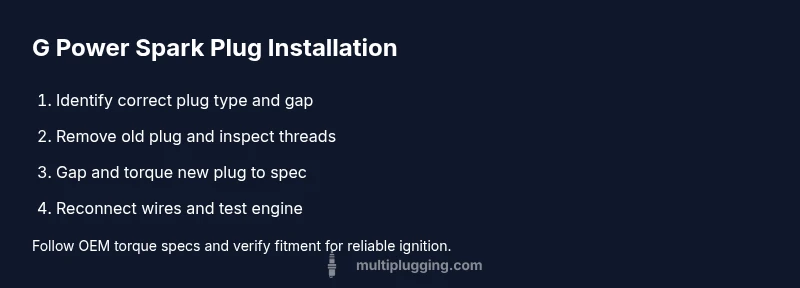
The actual step-by-step portion is covered in the dedicated STEP-BY-STEP block, but here’s a high-level overview to guide your planning. First, you’ll disconnect the battery and locate each spark plug well and its corresponding coil or wire. Next, you’ll remove the old plug carefully, inspect the threads for damage, and compare the old plug to the new G Power spark plug for thread type and reach. Gap and adjust the new plug to the recommended measurement, then thread it by hand to prevent cross-threading. Finally, torque the plug to the OEM specification, reattach the coil or wire, and perform a basic run test to confirm smooth operation. Throughout, maintain clean handling to avoid contaminating the plug seat with oil or debris. By following this approach, you’ll ensure a proper seal, correct combustion chamber depth, and reliable ignition for your engine. After reinstalling all plugs, start the engine and listen for any misfires or rough idling; if detected, recheck the gap and torque values and verify each coil connection is secure. A proper installation yields consistent performance and a smoother idle, especially with high-mileage engines where compression or heat ranges might shift over time.
Common Mistakes and How to Avoid Them
Even seasoned DIYers can trip over a few common mistakes when replacing a G Power spark plug. Over-tightening the plug can strip threads or crack the seat, while under-tightening can cause gas leaks and poor seal. Cross-threading is another frequent issue that leads to improper seating and eventual misfires. Never force a plug into a misaligned hole, and always start by hand to ensure threads catch cleanly. Using the wrong heat range or electrode type will produce rough idle, reduced fuel economy, and potential misfires. Skipping the gap check on new plugs is a quick path to engine roughness; always verify the gap with the recommended range before installation. Lastly, neglecting to reattach the ignition boot or coil pack can create a misfire or a no-start condition. By adopting a precise, methodical approach—careful torque, clean threads, and verified electrical connections—you’ll minimize risk and maximize the benefits of a new G Power spark plug. MultiPlugging emphasizes documenting your steps and keeping used parts organized to simplify future maintenance. If you notice ongoing issues after replacement, consider checking fuel delivery, ignition coils, and compression to rule out related faults.
Pro tip: when in doubt, re-check torque after a short test drive; heat cycling can reveal slightly different seating, especially on aluminum cylinder heads. A careful recheck saves time and prevents long-term damage.
Maintenance and Diagnostics After Installation
After installing a G Power spark plug, a quick diagnostic routine helps confirm the job was successful. Start the engine and listen for a clean, consistent idle; any continued roughness or misfire indications could signal a gap or sealing issue. Check for diagnostic trouble codes that may appear if a cylinder is misfiring or if the ignition system has an issue. A healthy plug should show dry, light-brown insulator material at the tip after a normal running cycle. If oil or fuel fouling is present, there may be deeper engine conditions to address, such as worn piston rings, valve seals, or fuel injector problems. Periodically inspect the plug wires and boots for cracks or swelling, especially on older vehicles. If the plug sits in a high-vibration environment, ensure the boot friction is minimized to prevent boot-to-plug arcing. In terms of maintenance frequency, hardware such as ignition coils, wires, and plugs collectively determine replacement intervals. Always replace plugs in matched sets to ensure uniform combustion, avoiding a mixed configuration that can yield uneven performance. Keep a maintenance log noting the date, vehicle mileage, plug type (G Power spark plug), and any observed drivability changes. This helps plan future service and maintain peak performance across seasons.
From a reliability standpoint, the MultiPlugging team notes that consistent gap settings and torque accuracy are among the most impactful factors for engine smoothness and fuel economy. If any symptoms persist, revisit the entire ignition system, from coils to spark plug wires, and consider a professional inspection if you’re uncertain.
Testing and Verifying Performance After Replacement
Once installation is complete, you’ll want to verify the results. Start by performing a cold and then a warm engine test, listening for smooth ignition and steady idle. If available, use an OBD-II scanner to check for misfire codes and monitor cylinder-specific data. A healthy G Power spark plug setup should produce stable voltage readings and consistent coil current with no misfire codes. A test drive can reveal improvements in throttle response and acceleration without hesitation or stumble. If you notice hesitation, check the gap again and ensure the torque is within the manufacturer’s specification. For engines with variable valve timing or advanced ignition control, ensure the ECU recognizes the new plugs and does not flag any sensor faults related to misfires. A dotted pattern of success includes stable idle, improved cold-start behavior, and a smoother transition from idle to load. If you still observe roughness after reinstalling, re-check all boots and connectors and consider re-measuring the plug gap with a fresh gauge. Sustained performance improvements with a G Power spark plug come from consistent maintenance and careful conformity to OEM guidelines.
Incorporating Simple Checks: verify the gap, torque, and boot seating; confirm there are no cracked coil boots or damaged wires; and run a short road test to observe sustained improvement over a few miles. The process is straightforward with the right preparation and attention to detail.
Verdict, Best Practices, and Final Tips
The practical takeaway for installing a G Power spark plug is straightforward: follow the engine’s OEM torque specs, use the correct heat range and electrode type, and verify gap accuracy before sealing the threads. The MultiPlugging team recommends documenting your replacement details and using high-quality plugs that match your engine’s design. Consistency matters: replace spark plugs in matched sets when you do a tune-up, avoid over-torquing, and protect electrical connections with dielectric grease where applicable. For long-term reliability, pair plug replacement with a review of ignition coils and wires, particularly on high-mileage engines. The key is a systematic approach that minimizes contamination and ensures proper sealing, gap accuracy, and secure electrical connections. With careful preparation and adherence to the OEM specifications, your engine should start reliably, idle smoothly, and deliver consistent power. The MultiPlugging team’s verdict is that a well-chosen G Power spark plug can restore performance and efficiency when installed correctly, and ongoing maintenance—guided by your service manual—will help sustain those gains over time.
Tools & Materials
- Spark plug socket(6-point or 12-point socket; match plug size (e.g., 14mm, 5/8 inch).)
- Ratchet and extension(For reach in tight engine bays; use extension when needed.)
- Torque wrench(To verify correct torque as per OEM specs; avoid over-tightening.)
- Spark plug gap gauge(Check and set the exact gap specified by OEM for G Power spark plug.)
- Anti-seize compound(Apply only if recommended by manufacturer; some plugs have coatings.)
- Dielectric grease(Optional for plug boots to prevent moisture ingress.)
- New G Power spark plugs (correct type)(Use the exact heat range and electrode design required for your engine.)
- Safety gear(Gloves and safety glasses; disconnect battery before starting.)
- Magnetic tray or parts organizer(Keeps removed plugs and fasteners organized.)
Steps
Estimated time: 60-90 minutes
- 1
Prepare and safety check
Park the vehicle on a flat surface, set the parking brake, and disconnect the negative battery cable. Allow the engine to cool to avoid burns, then gather all tools and new G Power spark plugs. This ensures you have everything at hand before starting the replacement.
Tip: Label each coil/wire to keep track of which plug belongs to which cylinder; it helps on V-engine layouts. - 2
Locate plugs and access ports
Open the hood and locate the spark plug wells. If needed, remove engine coverings to access the coil packs or wires. Take a moment to visually inspect the area for oil or debris that could contaminate a new plug.
Tip: Use a light to peek into the wells; avoid rough handling of wires to prevent cracking the boots. - 3
Remove old plugs
Carefully loosen and remove the old plugs without forcing them. Use a magnetized spark plug socket to lift plugs straight out. Inspect the threads for damage and clean the port if needed.
Tip: Turn slowly; if a plug is stubborn, back it out a bit and re-align to prevent cross-threading. - 4
Gap and inspect new plugs
If needed, gap the new G Power spark plugs to the OEM specification using a gap tool. Check the threads and seating surface for particles. Do not lubricate the threads unless the OEM specifies anti-seize; many modern plugs include coatings that reduce the need.
Tip: Work in a clean, dry area to avoid contamination on the seat or insulator. - 5
Install new plugs and torque to spec
Carefully thread the plug by hand to avoid cross-threading, then tighten with a torque wrench to the manufacturer’s specification. Recheck torque after a short test run if the engine design requires coolant or head temperature cycling.
Tip: Nut/bolt-street torque may vary by model; always confirm with the service manual. - 6
Reconnect coils/wires and test
Reconnect each coil or wire to its proper plug, ensuring a snug fit. Reinstall any engine covers, reconnect the negative battery terminal, and start the engine. Listen for a smooth idle and watch for any misfire codes on an OBD reader if available.
Tip: If you hear a ticking sound or rough idle, recheck the boot seating and plug torque.
FAQ
What is a G Power spark plug and how does it differ from standard plugs?
A G Power spark plug is designed to optimize combustion using a specific heat range and electrode design. It aims to improve ignition reliability and engine performance compared to traditional copper plugs, particularly in modern engines with tighter tolerances.
A G Power spark plug is built for reliability and better ignition in many engines, especially newer models. It uses a specialized electrode design to improve combustion.
Do I need to gap the G Power plugs before installation?
Yes. Check the OEM specification for the correct gap and use a gap tool to set it precisely. A correct gap ensures spark efficiency and reduces misfires.
Yes—gapping the plugs to the manufacturer’s spec helps ensure proper ignition and avoids misfires.
Can I reuse old spark plugs?
In most cases, it’s best to replace old plugs with new G Power plugs. Worn or fouled plugs can compromise engine performance and reliability.
Usually it’s better to replace worn plugs rather than reuse them.
Should I use anti-seize or dielectric grease with G Power plugs?
Follow OEM guidance. Anti-seize is often unnecessary on modern plugs with anti-corrosion coatings, but dielectric grease can help with boot sealing and moisture resistance.
Check the manual—some plugs don’t need anti-seize, but dielectric grease can help seal connections.
What torque specification should I use for G Power spark plugs?
Torque should match the OEM specification for your engine. Use a torque wrench and avoid over-tightening to prevent thread damage.
Always torque to the OEM spec to avoid damage and leaks.
What signs indicate a wrong plug choice after installation?
Symptoms include rough idle, misfires, reduced fuel economy, or sluggish acceleration. If these occur, re-check plug type, gap, and torque, and inspect ignition components.
If you notice rough running after installation, double-check gap and torque and inspect ignition components.
Watch Video
Main Points
- Select the correct G Power spark plug by engine spec.
- Gap the plug correctly before installation.
- Torque to OEM specification to seal the seat.
- Replace all plugs in a set for balanced performance.
- Test drive and monitor for smooth operation post-installation.