what to gap spark plugs: A Practical DIY Guide
Learn what to gap spark plugs, how to measure and adjust gaps, and when to replace plugs for optimal engine performance. A clear, data-driven approach for car owners and DIY enthusiasts.


What to gap spark plugs matters because the right gap ensures optimal ignition, fuel efficiency, and smooth idle. In most engines, the recommended gap is tiny, and using a feeler gauge or a gap tool keeps it precise. Always verify your specific model's spec in the owner manual or OEM datasheet.
What to Gap Spark Plugs: Definition and Purpose
The phrase what to gap spark plugs refers to the intentional distance between the center electrode and the ground electrode. This gap needs to be precise because it governs how easily an electrical current jumps the spark plug and ignites the air-fuel mixture. When the gap is too wide, the spark may struggle to jump, causing misfires, rough starts, and reduced fuel efficiency. When it is too narrow, the spark can fire too easily, delivering less energy per combustion and potentially increasing fouling. The goal is a stable, predictable arc at the operating temperature of your engine. In this article, we’ll cover how to determine the correct gap, how to measure it, and how to safely adjust or replace plugs so you maintain optimal ignition performance. Throughout, remember that the exact gap depends on your engine manufacturer’s specification, not a universal number.
How to Determine the Correct Gap for Your Engine
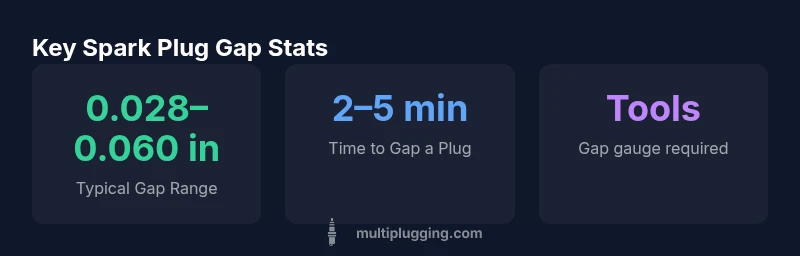
Determining the correct gap starts with the engine’s specification. Check the owner’s manual, service manual, or OEM datasheet for the exact gap value. If you don’t have the manual handy, you can often find the gap printed on the packaging of the spark plugs or on the manufacturer’s website. A practical rule of thumb is that many gasoline engines use gaps in the 0.028–0.060 inches range (0.7–1.5 mm), but performance engines or newer designs may call for tighter tolerances. For lawn equipment and small engines, gaps can be at the lower end of this spectrum. Always measure the actual gap before installing the plug, as heat cycles can cause drift. Use a reliable gap gauge or a dedicated gap tool to ensure precision. Also confirm that you’re using the correct heat range and thread size for your specific engine.
Tools and Setup: What You Need to Gap Spark Plugs
To gap spark plugs safely and accurately, assemble a small work kit: a spark plug gap gauge or a dedicated gap tool; a torque wrench or adjustable wrench for sealing the plug at the correct torque; a spark plug socket and ratchet; a clean rag to wipe deposits; and a small screwdriver or pliers only if adjustments are supported by the plug design. If you’re replacing plugs, have a fresh set on hand and anti-seize compound is optional depending on the thread condition and manufacturer guidance. Keep the work area clean to avoid damaging the ceramic insulator. Always work with the engine cool to prevent thermal shock and accidental contact with hot components.
Step-by-Step Guide: Gapping Spark Plugs Safely
- Remove the plug carefully using a proper socket and keep track of the plug’s exact position for reinstallation. 2) Inspect the tip and threads for wear or damage; replace if needed. 3) Measure the gap with the gauge; compare to the OEM spec. 4) If the gap is off, carefully adjust by bending the ground electrode or re-gapping as allowed by the plug design; never force a bend beyond manufacturer guidance. 5) Re-measure to confirm accuracy, wipe clean, and reinstall with the correct torque. 6) After installation, start the engine and listen for a smooth idle and steady performance. 7) If you notice misfiring or rough running, re-check the gap and consider replacing the plugs.
Common Mistakes and How to Avoid Them
Common mistakes include over-tightening, which can crush the gasket or strip threads; using dirty or damaged tools that skew the measurement; bending the electrode inconsistently; and assuming one gap fits all engines. Always verify the exact specification per engine model and plug type. If you’re unsure about adjusting gaps on a modern iridium or platinum plug, refer to the manufacturer’s guidelines or replace with a fresh set rather than attempting aggressive re-gapping.
When to Gap vs. Replace: Signs and Timing
Gapping is appropriate when plugs show minor electrode wear and the gap drift is within spec. If electrode wear, erosion, or physical damage is visible, or if the engine has persistent misfires or hard starts, replacement is usually the better option. Gapping worn plugs can result in inconsistent performance and reduced fuel economy. In many cases, replacing plugs at recommended intervals yields more reliable ignition and longer engine life, even if the gaps would nominally still be adjustable.
Engine-Specific Considerations and Documentation
Engines vary widely in gap requirements. Cars, trucks, and motorcycles each have their own specs, as do lawn mowers and other small engines. Always consult the OEM documentation for the exact gap, heat range, and thread specification. If you work with older equipment or non-standard engines, you may encounter a broader gap tolerance or special plug types. In doubt, err on the side of using the recommended specification from the manufacturer rather than a generalized target.
Maintenance and Long-Term Care After Gapping
After you gap or replace plugs, keep a routine inspection schedule. Recheck gaps after the first 100–300 miles or one month of operation, especially if you operate in harsh conditions. Regularly inspect the ignition system for fouling, improper heat range, or electrode wear. Store spare plugs in a clean, dry place and label them by model to avoid incorrect substitutions. A little proactive care keeps ignition timing stable and helps maintain peak engine performance over time.
Common gap specs by engine type
| Engine Type | Recommended Gap | Notes |
|---|---|---|
| Gasoline passenger car | 0.028–0.060 in | Check OEM spec; varies by model |
| Lawn mower (4-stroke) | 0.030–0.040 in | Follow manufacturer guidance; small engines differ |
| Small off-road engine (generator, snow blower) | 0.028–0.032 in | Consult manual; wear affects gap |
FAQ
Why does spark plug gap vary by engine?
Different engines have unique ignition systems and combustion chamber designs, which require specific gaps to optimize spark energy and flame propagation. Always rely on OEM specs rather than a generic target.
Gaps vary because engines are built differently. Always follow the manufacturer’s spec for your exact model.
Can I gap iridium or platinum plugs?
Yes, if the plug is designed to be gapped and the manufacturer allows adjustment. Some iridium plugs have fixed gaps and must be replaced rather than adjusted.
Yes, but only if the plug is designed to be gapped. Check the spec before adjusting.
What tools do I need to gap spark plugs?
A gap gauge or gap tool is essential, plus optional torque control and basic hand tools. Always use tools that are clean and free of debris.
You’ll need a gap gauge and the right socket; a torque wrench helps if your manual calls for a specific torque.
What happens if I gap too wide or too narrow?
A gap that’s too wide can cause misfires and hard starts, while a gap that’s too narrow can reduce ignition energy and fuel efficiency. Both degrade performance.
Too wide or too narrow gaps cause rough starts and poor efficiency.
Should all plugs have the same gap?
Yes, for consistent combustion you generally want all plugs gapped to the same spec. Mismatched gaps can cause uneven firing.
Usually yes—match all plugs to the factory specification to keep ignition even.
When should I replace a plug instead of re-gap?
If the electrode is worn, damaged, or the plug no longer maintains the spec after cleaning and re-gapping, replacement is recommended.
If you see wear or damage, replace the plug rather than re-gap.
“Gap accuracy is a repeatable performance lever for engines; when gaps are set correctly, ignition reliability and fuel economy improve. Small changes in the gap can have outsized effects on starting and smooth operation.”
Main Points
- Check OEM gap spec before any adjustment
- Use a gap gauge for accurate measurement
- Don't force electrode adjustments on iridium/platinum plugs
- Recheck gap after installation to confirm accuracy
- Replace worn plugs rather than attempting risky gaps